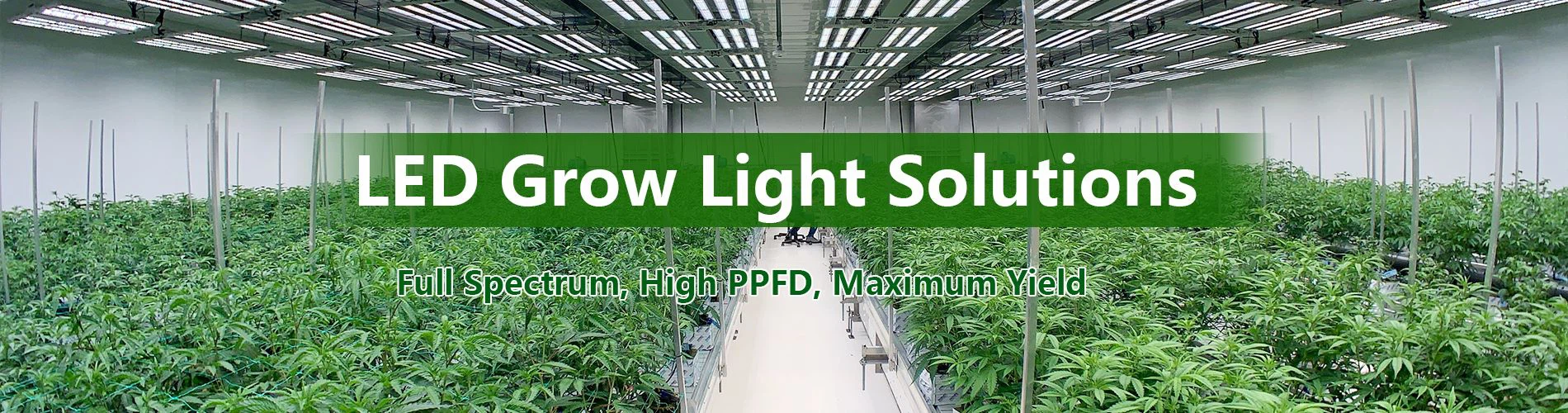

If you've ever been involved in expanding a commercial grow operation, you already know this uncomfortable truth: what works at small scale often breaks when you try to replicate it.
I've seen facilities where the first room performed beautifully. Yields were consistent, plants looked healthy, and everyone felt confident enough to move forward. Then came the second room. Then the third. Somewhere between replication and scale, things started drifting. Growth rates diverged. Maintenance became reactive. Environmental control turned into a daily firefight.
The lighting system rarely failed outright. It failed quietly - by introducing small inconsistencies that multiplied with every new room, rack, or layer.
This is where the conversation around scalability becomes real. Scaling is not about brightness or innovation. It's about repeatability. And this is precisely why, in many commercial environments, LED tube grow lights and LED grow light bars scale more easily than more complex lighting systems.
Scaling Fails When Systems Can't Be Copied Cleanly
One of the biggest misconceptions in cultivation is that scaling is just about buying more of the same equipment. In reality, scaling only works when a system can be copied with minimal interpretation.
At small scale, problems are masked by attention. The same team installs everything. Adjustments are made instinctively. Minor inconsistencies are corrected manually. Once expansion begins, that safety net disappears. Installation crews change. Timelines compress. Training quality varies. Suddenly, every extra step in a lighting system becomes an opportunity for error.
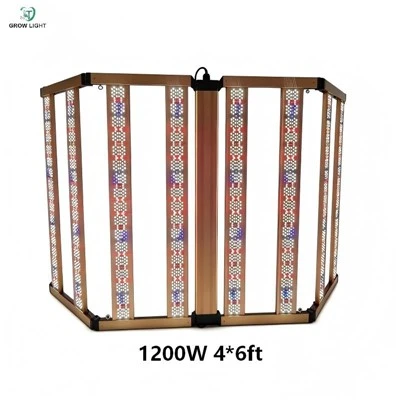
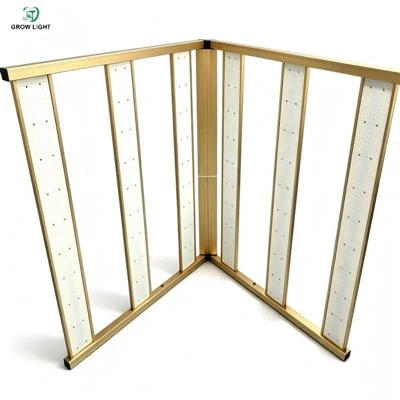
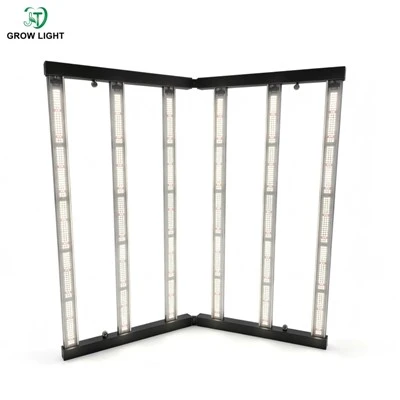
This is where LED grow lights tube systems show their advantage. Linear fixtures follow standardized dimensions. Mounting logic stays consistent. Power distribution is straightforward. The system behaves the same way whether you install ten units or ten thousand.
In contrast, complex fixtures often rely on fine-tuned positioning, precise spacing, or multi-variable configuration. These requirements are manageable in a pilot room. They become liabilities when speed and scale matter more than perfection.
When Expansion Speed Outpaces Fine-Tuning Ability
As operations grow, the ability to fine-tune every room diminishes. Decisions must be made quickly, and systems must tolerate imperfect execution.
This is another reason LED tube grow lights are easier to scale. Their linear structure, fixed form factor, and predictable light distribution reduce the need for precision adjustments during installation. Shelves line up. Light spacing remains intuitive. Output behaves consistently across racks.
Structural stability plays a bigger role here than most people realize. In large projects, fixtures are installed, removed, reinstalled, and sometimes relocated entirely. A lighting system designed only for ideal conditions often degrades under this kind of handling.
This is where construction details matter. Thicker aluminum housings, like those used in JTGL's LED tube grow lights, aren't about aesthetics or marketing. They maintain structural integrity and stable heat dissipation through repeated installation cycles and continuous operation. That stability translates directly into scalability, because the system doesn't change behavior as it grows.
Scaling Breaks When Variability Creeps In
Most large-scale cultivation failures don't happen because something stops working. They happen because results stop matching expectations.
One room runs warmer. Another shows slower vegetative growth. A third requires more labor to manage canopy uniformity. Individually, these issues seem manageable. At scale, they become systemic.
Lighting is a major contributor to this kind of variability. Inconsistent photon distribution, uneven thermal behavior, or subtle spectral differences can compound across rooms and cycles.
This is where full spectrum LED grow light tube systems prove their value. They deliver balanced, familiar spectral output that plants respond to predictably. When combined with linear light distribution, the result is a growing environment that behaves similarly from one rack to the next and from one room to the next.
Scalability depends on reducing variance. The more predictable the lighting system, the easier it is to maintain uniform growth patterns across expanding facilities.
This is also where multiple spectrum options within the same LED grow lights tube platform become strategically important. When a facility expands into new crop types or adjusts growth strategies, the ability to change spectrum without redesigning the entire lighting layout keeps expansion manageable instead of disruptive.
Maintenance and Environment Matter More as Scale Increases
As facilities grow, so does exposure to environmental stress. More rooms mean more humidity zones. More racks mean more irrigation cycles. Cleaning routines become more aggressive and more frequent.
Lighting systems that tolerate only ideal conditions tend to fail prematurely in these environments. Water ingress, condensation, and thermal fatigue quietly shorten lifespan and increase maintenance demands.
This is why IP65-rated LED tube grow lights are particularly well-suited for scalable operations. Their sealed design protects internal components from moisture exposure that becomes unavoidable at scale. The goal is not waterproofing for extreme events, but long-term resilience under daily operating conditions.
JTGL's LED tube grow lights are designed with this reality in mind. IP65 protection, combined with robust thermal management and durable construction, allows the lighting system to maintain consistent performance even as the facility expands and operational complexity increases.
In large operations, durability is not about avoiding failure - it's about avoiding variability.
Clear Use Cases Make Scaling Easier
LED tube grow lights scale best when their role within the system is clearly defined. They excel in propagation rooms, vegetative stages, nursery environments, and multi-layer rack systems where consistency and control outweigh the need for extreme intensity. In these scenarios, full spectrum LED grow light bars and tubes provide exactly what the system needs - no more, no less.
Trying to force a single lighting solution to cover every growth stage often complicates scaling. Successful projects define boundaries early and deploy lighting systems where they perform best. This clarity simplifies replication and reduces the risk of unintended consequences during expansion.
When LED Tube Grow Lights Are Not the Right Scaling Tool
Scalability does not mean universality.
In high-ceiling, single-layer flowering rooms requiring deep canopy penetration and very high PPFD levels, LED tube grow lights are not the most effective option. Attempting to scale them into these roles introduces inefficiencies rather than solving them.
Understanding where LED tube grow lights do not belong strengthens their position where they do. Scalability is about deploying the right tool repeatedly - not forcing one tool to do everything.
Scaling Is About Behavior, Not Specs
The reason LED tube grow lights are easier to scale has little to do with innovation and everything to do with behavior.
- They behave predictably across rooms.
- They tolerate imperfect installation.
- They integrate cleanly into standardized rack systems.
- They reduce environmental sensitivity as facilities grow.
Manufacturers like JTGL focus on these realities rather than chasing novelty. Our LED tube grow lights are built to support long-term expansion by minimizing the variables that make scaling difficult in the first place.
In commercial cultivation, scalability is earned by systems that don't demand constant attention. LED tube grow lights achieve this by staying within their strengths - and letting the operation grow around them instead of fighting them. That is why, when growth moves from ambition to execution, LED tube grow lights remain one of the easiest lighting solutions to scale.