When growers compare lights, they usually look at wattage, efficacy, spectrum and price. Those numbers matter. But after years of talking to buyers, I can tell you the question that decides whether a light still works well after three years is rarely on the spec sheet: how was it actually built?
A good LED grow light manufacturer controls quality long before the final test. The parts, the circuit board, the soldering, the heat design and the finished-light testing all work together. In this article, we'll take you onto the SMT line at JT Grow Light and explain, in plain words, why this step deserves a buyer's attention.
SMT stands for Surface Mount Technology. In simple terms, it is how the small electronic parts, including the LEDs, get fixed onto a printed circuit board (PCB).
Here is the basic flow on a typical line:
- Solder paste is printed onto the bare PCB.
- A pick-and-place machine sets each part in its exact position.
- The board goes through a reflow oven, where the paste melts and forms the solder joints.
- The board is inspected before it moves on to light assembly.
If you have ever wondered how LED grow lights are made, this is the heart of it. A machine does the placing, so the position of each part is far more consistent than with hand work.
One honest point: SMT is only one stage. After it, the boards still need to be mounted, wired, connected to the driver, assembled into the housing and tested. SMT does not decide efficacy or lifespan by itself. It is one link in the chain, but a weak link here can cause problems that are hard to fix later.

Why SMT Quality Affects Your Grow Light's Performance
Many buyers ask me, "If the LED chips are good, isn't the light good?" Not quite. Good chips are the starting point. What happens next is just as important.
Placement accuracy
Each part must sit in the right spot and face the right way. A part that is off-position can lead to a weak solder joint or a circuit fault.
Solder joint quality
A solder joint does two jobs: it carries current and it holds the part in place. A poor joint can cause flickering, dead LEDs or a section of the light going out. In a grow room that runs 12 to 18 hours a day, small defects show up sooner than you might expect.
Batch consistency
This one matters most for commercial projects. If you order 200 lights for a facility, you want light number 200 to match light number 1. Automated production, with fixed programs and process control, makes that much easier.
Here is a simple comparison:
| Factor | Mainly manual assembly | Automated SMT line |
|---|---|---|
| Part placement | Depends on the worker | Set by machine program |
| Batch consistency | Can vary between batches | Easier to keep consistent |
| Production speed | Slower | Faster, suited to volume orders |
| Traceability | Often limited | Easier to record by batch |
| Best suited for | Very small runs, repairs | Wholesale LED grow lights and volume projects |
The Heat Factor: Why Soldering and Cooling Go Together
LEDs turn most of their input power into light, but a meaningful share still becomes heat. If that heat is not carried away, the light runs hot, and hot LEDs lose output faster. As a general rule, LED lifespan falls as junction temperature rises.
This is where SMT and thermal design meet. Heat flows from the LED through the solder joint into the PCB, and then into the aluminum body. A weak or uneven joint can slow that path.
A few numbers help here:
Lead-free solder (such as the common SAC305 type) melts at about 217°C, and reflow ovens peak at roughly 240–250°C. The temperature profile has to be controlled carefully, because too much or too little heat creates defects.
Aluminum is widely used for heat sinks because it conducts heat well, roughly 200 W/m·K for common alloys, compared with only about 0.2 W/m·K for typical plastics.
So when you evaluate a commercial LED grow lights supplier, ask about the whole heat path, not just the heat sink size.
What Buyers Should Check Before Choosing a Factory
Owning an SMT machine is a good start, but it is not proof of quality. What counts is how the factory uses it. Here are the questions I would ask any LED grow light factory.
Incoming material checks
Does the factory inspect PCBs and components before production? Are materials tracked by batch? For repeat orders, this keeps the product stable over time.
Process control
Are placement and soldering settings matched to the product design and parts used? A stable process lowers the chance of defects.
Inspection after assembly
Factories use different methods, and each has its own strengths:
| Inspection method | What it catches | Good to know |
|---|---|---|
| Visual check | Obvious placement and solder problems | Depends on the inspector |
| Solder joint check | Joint shape and bridging | Useful for spot checks |
| AOI (automated optical inspection) | Missing, shifted or reversed parts | Fast, good for volume |
| Functional test | Whether the board actually lights and works | Confirms working state |
Ask which methods your supplier actually uses, and for which stage.
How problems are handled
Finding a defect is only half the job. A good factory also fixes the cause so it does not happen again. Ask whether records are kept and whether you can get quality data that matches your order.
For larger or repeat orders, this paperwork matters more than factory size or the number of machines.
From SMT to the Finished Light: What Else Counts
Good SMT work still has to be backed by the rest of the product. For a grow light, I would look at five things.
LED chips and spectrum
Spectrum should fit the crop and stage. For example, many growers choose a full spectrum with added red or far-red for flowering. At JT Grow Light, we use Samsung LEDs in our lights and can adjust the spectrum for custom projects.
01
Driver quality
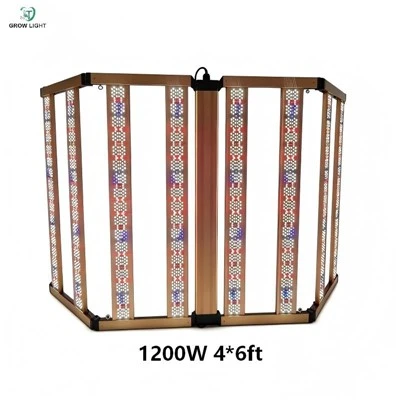
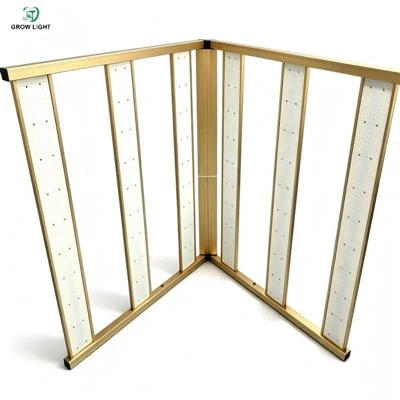
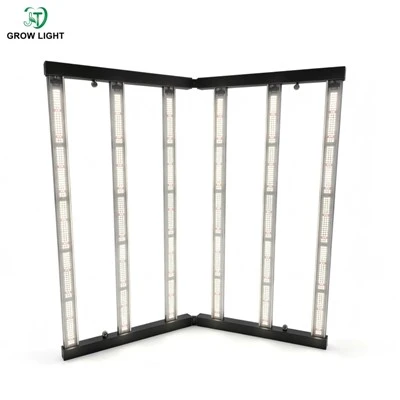
The driver controls power and dimming. Check the input voltage range, dimming method and safety approvals. Our foldable lights, for example, work across a wide input range of AC100–277V.
02
Efficacy (PPE)
PPE shows how many micromoles of light you get per joule of electricity (µmol/J). Higher is better, because you get more light for the same power bill. Today, many quality commercial LED fixtures fall in the 2.5 to 3.0 µmol/J range, and our 720W foldable light reaches 2.8+. Don't confuse PPE with PPFD, which is the amount of light landing on a given spot of your canopy (µmol/m²/s).
03
Heat design
As covered above: aluminum structure, heat path, and how the light behaves at real working temperatures.
04
Final testing
Electrical tests, dimming checks, light output and a burn-in run are all useful. Burn-in helps catch early failures, but it does not by itself prove a fixed lifespan.
05

Real-World Scenario: A Buyer Comparing Suppliers
A grower from South America recently sent inquiries to several suppliers for a custom 720W foldable LED Grow light. The quotes looked similar. What helped our team stand out was not a lower price. We explained the build process, showed our SMT line and testing steps, and added a far-red spectrum at no extra custom fee. The buyer chose us because they could see how the product would be made, not just read a spec sheet.
This is a common pattern. When prices are close, transparency wins.
Working With JT Grow Light
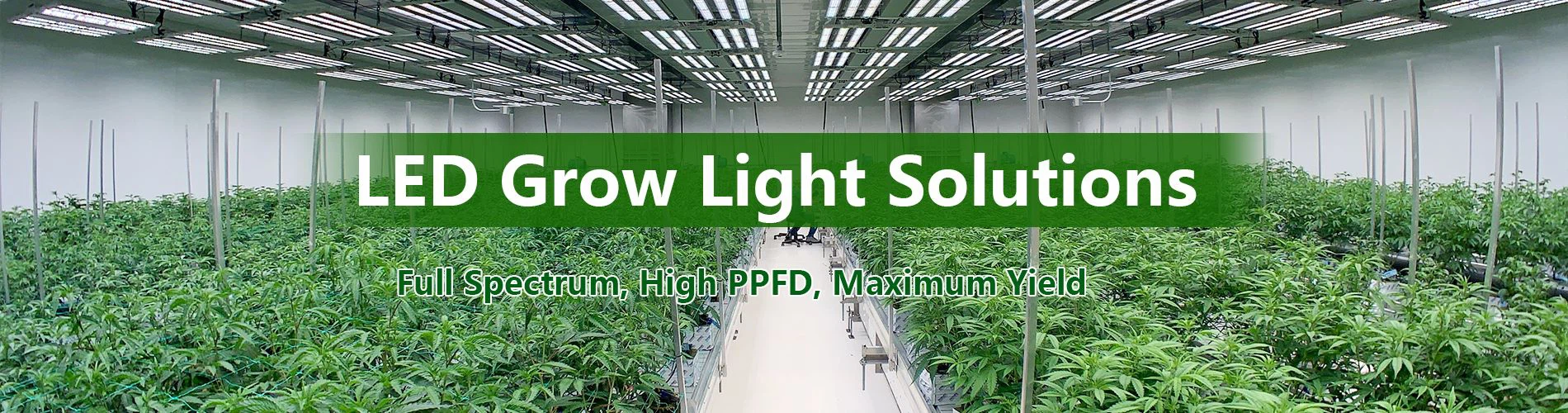
We run our own SMT line and four production lines, with output of 8,000+ units per month. Our range covers T8 and T12 tubes for vertical racks, high-efficacy top lights for greenhouses, foldable and detachable commercial lights for indoor rooms, and under-canopy lights. If you need an LED grow light supplier in China that can explain its process clearly, or an ODM LED grow light manufacturer for your own brand, we are happy to talk through your project, including power, size, spectrum, dimming and installation conditions.

FAQ
Q: What is SMT in LED grow light manufacturing?
A: SMT (Surface Mount Technology) is the process of placing small electronic parts, including LEDs, onto a circuit board using automated machines, then soldering them in a reflow oven. It is one important stage in building a grow light.
Q: Does an SMT line guarantee a better LED grow light?
A: No. It helps with accuracy and consistency, but the final quality also depends on LED chips, the driver, heat design, testing and quality control. Ask to see the whole process, not just the machine.
Q: How can I tell if an LED grow light factory is reliable?
A: Ask about incoming material checks, inspection methods, test records and how problems are handled. A reliable factory can answer clearly and share data that matches your order.
Q: What is the difference between PPE and PPFD?
A: PPE (µmol/J) measures how efficiently a light turns electricity into usable light. PPFD (µmol/m²/s) measures how much light reaches a specific spot on your canopy. One is about the light's efficiency, the other about the light on your plants.
Q: Can I order OEM or custom LED grow lights in volume?
A: Yes. At JT Grow Light, we support custom power, spectrum, color, dimming and logo for distributors and brand owners. Contact us with your target market and crop, and we will suggest a suitable setup.