
What Wattage Actually Tells You
Wattage measures electrical power consumption, how much energy a fixture draws from the wall. It says nothing directly about how much of that energy actually converts into usable light your plants can photosynthesize. The variable connecting the two is efficacy, measured in micromoles of photosynthetic photons delivered per joule of energy consumed (μmol/J), and this figure varies considerably between fixtures even at identical wattage ratings.
Two fixtures can draw exactly the same power and deliver noticeably different amounts of usable light, because wattage tells you what goes in, not what comes out the other end as PAR your plants can actually use.
Why Two Fixtures at the Same Wattage Can Perform Very Differently
Diode Quality and Binning
LED diodes vary in efficiency even within the same general product category, and manufacturers sort, or "bin," diodes by performance characteristics. Higher-bin diodes convert more electrical energy into usable light per unit of power, while lower-bin diodes, often used to hit an aggressive price point, simply produce less light for the same power draw.
This binning process exists because even diodes manufactured on the same production line show natural variation in output and efficiency, and separating them into performance tiers lets manufacturers sell higher-performing bins at a premium while routing lower bins into budget product lines. A fixture built entirely from top-tier binned diodes costs more to produce than one using a mix of lower bins, and that cost difference shows up directly in both the purchase price and the real-world efficacy gap between otherwise similar-looking fixtures. Asking a supplier which diode bin their fixtures use, rather than just the diode brand name, is a more specific and useful question than it might initially sound, since the same diode manufacturer can supply components spanning a meaningful efficiency range depending on which bin gets specified.
Driver Efficiency Losses
The driver converting incoming electrical current into what the LED diodes actually need isn't perfectly efficient, and quality varies significantly between products. A well-built driver commonly operates in the 90-95% efficiency range, while a lower-quality unit can lose meaningfully more power as waste heat during that conversion, power that never reaches the diodes as usable output at all.
Thermal Management Affecting Sustained Output
LED output and lifespan both degrade faster under excess heat, and fixtures with inadequate heat sink design or airflow can show reduced actual output once running at operating temperature for an extended period, even if their rated specs looked identical to a better-cooled competitor on a cool bench test at power-on.
This matters more than a quick spec comparison suggests, since manufacturer PPF figures are commonly measured shortly after power-on under controlled conditions, not after hours of continuous operation in a warm commercial grow room. A fixture with a well-engineered heat sink and adequate airflow tends to hold closer to its rated output over a full daily photoperiod, while a poorly cooled fixture can see output drift downward as internal temperatures climb during extended runtime, meaning the PPFD your plants actually receive several hours into the light cycle may be measurably lower than the number printed on the box. Over the fixture's full multi-year service life, this same thermal stress also tends to accelerate long-term lumen depreciation, meaning a poorly cooled fixture doesn't just underperform its spec sheet on day one, it typically reaches meaningful output decline faster over its operating lifespan than a well-engineered equivalent.
The Number That Actually Matters, Cost Per Micromole, Not Cost Per Watt
This is exactly where two fixtures with the same label on the box can end up delivering very different results in your grow room. A more meaningful way to compare fixtures is cost per micromole of light actually delivered per second, rather than cost per watt of power consumed, since this accounts for the real efficacy difference between products rather than assuming all wattage is created equal.
Example: Fixture A costs $800 and delivers 2,400 μmol/s of total photosynthetic photon output. Fixture B costs $650 and delivers 1,800 μmol/s. Fixture A's cost per μmol/s is $0.33, while Fixture B's is $0.36, meaning the seemingly more expensive fixture actually delivers better value per unit of usable light, despite the higher sticker price.
Comparison Table, Two 1200W Fixtures Compared on Paper vs Reality
|
Spec |
Fixture A (Premium Diodes, Efficient Driver) |
Fixture B (Budget Diodes, Basic Driver) |
|
Rated Wattage |
1200W |
1200W |
|
Efficacy |
~2.8 μmol/J |
~2.1 μmol/J |
|
Total PPF Output |
~3,360 μmol/s |
~2,520 μmol/s |
|
Driver Efficiency |
~93% |
~85% |
|
Real-World PPFD Delivered (same coverage area) |
Meaningfully higher |
Meaningfully lower |
These are illustrative figures showing how the same wattage rating can hide substantial real-world performance differences, not specific claims about any particular product line.
Commercial 1000W LED Grow Light, When This Tier Is Actually the Smarter Choice
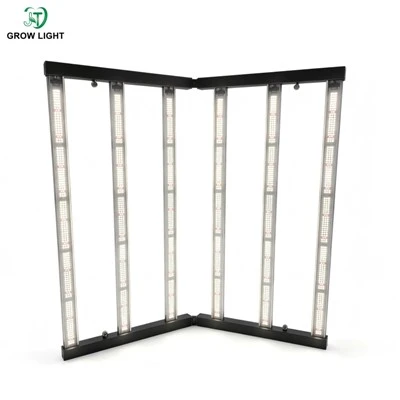
This is worth stating plainly, since it directly challenges the "bigger number is better" instinct: a well-engineered Commercial 1000W LED Grow Light with high efficacy diodes and an efficient driver can genuinely outperform a poorly built 1200W fixture in actual usable light output, while consuming less electricity in the process. Choosing based on wattage alone, without checking efficacy, can lead a grower to pay for more power draw while actually receiving less usable light than a smarter, lower-wattage alternative would have delivered.
Running this out across a full facility makes the point concrete. A 1000W fixture at 2.8 μmol/J delivers roughly 2,800 μmol/s of total output, while a 1200W fixture at 2.1 μmol/J delivers roughly 2,520 μmol/s, less total usable light despite drawing 200 additional watts continuously. Across a facility running 50 fixtures for 16 hours a day, that 200W-per-fixture difference adds up to a substantial amount of extra electricity consumption purely to deliver less light than the lower-wattage, higher-efficacy alternative. This is exactly the kind of comparison a wattage-only evaluation would miss entirely, since both fixtures would simply be filed under "1000W" and "1200W" on a spec sheet with no indication of which one actually serves the crop better per dollar of electricity spent.
Commercial 1200W LED Grow Light, When Higher Wattage Is Genuinely the Right Call
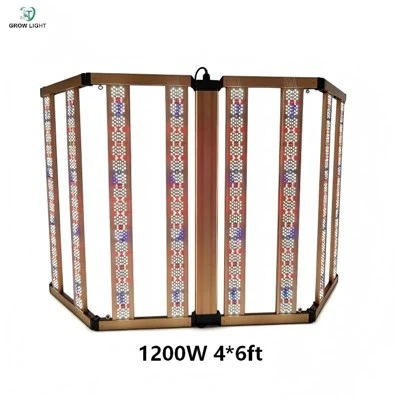
None of this means 1200W-tier fixtures are a bad choice, quite the opposite in the right situation. A Commercial 1200W LED Grow Light genuinely makes sense when covering a larger footprint, working with a higher ceiling requiring more total output to maintain target PPFD at a greater hanging distance, or consolidating fixture count across a large facility to simplify installation and maintenance. The point isn't that higher wattage is wrong, it's that the wattage number alone shouldn't be the deciding factor without confirming the efficacy and real output behind it.
1100W LED Full Spectrum Commercial Grow Light, A Middle Ground Worth Considering
A 1100W LED Full Spectrum Commercial Grow Light often sits in a practical middle ground for growers who need more coverage than a 1000W fixture provides but don't need the full jump to 1200W-tier output. This tier can offer a reasonable balance between initial fixture cost, coverage area, and total facility power draw, particularly for operations sizing their lighting layout carefully around actual canopy dimensions rather than defaulting to the highest wattage tier available.
Common Mistakes When Comparing Grow Lights by Wattage
Comparing fixtures purely on wattage without checking efficacy. As shown throughout this article, identical wattage ratings can hide substantial differences in actual usable light output.
Evaluating total price without calculating cost per micromole of delivered light. A higher sticker price can still represent better real value once actual output is factored in.
Ignoring driver efficiency and thermal management in the comparison. These factors directly affect how much of that wattage rating actually reaches your plants as usable light, both initially and over the fixture's operating life.
Assuming higher wattage automatically means higher yield. As covered in earlier discussions of PPFD requirements, exceeding a crop's actual light needs doesn't scale yield proportionally, and can waste both money and energy.
Trusting a manufacturer's PPF figure without asking when and how it was measured. As covered above, output measured on a cool bench moments after power-on doesn't necessarily reflect what a fixture delivers hours into a normal daily photoperiod once it's reached full operating temperature in a warm grow room.
Industry Trends: Why Efficacy Is Replacing Wattage as the Primary Buying Metric
Commercial horticultural lighting procurement has shifted noticeably in how buyers evaluate fixtures.
More commercial buyers are requesting efficacy data (μmol/J) and total PPF output figures upfront, rather than comparing quotes primarily on wattage and price alone
Third-party test reports and independent PAR verification are increasingly expected as standard supporting documentation, reflecting growing buyer sophistication around distinguishing marketing claims from measured performance
Facility-scale buyers are increasingly calculating total cost of ownership, including electricity cost per unit of delivered light over the fixture's operating life, rather than evaluating purchase price and wattage as standalone decision points
Regulatory & Testing Standards Worth Knowing
While there's no single mandatory certification specifically governing horticultural lighting efficacy claims, third-party photometric testing following established PAR and PPF measurement methodologies is commonly used across the industry to verify manufacturer performance claims. Asking a supplier which testing lab performed their efficacy verification, and whether that data is available for review, is a reasonable step before relying on any manufacturer's self-reported figures for a significant purchase.
How to Compare Grow Lights the Right Way Before You Buy
Request efficacy data (μmol/J) and total PPF output for each fixture being compared, not just wattage and price
Calculate cost per micromole of delivered light for a true apples-to-apples value comparison
Ask about driver efficiency specifications and thermal management design, since both affect real-world sustained output
Request third-party test data or PAR maps rather than relying solely on manufacturer marketing claims
Size your fixture wattage tier to your actual coverage area and target PPFD, not to whichever number sounds most impressive on a spec sheet
If you're comparing fixtures and want the real efficacy numbers behind the wattage rating, that's the point to ask a commercial LED grow light manufacturer for their actual third-party test data, not just the spec sheet. A supplier confident in their fixture's real performance should have no hesitation providing that documentation, and their willingness to share it tells you almost as much as the numbers themselves.
FAQ
Q: Does higher wattage always mean more light output?
A: No. Wattage measures power consumption, not usable light output. Efficacy, measured in μmol/J, determines how much of that power actually converts to photosynthetically usable light, and this varies significantly between fixtures at the same wattage rating, sometimes by 25% or more between a well-engineered fixture and a budget-focused one.
Q: Why do two grow lights with the same wattage perform differently?
A: Differences in diode quality and binning, driver efficiency, and thermal management design all affect how much usable light a fixture actually delivers, even when two fixtures share an identical wattage rating on their spec sheet.
Q: What is efficacy, and why does it matter more than wattage?
A: Efficacy measures how efficiently a fixture converts consumed electrical power into usable photosynthetic light, expressed in μmol/J. It matters more than wattage because it reflects actual delivered output rather than just how much electricity the fixture draws from the wall.
Q: How do I calculate cost per micromole for a grow light?
A: Divide the fixture's total price by its total photosynthetic photon flux (PPF) output in μmol/s, giving you a cost-per-output figure that allows fairer comparison between fixtures than price or wattage alone.
Q: When does a 1200W grow light actually make sense?
A: When covering a larger footprint, working with greater hanging height requiring more total output to maintain target PPFD, or consolidating fixture count across a large facility, assuming the fixture's efficacy genuinely supports that higher output tier.
Q: Can a 1000W grow light outperform a 1200W grow light?
A: Yes, if the 1000W fixture has meaningfully higher efficacy, better diodes and a more efficient driver, it can deliver more usable light output than a poorly engineered 1200W fixture, despite the lower wattage rating.
Q: What causes efficacy differences between similarly rated fixtures?
A: Diode quality and binning, driver conversion efficiency, and thermal management design are the primary factors, with lower-quality components in any of these areas reducing real-world usable light output relative to the fixture's power draw.
Q: How can I verify a grow light's real efficacy before buying?
A: Request third-party test data or independent PAR verification from the manufacturer, rather than relying solely on marketing claims, and calculate cost per micromole using the fixture's actual total PPF output figure.
Final Thoughts, Buy for Output, Not for the Number on the Box
Wattage is an input number, not an output number, and treating it as the primary decision-making metric for a commercial grow light purchase overlooks exactly the variable that actually determines value: how much usable light you're getting for your money and your electricity. Whether you're evaluating a Commercial 1000W LED Grow Light, a Commercial 1200W LED Grow Light, or a 1100W LED Full Spectrum Commercial Grow Light, the wattage tier should follow your coverage and PPFD requirements, not the other way around.
Before finalizing a purchase, it's worth requesting real efficacy data and calculating cost per micromole across every fixture you're comparing, rather than letting the biggest number on the spec sheet make the decision for you.