
Why "It Looks Bright" Isn't a Testing Method
Human eyes are genuinely bad instruments for evaluating horticultural lighting, and this isn't a minor caveat, it's a fundamental mismatch. Our visual system is most sensitive to green-yellow wavelengths, while the light plants actually use for photosynthesis draws heavily on red and blue wavelengths that don't register as particularly bright to us. A fixture can look dazzling to the eye while delivering mediocre photosynthetically active output, and the reverse is just as true. Sample testing has to rely on actual measurement instruments, not a visual first impression, because the two don't reliably correlate.
Actual PPFD at Your Target Canopy Distance
PPFD (photosynthetic photon flux density) measures how much usable light is actually reaching a specific surface, and this number changes significantly with distance from the fixture. A product listing's headline PPFD figure was measured at some specific test distance, and if your actual planned mounting height differs from that test condition, the real PPFD hitting your canopy will differ too.
When testing a sample, mount it at your actual intended installation height, then take PPFD readings at multiple points across the coverage area, not just directly beneath the center of the fixture. Uniformity matters as much as the peak number, a fixture with an impressive center reading but a sharp falloff toward the edges can leave your outer canopy underlit even though the spec sheet number looked strong.
PPF and PPE (Efficacy) Not Just Wattage
Beyond PPFD, two other metrics tell you what's actually happening inside the fixture. PPF (photosynthetic photon flux) is the fixture's total photosynthetic light output, essentially how many usable photons it produces per second across its entire coverage area. PPE (photosynthetic photon efficacy) divides that output by total electrical input watts, giving you a genuine efficiency figure in µmol/J, how much usable light you get per unit of electricity consumed, rather than judging efficiency by wattage alone.
This distinction matters because wattage tells you what a fixture consumes, not what it produces. Current industry benchmarks from the DesignLights Consortium's horticultural certification program set a minimum PPE threshold of 2.5 µmol/J for qualification under their latest technical requirements, a bar that's meaningfully more than 45% above the most efficacious non-LED lighting option still in commercial use. Testing your sample's actual PPE against this kind of reference point tells you whether you're looking at a genuinely efficient modern fixture or one trading on wattage numbers alone.
Comparison Table Key Metrics to Measure When Testing a Grow Light Sample
|
Metric |
What It Measures |
Why It Matters |
|
PPFD |
Usable light intensity reaching a specific surface point |
Determines actual light delivered to your canopy at your real mounting height |
|
PPF |
Total photosynthetic light output of the fixture |
Reflects overall fixture output capacity, independent of coverage distance |
|
PPE (efficacy) |
Usable light output per watt of electrical input |
The real efficiency benchmark, more meaningful than wattage alone |
|
Actual input power |
Real measured electricity draw |
Should be checked against the fixture's nameplate wattage rating |
|
Spectrum distribution |
Actual wavelength composition of emitted light |
Confirms marketing claims like "full spectrum" against real output |
|
Thermal stability |
Output consistency under sustained operation |
Reveals whether cooling design supports the fixture's rated performance long-term |
Actual Input Power vs Nameplate Wattage
A fixture labeled "1200W" doesn't always draw exactly 1200W in practice. Using an actual power meter on your sample to measure real input power, and comparing that figure against the nameplate rating, is a simple but frequently skipped verification step. Some variance within a reasonable tolerance is normal, but a significant gap between claimed and measured wattage can point to driver quality issues or, less charitably, inflated nameplate specifications that don't hold up under direct measurement.
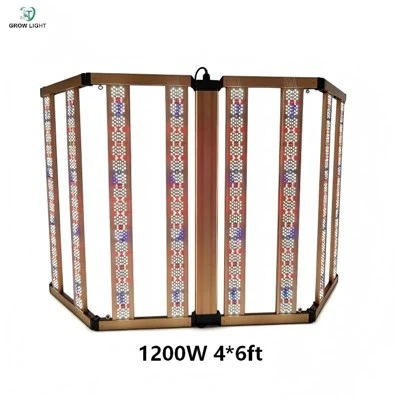
Commercial 1200W LED Grow Light - A Worked Example of Sample Testing in Practice
Here's what a complete verification pass looks like using a Commercial 1200W LED Grow Light as the example. Start by measuring actual input power with a power meter, confirming it's reasonably close to the 1200W nameplate figure. Next, mount the sample at your actual planned installation height and take a PPFD reading grid across the intended coverage area, not just a single center-point measurement. From there, calculate PPE by dividing the fixture's total photosynthetic output by the measured input wattage, giving you a genuine efficiency figure to compare against published benchmarks. This sequence, power check, distributed PPFD mapping, PPE calculation, is the actual substance of a real sample test, versus simply confirming the light turns on and looks reasonably bright.
Spectrum Distribution Test, Not Just "Full Spectrum" Claims
Full spectrum" is one of the most overused and least specific phrases in grow light marketing. A genuine sample test uses a spectrometer to measure the actual wavelength distribution coming out of the fixture, confirming the real red-to-blue ratio, checking whether promised far-red or UV bands are actually present, and comparing that measured output against whatever the product listing claimed. DLC's horticultural certification framework specifically requires spectral distribution reporting covering both the photosynthetically active radiation range and the broader photobiologically active radiation range, precisely because "full spectrum" as a marketing term needs actual measured data behind it to mean anything concrete.
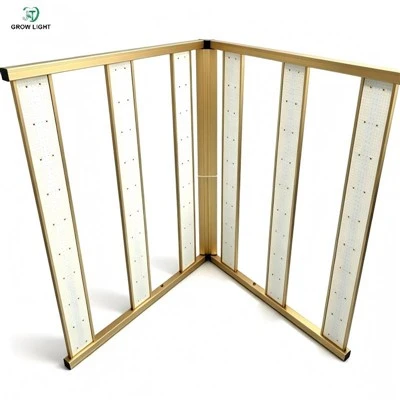
Commercial 1000W LED Grow Light - Checking Spectrum Consistency Across Sample Units
If you're ordering multiple sample units of a Commercial 1000W LED Grow Light, perhaps from different production batches, or simply to confirm consistency before a large order, it's worth testing more than one unit rather than assuming a single sample represents the entire batch. Compare spectrum readings and PPFD output across the sample units. Meaningful variation between units claiming to be identical is a red flag worth raising with your supplier before committing to a bulk order, since that same inconsistency, multiplied across a full commercial installation, becomes a real uniformity problem across your growing space.
Thermal Performance Under Realistic Operating Conditions
A quick power-on test tells you almost nothing about how a fixture performs after hours of continuous operation in a real growing environment. Run your sample continuously for an extended period, ideally several hours up to a full day, under conditions that mimic your actual installation, similar ambient temperature and humidity to your greenhouse or vertical farm space. Monitor whether PPFD output and input power stay stable or start drifting as internal temperatures climb. This directly connects to lumen depreciation concerns down the line, since inadequate thermal management during extended operation is one of the primary drivers of accelerated light output decline over a fixture's service life.
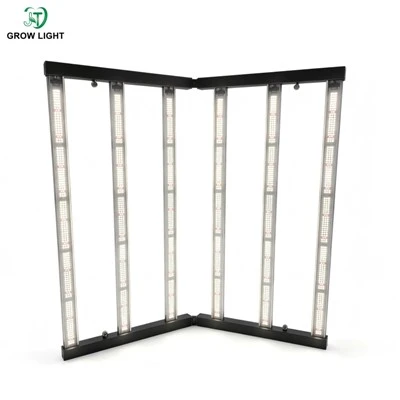
1100W LED Full Spectrum Commercial Grow Light - Why Thermal Testing Matters Most for High-Power Fixtures
Higher-wattage commercial fixtures like an 1100W LED Full Spectrum Commercial Grow Light pack more LED chips into a single housing, generating substantially more total heat than lower-power units. This makes thermal testing especially important at this power tier, since inadequate cooling design has more heat to manage and less margin for error. Extending your thermal test duration and running it under conditions matching your actual planned installation environment, rather than a cool, well-ventilated test bench, gives you a far more realistic picture of how the fixture will actually perform once installed at scale.
Industry Trends - Why More Buyers Are Requesting Third-Party Test Reports Alongside Samples
Large commercial buyers are increasingly pairing their own sample testing with third-party verification, requesting documented test reports from independent testing organizations rather than relying solely on in-house measurements. This trend has accelerated as DLC's horticultural certification program has tightened its own requirements over successive revisions, with the current technical requirements version raising the minimum PPE threshold to 2.5 µmol/J, a meaningful increase over the previous version's standard, and delisting a portion of previously qualified products that no longer meet the updated bar. This kind of independently verified, versioned certification data gives buyers a documented cross-check against their own sample results rather than relying on measurement alone.
Regulatory Context Worth Knowing
The DesignLights Consortium maintains a Horticultural Qualified Products List, a searchable public database of fixtures that have passed independent testing against defined PPE, spectral distribution, and thermal longevity requirements, commonly including L80 or L90 lifetime metrics showing how long a fixture maintains 80% or 90% of its original output. UL 8800, the Standard for Horticultural Lighting Equipment and Systems, underpins electrical safety requirements referenced by the DLC program, and UL also provides photobiological safety testing under IEC 62471 covering human eye and skin exposure considerations for horticultural lighting. Checking whether a specific product appears on the DLC's public QPL database is a concrete, verifiable step worth taking alongside your own sample testing, particularly for markets where utility rebate programs require DLC-listed fixtures as a qualification condition.
Real Example - A Sunhing Stones Case Study on Catching a Spec Mismatch Before Bulk Order
We've worked with commercial growing clients through Sunhing Stones who, during sample testing ahead of a large facility order, measured actual PPE and PPFD figures that fell meaningfully short of what the product listing had advertised. Raising this discrepancy directly with the supplier before finalizing the bulk order allowed the specification gap to be resolved, avoiding a much larger problem that would have surfaced only after a full shipment arrived and got measured for the first time.
(Note: this case is illustrative. Please share the actual client background and specific details so this section can be updated with accurate information before publishing.)
A Note on Industry Standards and Recognition
Within the commercial horticultural lighting industry, there's a clear and growing expectation that buyers verify supplier claims through actual instrument-based sample testing and independent certification checks, rather than relying on product listing specifications or a visual first impression alone.
(Note: I don't currently have verified details on what ESTA specifically refers to in this context or its direct connection to your product line. Please share the specific details so this section can be written accurately.)
Common Mistakes When Sample-Testing Commercial Grow Lights
A handful of mistakes account for most sample-testing gaps that lead to unpleasant surprises after a bulk order:
Judging brightness visually instead of measuring with instruments. Human vision doesn't correlate reliably with photosynthetically active light output.
Testing only immediately after power-on, skipping extended thermal testing. Output drift under sustained operation is exactly what a quick test misses entirely.
Testing a single sample unit and assuming it represents the whole batch. Meaningful unit-to-unit variation is worth catching before, not after, a large order ships.
Checking PPFD alone without calculating PPE. A high PPFD reading paired with excessive power consumption isn't actually an efficient fixture, and wattage-only comparisons miss this entirely.
A Sample Testing Checklist Before Placing a Bulk Order
Measure PPFD at multiple points across your actual intended mounting height and coverage area, not just a single center-point reading.
Measure actual input power and compare it against the fixture's nameplate wattage rating.
Use a spectrometer to verify actual wavelength distribution, checking specific claims like far-red or UV inclusion against real measured data.
Run an extended thermal test, several hours to a full day, under conditions matching your real installation environment.
Test more than one sample unit if possible, checking for consistency across units before committing to bulk quantities.
Request third-party test reports and check the DLC Horticultural QPL to cross-verify your own sample results.
F A Q
Q: What's the difference between PPFD, PPF, and PPE?
A: PPFD measures light intensity reaching a specific surface point, PPF measures a fixture's total photosynthetic light output, and PPE measures efficiency, usable light output per watt of electrical input. All three tell you something different, and none of them substitutes for the others.
Q: Why shouldn't I trust visual brightness when testing a grow light sample?
A: Human eyes are most sensitive to wavelengths plants don't primarily use for photosynthesis, meaning a fixture can look bright without delivering strong photosynthetically active output, or the reverse. Instrument-based measurement is the only reliable way to evaluate actual performance.
Q: How long should thermal testing run before I trust the results?
A: Several hours up to a full day of continuous operation under conditions similar to your actual installation environment gives a far more realistic picture than a brief power-on check, since output drift from heat buildup often only becomes apparent after extended operation.
Q: Does actual input power always match the nameplate wattage?
A: Not always. Some variance is normal, but a significant gap between measured and claimed wattage can indicate driver quality issues or inflated nameplate specifications, which is exactly why measuring it directly with a power meter matters.
Q: Should I test more than one sample unit before placing a bulk order?
A: It's worth doing when possible, particularly for large orders, since meaningful variation between units claiming to be identical can indicate a consistency problem that will show up at scale across a full commercial installation.
Q: What third-party certifications should I ask about for commercial grow lights?
A: The DesignLights Consortium's Horticultural Qualified Products List is a widely referenced independent verification source, along with UL 8800 certification for horticultural lighting electrical safety, both worth checking alongside your own sample testing.
Q: How do I know if a PPFD reading is accurate for my actual setup?
A: Measure at your actual planned mounting height and across multiple points in your real coverage area, rather than relying on a single headline PPFD figure from a product listing that may have been measured under different distance conditions.
Q: What should I do if my sample test results don't match the product listing?
A: Raise the discrepancy directly with your supplier before placing a bulk order. This is exactly the kind of gap sample testing is meant to catch, and addressing it at this stage avoids a much larger problem after a full shipment arrives.
Final Thoughts A Real Sample Test Uses Instruments, Not Impressions
The real value of sample-testing a commercial grow light comes from measuring PPFD, PPE, actual input power, spectrum distribution, and thermal stability with real instruments, not from forming a subjective impression of how bright something looks under normal room lighting. Whether you're evaluating a Commercial 1200W LED Grow Light, a Commercial 1000W LED Grow Light, or an 1100W LED Full Spectrum Commercial Grow Light, this is exactly the step that catches a spec mismatch before it becomes a full-facility problem.
Before placing your next bulk order, it's worth running your sample through this full metric checklist and requesting third-party test documentation from your supplier, rather than trusting a first impression to make a decision that scales across your entire growing operation.