Why Install Supplemental Grow Lights for Plants? From "Geographical Restrictions" to "Stable Yield Increase"
Due to factors such as latitude, season, and weather, natural light often fails to meet the light quantity (DLI) and light quality (spectral composition) requirements of crops.
Supplemental grow lights, by providing controlled light during critical periods, help growers:
1. Eliminate Geographic and Seasonal Restrictions: In winter, during high temperatures, and on cloudy days, they provide stable light for plants, ensuring they absorb sufficient photons, promoting photosynthesis, and maintaining a healthy growth rate.
2. Improve Yield and Quality: Supplemental grow lights enhance plant photosynthesis, accelerating crop growth, shortening the growing cycle, and increasing yield per unit area. They also increase flowering and fruit set rates, improving product quality.
3. Achieving Controllable Cultivation: Using supplemental lighting allows growers to precisely control the photoperiod and light spectrum, enabling them to improve their cultivation results through advanced agricultural techniques continuously.
In agricultural cultivation, the core of supplemental lighting isn't simply brightness; it's the right amount of PPFD/DLI, a suitable light spectrum, and precise photoperiod control, ultimately improving cultivation efficiency.

The Essential Differences Between Grow Lights and Conventional Lighting LEDs
Although both use light-emitting diodes, lighting is designed for human vision and comfort, while grow lights are designed for crop photosynthesis and morphological development. The differences primarily manifest in:
1. Different Blue Light Layout
1) Lighting typically reduces or adjusts blue light energy distribution for eye protection and color rendering.
2) Grow lights emphasize the crucial role of 440nm blue light in chlorophyll absorption, stomatal opening, and plant compactness.
2. Different Red Light Peak Position and Ratio
1) Grow lights typically emphasize 660nm red light to promote photosynthetic efficiency, induce flowering, and increase biomass accumulation.
2) Red light configurations in lighting fixtures are often focused on color rendering and aesthetic comfort, without specifically optimizing the peak position and ratio of red light, which is critical for plants.
3. Different Spectra
Lighting prioritizes a high color rendering index (CRI) and eye comfort, while LED grow lights focus on a functional spectrum and light efficiency (μmol/J) that aligns with crop photophysiology.
Therefore, general lighting LEDs cannot effectively replace grow lights. Especially in commercial cultivation, where high yields, high quality, and high efficiency are key goals, specialized LED grow lights are more necessary.
The Importance of Red and Blue Light for Plant Growth
Research by numerous experts has revealed that 660nm red light and 440nm blue light are crucial wavelengths for plants from seedling stage to growth, flowering, and fruiting.
1. 660nm red light: This is the primary wavelength for photosynthesis. When combined with blue light, photosynthesis is more efficient, increasing photosynthetic rates, promoting flowering, and biomass accumulation.
2. 440nm blue light: In the early stages of plant growth, it supports root growth, promotes stronger trunks, and enhances leaf size.
In indoor cultivation, a balanced ratio of red and blue light addresses the core needs of plants, from vegetative growth to flowering and fruiting. This is the fundamental principle behind the development of efficient LED grow lights.
Why choose full-spectrum grow lights?
Although plants absorb red and blue light most strongly, other wavelengths (such as green, some yellow light, and far-red light) play important roles in canopy penetration, morphological development, and light signal transmission.
The value of full-spectrum grow lights lies in:
1. Better canopy penetration: Green light can penetrate the leaf canopy, increasing overall photosynthesis and benefiting lower leaves, thus promoting consistent growth throughout the plant.
2. Better control of the flowering cycle: Far-red light can inhibit flowering and prolong the flowering cycle, making it suitable for the growth of flowers. 3. A more natural color temperature: This facilitates manual inspections, pest and disease identification, and quality grading.
Numerous studies have found that an LED grow light with a spectrum dominated by red and blue, plus a reasonable proportion of full-spectrum white light, strikes a balance between energy efficiency and crop response.

Supplemental Grow Light Application Strategies (From "Quantity" to "Spectrum")
1. Light Intensity Design: PPFD and DLI
PPFD (μmol·m⁻²·s⁻¹): Instantaneous photon flux density, which determines the current light intensity.
DLI (mol·m⁻²·d⁻¹): Total daily light intensity, highly correlated with yield.
Strategy: Based on the crop and stage target DLI, combined with real-time changes in natural light, supplemental lighting can be used to "make up the difference" and avoid over- or under-intensification.

2. Spectrum Design: Stage and Crop Differences
Vegetative Growth: A slightly higher proportion of blue light results in a compact plant shape and thicker leaves.
Reproductive Growth/Flowering and Fruiting: Enhance 660nm red light with an appropriate amount of far-infrared light (depending on the variety and goals).
Leafy Vegetables/Microgreens: Moderate blue light improves quality and nutrition.
Fruiting Vegetables/Berries: Red light combined with a full spectrum of light enhances photosynthesis and coloration, with far-infrared light used to optimize canopy growth as needed.
3. Time and Light Control: Photoperiod and Dimming
Use timing and dimming (manual, automatic, or sensor-based) to precisely control day length and light intensity, balancing energy savings and growth rhythms.
LED Grow Lights with a dimming interface/controller are recommended for easy zoning and staged management.
The Value of Customized Spectra: From "General Adaptation" to "Targeted Yield Increase"
When cultivation objectives are refined to target specific crops, specific varieties, specific growth stages, and specific flavors/appearances, customized spectra can bring significant benefits:
1. Targeted Control: Adjusting flavor (sugar content, aromatic compounds), color (flower/fruit/leaf color), and plant shape.
2. Optimizing Energy Efficiency: Reducing excess wavelength output without sacrificing production targets, thereby increasing the effective utilization of μmol/J.
3. Differentiated Competitiveness: Establishing a dedicated spectrum formula and cultivation SOP to create standardized output and brand barriers.
Implementation Methods:
Clearly define goals (speed/yield/quality/taste/appearance/stress resistance).
Fine-tune key peak positions and ratios based on the basic spectrum (red, blue, and full spectrum).
Establish control experiments (yield, dry matter, soluble solids, color, resistance, etc.).
Curated into customized spectrum and process parameters (PPFD/DLI/photoperiod/irrigation and nutrition integration).
How to Choose the Right LED Grow Lights?
1. Key Indicators
1) Luminous Efficacy (μmol/J): Higher effective photon output at the same electricity cost.
2) PPFD Uniformity: More balanced plant growth and consistent quality.
3) Spectrum Adjustability: Supports customized spectrum strategies for phased/crop-based growth.
4) Heat Dissipation and Lifespan: Passive/Active Cooling Design, L90/B10, and other indicators, and warranty period.
5) Protection and Safety: IP rating, corrosion resistance, temperature control, and electrical safety certifications.
2. Influenced by the Growing Environment
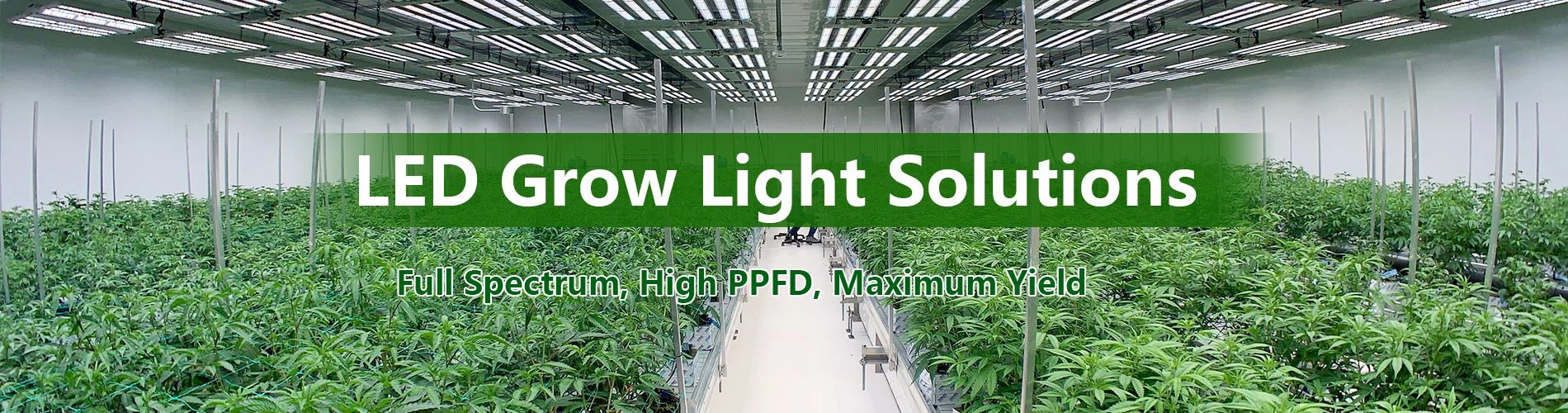
1) Greenhouse Supplemental Lighting: In greenhouses, a small amount of natural light enters. Choosing high-efficiency, long-range lighting can provide supplemental lighting while saving on electricity costs. Therefore, strip or ceiling-mounted LED grow lights are recommended. JT Grow Light offers a variety of supplemental lighting options suitable for greenhouse cultivation, with PPE ratings exceeding 3.4 and hanging heights ranging from 1m to 2m. They are ideal for growing tomatoes, strawberries, cannabis, and other crops.

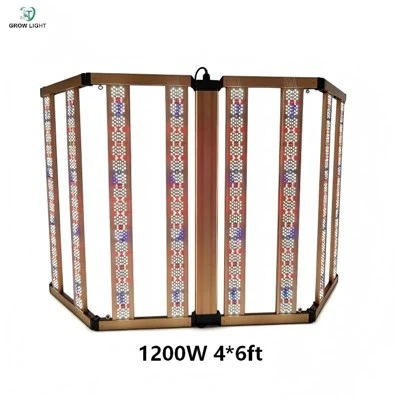
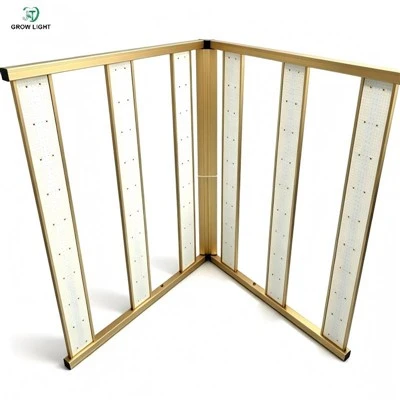
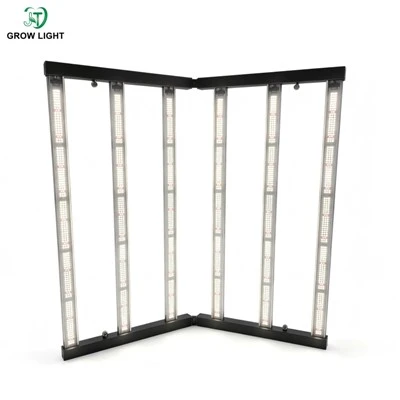
2) Indoor multi-story/vertical farms: Due to the lack of natural light, installation heights are low, and uniform light distribution is required. Therefore, depending on the hanging height and plant light requirements, we recommend foldable and detachable LED grow lights for cannabis cultivation. For vegetable and fruit cultivation with low ceilings, T8 LED grow light tubes and strip-mounted grow lights are recommended. JT Grow Lights has extensive experience in indoor and vertical farming, successfully providing one-stop growing solutions for farmers in Australia, Canada, the United States, Thailand, and other countries.

3) Canopy Lighting: For tall plants like marijuana, tomatoes, and peppers, due to their height, the lower layers absorb less light. Therefore, under-canopy LED grow lights are needed to provide supplemental lighting to ensure that the plants below can also bloom and bear fruit.

If you're unsure how to choose the right LED grow lights for your plants, please feel free to contact JT Grow Light. Our experienced and professional team can provide you with a one-stop growing solution to ensure high yield, high quality, and efficient growth.
Contact Us
Email: sales@china-growlight.com
WhatsApp:+86 135 1069 5807