The Real Question Isn't Which Light Is Cheaper to Buy - It's Which Costs Less Over Time
A greenhouse owner sees an LED quote that runs higher than a familiar HPS package and thinks the price is simply too high. That reaction is common, yet it only looks at the invoice. The real LED vs HPS greenhouse supplemental lighting cost calculation includes electricity, lamp changes, heat load, cooling or heating impact, and available rebates. Over five to ten years the lower operating cost of LED systems usually closes the gap and then pulls ahead. Purchase price alone never tells the full story.
Upfront Cost - LED vs HPS Fixture Pricing for a 1-Acre Setup
Typical Fixture Count Needed to Cover 1 Acre at Target PPFD
One acre is 43,560 square feet. Most vegetable and ornamental crops need supplemental PPFD between 150 and 300 µmol/m²/s. Older 1000 W double-ended HPS layouts often used 400–500 fixtures to hit around 200 µmol/m²/s. Modern high-efficacy LED fixtures deliver the same or better canopy light with lower total wattage and, in many designs, a similar fixture count because of tighter optics. Exact numbers still depend on hang height, uniformity targets, and crop height. A proper photometric plan remains the only reliable way to lock in the count.
Rough Total Fixture Cost Comparison at Scale
HPS still wins on day-one capital cost. LED fixtures usually cost 1.5–2.5 times more per installed kilowatt or per mole of light, depending on efficacy and features. On a full 1-acre install the difference can reach six figures before labor and electrical work. That gap shrinks once utility rebates are applied and once the lower LED wattage reduces the need for heavier electrical infrastructure. Upfront cost favors HPS, but the LED vs HPS greenhouse supplemental lighting cost picture changes as soon as operating expenses enter the spreadsheet.
Electricity Cost - Where the Real Long-Term Difference Shows Up
Typical Input Wattage per Fixture, LED vs HPS, for Similar Light Output
|
Fixture Type |
Typical Wall Draw |
Approx. Efficacy |
Relative Photon Output for Similar Canopy Light |
|
1000 W DE HPS (with ballast) |
1050–1100 W |
1.7–1.9 µmol/J |
Baseline |
|
High-efficacy LED equivalent |
550–700 W |
2.5–3.5+ µmol/J |
Matched or higher |
Modern commercial LEDs turn more of the input power into usable PAR and less into heat. The result is 30–50 % lower lighting electricity for the same photosynthetic output.
Annual Electricity Cost Estimate for a 1-Acre Greenhouse at Typical Operating Hours
A typical supplemental schedule runs 2,000–3,000 hours per year. At commercial rates of $0.10–0.15/kWh, a 1-acre HPS system can easily burn more than one million kWh annually. An LED system delivering similar light cuts that figure by 35–50 %. At $0.12/kWh the annual electricity difference alone often exceeds $50,000–$100,000. Demand charges and time-of-use rates make the savings larger still. These numbers are working estimates; actual utility rates and photoperiods set the final total. This is the single largest driver in the LED vs HPS greenhouse supplemental lighting cost comparison.
Heat Output - A Cost Factor Growers Often Forget
How Much Less Heat LED Fixtures Produce Compared to HPS
Most of the energy that enters an HPS fixture leaves as radiant and convective heat. LED fixtures convert a higher share into photons, so total heat released into the greenhouse drops 40–60 % for the same light level. One documented retrofit cut aggregate annual BTU load from several billion BTUs to less than half.
Cooling Cost Implications in Warmer Climates vs Heating Benefit in Cold Climates
In warm regions the lower heat load reduces ventilation and mechanical cooling demand, cutting both energy and equipment size. In cold climates the radiant heat from HPS can offset some winter heating fuel. Removing that heat may raise heating bills. The net thermal effect must be calculated with local climate data, glazing type, and crop set-points. Leaving heat out of the model distorts the true LED vs HPS greenhouse supplemental lighting cost.
Fixture Lifespan and Replacement Cost Over 10 Years
Typical HPS Lamp Replacement Cycle
Double-ended HPS lamps are rated 10,000–15,000 hours to roughly 90 % of initial output. At 2,000–4,000 hours of annual use that means full re-lamping every two to four years. Labor and lamp costs add up quickly; multi-acre sites can face six-figure re-lamping budgets over a decade.
Typical LED Fixture Lifespan and What That Means for Long-Term Cost
Quality horticultural LED fixtures are rated 50,000–100,000 hours. Over a ten-year horizon most installations need little or no diode replacement. Drivers may eventually require service, yet total maintenance labor and parts stay far below repeated HPS lamp cycles. Avoided re-lamping is a real contributor to payback in the LED vs HPS greenhouse supplemental lighting cost equation.
Matching Fixture Choice to Different Zones in a 1-Acre Layout
Different zones inside a 1-acre greenhouse perform better with different form factors. A practical layout usually mixes several LED types rather than forcing one fixture everywhere.
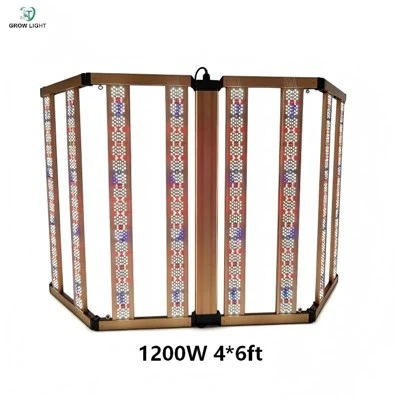
1100W LED Full Spectrum Commercial Grow Light for Main Canopy Coverage
High-output 1100 W-class full-spectrum fixtures handle primary canopy lighting over dense fruiting or high-DLI crops. They deliver strong PPF while keeping total connected load lower than equivalent HPS arrays.
Full Spectrum LED Grow Light Bar for Perimeter or Aisle Supplemental Zones
Slim bar-style fixtures work well along perimeter walls, walkways, and edge rows where clearance is tight or light needs precise direction. Their low profile also reduces shading of natural light when the system is off.
LED Under Canopy Supplemental Grow Light with Full Spectrum for Indoor Plants - Boosting Light to Lower Canopy Layers
Under-canopy or inter-lighting bars placed below the main canopy improve light to lower leaves and fruit, raising overall photosynthetic efficiency and often improving quality grades. Full-spectrum designs support balanced growth instead of narrow-band recipes.
|
Greenhouse Zone |
Suggested Fixture Type |
Rough Relative Quantity Guidance |
|
Main production canopy |
1100W LED Full Spectrum Commercial Grow Light |
Majority of fixtures |
|
Perimeter / aisle edges |
Full Spectrum LED Grow Light Bar |
Secondary quantity for edge fill |
|
Lower canopy / inter-lighting |
LED Under Canopy Supplemental Grow Light with full spectrum |
Targeted rows or high-value crops |
Exact counts still require a photometric plan matched to crop height, row spacing, and target uniformity.
Real-World Scenario - Estimating Payback Period for a 1-Acre Retrofit
Take a standard HPS-to-LED retrofit on one acre. The higher LED capital cost is offset by lower annual electricity, reduced cooling (or adjusted heating), and eliminated lamp replacements. With electricity near $0.12/kWh, 2,500 operating hours, and modest utility incentives, simple payback commonly lands in the 2–4 year range for commercial vegetable and ornamental operations. Life-cycle cost analysis that includes discount rates and residual value usually confirms the same ranking once rebates are applied. Without incentives or in very low-rate electricity markets the horizon stretches longer. Site-specific modeling with actual hours, tariffs, and climate data is the only way to pin down the number. This is where the practical LED vs HPS greenhouse supplemental lighting cost decision is made.
LED vs HPS - Side-by-Side Cost and Performance Comparison
|
Factor |
LED |
HPS |
|
Upfront fixture cost |
Higher |
Lower |
|
Annual electricity |
30–50 % lower for similar light |
Higher |
|
Heat output |
Substantially lower |
High radiant + convective |
|
Fixture / lamp life |
50,000–100,000 hours |
10,000–20,000 hours (frequent re-lamp) |
|
Spectrum flexibility |
Tunable / full-spectrum options |
Fixed |
|
Rebate eligibility |
Strong (DLC Horticultural) |
Limited |
|
Typical payback vs HPS |
Often 2–4 years with incentives |
Baseline |
When HPS Might Still Make Sense
Very Low-Budget or Short-Term Operations Where Upfront Cost Dominates the Decision
Operations under severe capital pressure, with very short planning horizons, or with access to extremely cheap electricity may still choose HPS. In cold climates where the radiant heat is a genuine winter asset and cooling is rarely needed, that heat contribution can tip the scales. These situations are becoming less common as LED prices fall and electricity rates rise, yet they remain valid for some growers. A clear-eyed look at LED vs HPS greenhouse supplemental lighting cost admits that LED is not automatically the best choice in every single case.
Industry Trend - Why Commercial Greenhouses Are Steadily Phasing Out HPS
LED systems now account for a clear majority of new greenhouse lighting installations. Energy savings of 40 % or more, longer service life, better spectrum control, lower heat load, and widespread utility incentives drive the shift. New builds specify LED from day one; retrofits accelerate as existing HPS lamps reach end of life.
Rebates and Regulations That Affect the Cost Comparison
Utility Rebate Programs for LED Greenhouse Retrofits
Many North American and European utilities cover 25–50 % or more of qualifying LED fixture costs, or pay based on kWh or kW saved. These programs can cut payback periods sharply and should be checked early in any project.
DLC Horticultural Qualification as a Rebate Eligibility Factor
Most programs require fixtures listed on the DesignLights Consortium Horticultural Qualified Products List. Specifying DLC-listed products is therefore a practical requirement for capturing incentives.
How to Get an Accurate Cost Comparison for Your Own Greenhouse
Generic ranges show the order of magnitude, but every greenhouse differs in glazing, crop mix, existing electrical capacity, local rates, and climate. A precise LED vs HPS greenhouse supplemental lighting cost comparison needs a tailored layout and financial model.
What Information a LED Grow Light Manufacturer Needs to Build a Real Quote
Provide greenhouse dimensions and layout, target crops and DLI/PPFD goals, existing lighting inventory and operating hours, electrical service details, local utility rates and any known rebate programs, plus climate zone or heating/cooling system description. With that information a LED grow light manufacturer or lighting designer can produce a photometric plan, fixture schedule, energy model, and projected payback that includes options for 1100W-class main canopy fixtures, bar lights, and under-canopy units. Wholesale and project pricing are available once the scope is clear.
FAQ
Q: Is LED cheaper than HPS in the long run?
A: In most commercial greenhouse settings yes, once electricity, maintenance, and thermal effects are included-especially when rebates apply.
Q: How long does it take for LED grow lights to pay for themselves?
A: Simple payback for a well-designed HPS-to-LED retrofit usually falls between 2 and 4 years under common commercial rates and operating hours. Incentives can shorten that further.
Q: Do LED grow lights really save money in a greenhouse?
A: Yes. The main savings come from lower electricity use and the end of regular lamp replacement. Secondary savings or costs from changed heat load depend on climate.
Q: How many fixtures are typically needed for 1 acre?
A: Several hundred, depending on target PPFD, fixture output, and layout. Only a professional design gives an accurate number.
Q: What is the impact of lower LED heat output?
A: Lower cooling demand in warm periods; possible increase in heating demand in cold periods. The net effect must be calculated for the specific site.
Q: How often do HPS lamps need replacement?
A: Every 2–4 years under typical greenhouse supplemental hours if light output is to stay near original levels.
Q: Where does an 1100W LED full-spectrum commercial grow light fit best?
A: Main canopy zones that need high output and good uniformity.
Q: What is the usual MOQ or path to a custom greenhouse lighting quote?
A: Most commercial manufacturers work with project-scale quantities and will generate a custom quote once site details are supplied. Contact a LED grow light manufacturer or factory for wholesale or project pricing and a tailored return-on-investment analysis.
For a realistic view of LED vs HPS greenhouse supplemental lighting cost on your own 1-acre or any-size operation, share your greenhouse area, current lighting inventory, crop targets, and location. A manufacturer can then prepare a site-specific fixture plan, energy projection, and payback estimate based on your actual conditions rather than generic averages.