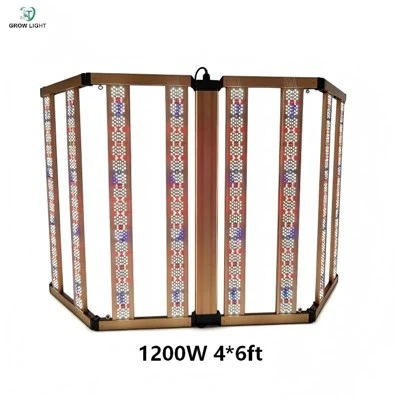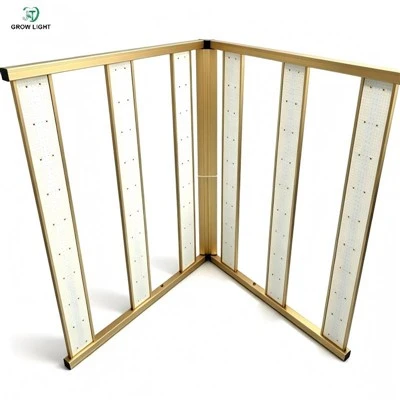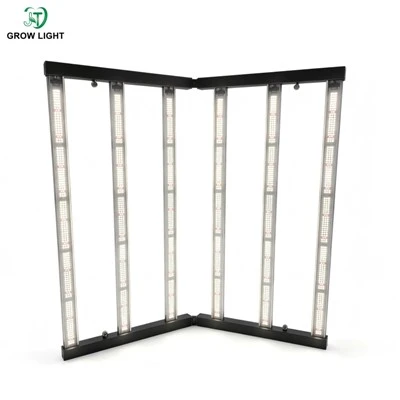

Have you noticed that newcomers to the industry are always discussing "full spectrum"? They're concerned with the appearance of the SPD curve, the presence of UV, IR, and far-infrared, the blue peak's height, and the red peak's sharpness. But after spending a few years in a grow room, you'll discover a completely different world: Plants don't care about the appearance of your spectrum; they only care if the spectrum you provide remains consistent every day.
This is what growers often refer to as "why some plants in my grow room behave strangely," and why two grow rooms with identical configurations can produce completely different results. As you progress, you'll understand that high yield, stable growth, and consistent growth rhythm are rarely determined by whether the spectrum is "full," but rather by whether the spectrum changes daily.
A stable spectrum isn't just a marketing slogan; it's a convergence of engineering realities, plant physiology, behavioral responses, and ROI.
Most LED grow light manufacturers like to show you a spectrum graph when selling their lights, the more colorful the better, making you think, "Wow, this is great, this must be very comprehensive."
But the truth is: 99% of manufacturers can't even clearly define "full spectrum," let alone define "stable."
If you want to understand why "perfect spectrum" has been a long-standing industry misunderstanding, I explain it clearly in this article:
→ Full-Spectrum LED Grow Lights: The Part No One Talks About
Here you'll see a fact that the so-called full spectrum only looks like "the moment the light is turned on," and it looks different after 10 minutes. If you don't understand this, you'll forever be chasing superficial specifications and ignoring the real logic.


2. Why a "stable spectrum" is what plants truly care about
Plants aren't people; they don't care about appearance, they care about their worldview. This "worldview" is the spectral proportions. The proportion of blue light, the proportion of far-red light, the degree of green light penetration, the stress signal from UV rays… even slight changes in these things will cause the plant's behavior to subtly adjust that day.
This is why if you give a plant a "stable spectrum," it will "grow stably"; if you give it "slightly different light every day," it will "give you a little mood every day."
To help you understand this logic, I explained it very thoroughly in another article:
→ Why Spectrum Shapes Plant Behavior More Than Specs Ever Will
It highlights a key point: Plants don't read colors, they read signals. Stable spectrum = stable signal = stable plant behavior. Understanding this will shift your focus from "looking at the light" to "looking at the crop."

3. Why is the spectrum unstable? This is the truth that growers most easily overlook
Now let's talk about what the industry is least willing to admit: the spectrum of LEDs is inherently unstable. LEDs constantly change during actual operation.
Why? The reasons are very practical:
1) As the LED temperature rises, the blue light ratio drops first.
2) Phosphor aging causes white light to drift towards the warmer end.
3) Fluctuations in the driving current cause inconsistent spectral proportions.
4) Light decay occurs in multiple wavelengths at different proportions, not an overall decrease.
5) Mixing different LED bin codes in the same greenhouse → plants will experience severe spectral instability.
How long will it take to see this phenomenon? About six months, no need to wait one or two years. If you want to see exactly where this spectral drift comes from, you must read this article → The Darkest Secret in LED Grow Lights Industry in 2025: Light Decay Control
Understanding this article will help you understand why most "cheap lights" become erratic after two months of use-not because they're broken, but because their spectrum has changed.
4. Why do plants react so dramatically to "tiny spectral changes"?
Many beginners say, "Is it really necessary to change the light by only 3%?" "The human eye can't even see the difference."
But plants aren't humans; they have a complete photoreceptor system:
1) Cryptochrome reads blue light
2) Phytochrome reads red/far-red light
3) UVR8 reads UV light
4) Phototropin reads directional light
5) Even blue-green light affects stomatal regulation and leaf angle.
These receptors don't "read color"; they read "signal intensity." Once you understand that "plants read signals," you'll understand why small changes can produce multiplied responses.
If you want to understand the fundamental principles of "how plants read the spectrum," this article is the core of the entire philosophy:


5. Commercial Cultivation > Home Cultivation: The Ultimate Answer is the ROI from a Stable Spectrum
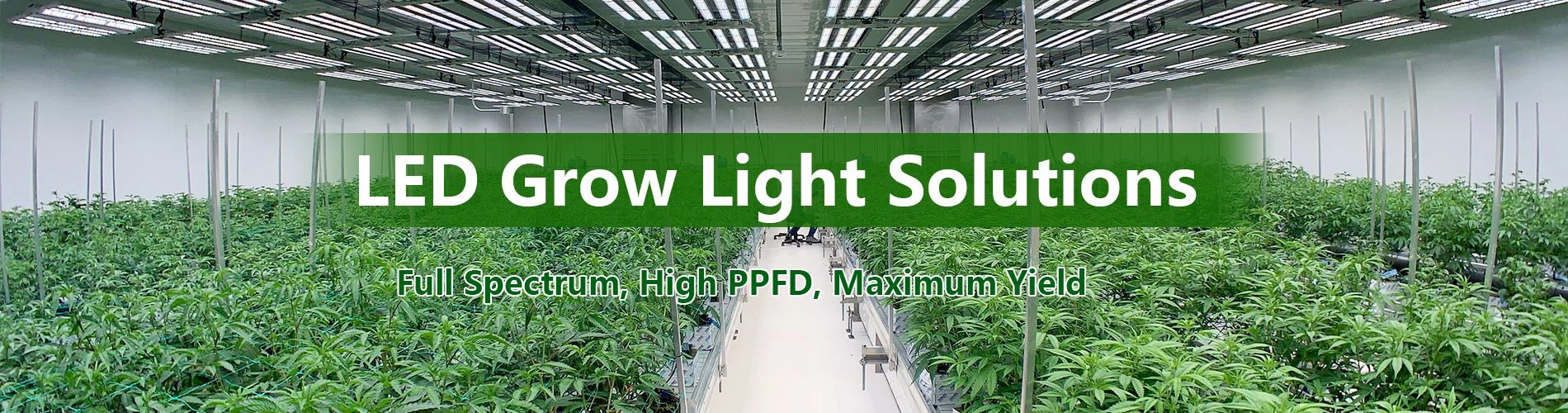
The closer you get to commercial cultivation, the more you'll discover one thing: it's not about the completeness of the spectrum, but the stability of the spectrum, which determines repeatability and consistency.
What are commercial growers most afraid of?
The same batch, the same greenhouse, the same formula-yet the results look like they're telling different stories.
Unstable spectra are the number one culprit behind this inconsistency.
Stable spectra =
1) Consistent orientation
2) Consistent nodes
3) Predictable growth rate
4) Stable flowering period
5) More stable weight
6) Faster production pace
7) Higher ROI
This is why growers ultimately don't look at "good spectra," but rather at "stable spectra."
6. Grower Practice: How to determine if your lamp spectrum is stable?
You don't need to buy a $20,000 spectrometer.
The most practical way to judge a plant's growth potential is actually quite simple:
1) Are the leaf postures consistent in the same area?
2) Is the growth rate predictable?
3) Does the flowering period look "very similar to yesterday" every day?
4) Does the light's performance change when it heats up?
5) Is the behavior stable after two months of aging?
If you want to further improve your measurement capabilities, you'll need this practical article:
7. Why does JT Grow Light have spectral stability far exceeding the industry average?
This isn't an advertisement; it's a fact: Now you know how important spectral stability is.
JT Grow Light chooses LEDs, implements thermal management, and ensures driver consistency not for fancy features, but for stability-this "soul metric." We don't create "perfect spectra"; we create "unchanging spectra." Plants prefer stability, not surprises.
The underlying logic of the entire spectral system can be summarized in one sentence: As long as the spectrum is stable, the plant will be stable; stable plants mean stable yields; stable yields mean stable business.