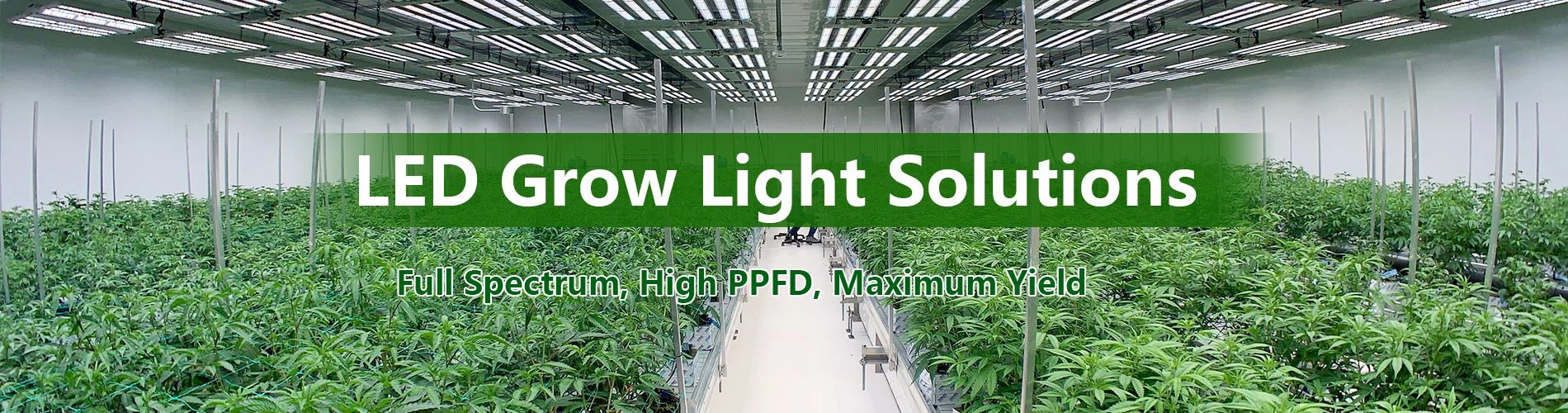
If you look at how large-scale growers made lighting decisions five or six years ago, the conversation was almost always the same: Who offers the highest PPF? Who claims the best efficacy? And even though those questions still show up today, the tone has shifted in a noticeable way. Across indoor farms, greenhouse operators, and vertical growers, the priorities in 2025 are becoming far more practical. Instead of only comparing "how bright" a fixture is, more growers are asking how predictably it performs over months of real operation, how hot it runs, and how often they are going to be forced to deal with repairs or replacements. The long-term issue becomes even clearer when you study The Darkest Secret in 2025: Light Decay Control.
You can see this shift reflected in the broader market data. Several industry reports from 2023–2024 pointed out that LED grow light adoption in commercial cannabis and leafy greens production keeps climbing, with many facilities now standardizing on LED instead of mixing different technologies. However, enhanced efficiency isn't the only factor driving adoption. A growing number of facilities are tracking long-term performance and noticing that stability and maintenance-related costs affect profitability more than a single efficiency number. Once growers started looking at lighting through a total-cost-of-ownership lens, the conversation around value changed completely.
Consistency is usually the first concern that comes up. And it makes sense-once a facility is running hundreds or thousands of fixtures, even small performance differences become difficult to ignore. Most commercial growers have run into cases where fixtures aged at different speeds or drifted slightly in spectrum after long photoperiods. These aren't dramatic failures; they're the subtle changes that show up in PPFD maps, crop height differences, or uneven canopy density. What growers learned over the last few years is that consistency is not guaranteed by a high μmol/J rating. It's the result of manufacturing quality, binning control, thermal management, and the ability of a fixture to hold its performance after months of real, often stressful, environmental conditions.
The second priority-heat behavior-is tied directly to that consistency. Anyone who has spent time in a cultivation room knows that LED grow lights don't fail because they're "weak." They fail because they run too hot for too long. Elevated junction temperatures accelerate lumen depreciation, increase spectral drift, and shorten driver lifespan. Most growers have experienced this first-hand, even if they describe it in practical terms instead of technical ones. A fixture that feels noticeably hotter than the others after several months rarely performs the same in the next cycle. And in many facilities, temperature behavior has turned out to be a better predictor of long-term performance than the marketing specs.
Industry surveys have also shown that energy remains one of the biggest operating expenses in controlled environment agriculture. Because of that, many growers intentionally run their environments tightly, sometimes pushing fixtures harder than in test environments. Real-world heat behavior becomes even more important under these conditions. A well-designed thermal structure isn't just about keeping the light cool-it protects against accelerated degradation and helps the fixture age more uniformly across large installations.
The third priority-maintenance cost and serviceability-is something growers talk about more openly now than they used to. Replacing a fixture in a commercial operation is rarely a simple "unscrew and put a new one up" job. In vertical farms, it may require ladders that barely fit between racks, navigating irrigation lines, or coordinating downtime for a specific zone. In greenhouses, any interruption in a consistent daily light period can shift plant behavior. And in both cases, labor isn't cheap. Many growers who originally chose lower-cost fixtures discovered over time that the maintenance burden erased whatever they saved upfront. That experience has pushed the market to value reliability on a much deeper level.
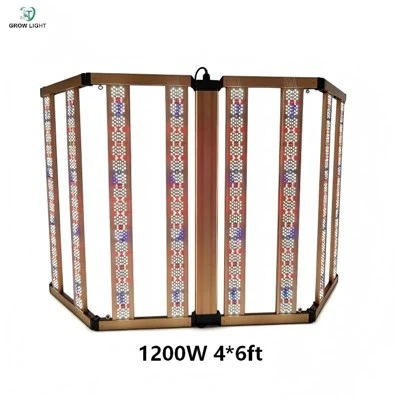
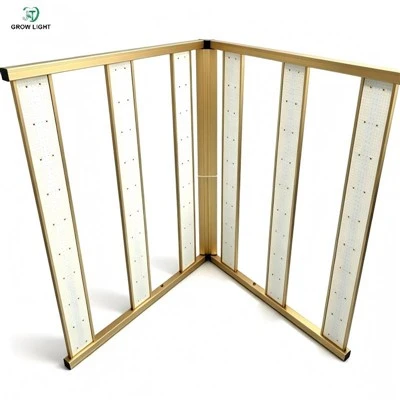
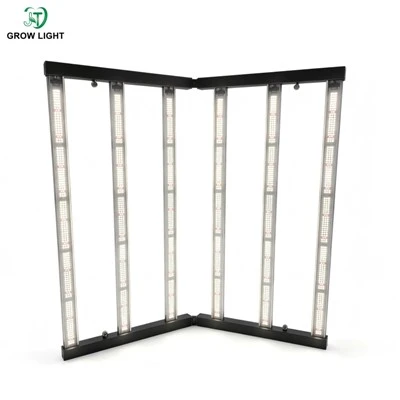
To be fair, JT Grow Lights is a successful manufacturer in the lighting industry, and when designing LED Grow lights, we prioritize durability, thermal stability, and consistent long-term output. JT Photoelectric's engineering focuses on controlled heat distribution, matched batch performance, and modular components to reduce maintenance complexity in case of problems. This difference is evident in multi-cycle performance data shared by growers: lights operating at lower, more uniform temperatures tend to degrade more slowly and require less maintenance.
This trend is clear. As lighting becomes one of the most mature aspects of indoor agriculture, growers no longer view it as a "performance race" but rather as a long-term infrastructure investment. Their focus has shifted from "which light is the brightest" to "which light minimizes the risk of unforeseen problems." This means that stability, heat dissipation, and maintenance costs naturally become primary considerations in evaluation.
Of course, efficiency remains important. But by 2025, growers will have accumulated enough experience and data to understand that high efficiency does not guarantee predictable yields. What truly guarantees yield and profits is a stable lighting system that avoids additional labor costs for growers or causes downtime. And if you're investing in new fixtures, compare this with Seven Investment Principles for Professional Growers.
If there's any key point, it's this:
Commercial farming no longer pursues ultimate performance, but rather predictable performance.
And those manufacturers that can meet this demand are the products growers will ultimately choose.
Learn More About JT Photoelectric's foldable LED grow lights/spider LED grow lights/ QB LED grow lights/ Greenhouse LED grow lights/Full Spectrum LED grow lights, etc. Pls contact us now.
Email: Sales@china-growlight.com
WhatsApp: + 86 135 1069 5807