
Almost every grower has seen this moment.
- The top lighting PPFD is strong.
- Power density is high enough.
- Light maps show clean coverage above the canopy.
And yet, a few weeks into flowering, the same problems appear again. Lower buds stay airy, and maturity is uneven. Harvest weight looks good at the top, disappointing underneath.
At that point, many people jump to the same conclusion: The plants need more light. So growers raise power, add more lights and push top lighting harder. But the under canopy still doesn't catch up.
This is the exact point where under-canopy grow lights are often misunderstood. Not because they don't work, but because most people don't clearly understand what problem they were actually designed to fix in the first place. Under canopy grow lighting is not about brightness. It is about correcting a structural lighting failure that exists in modern grow rooms, especially in dense, commercial-scale facilities.
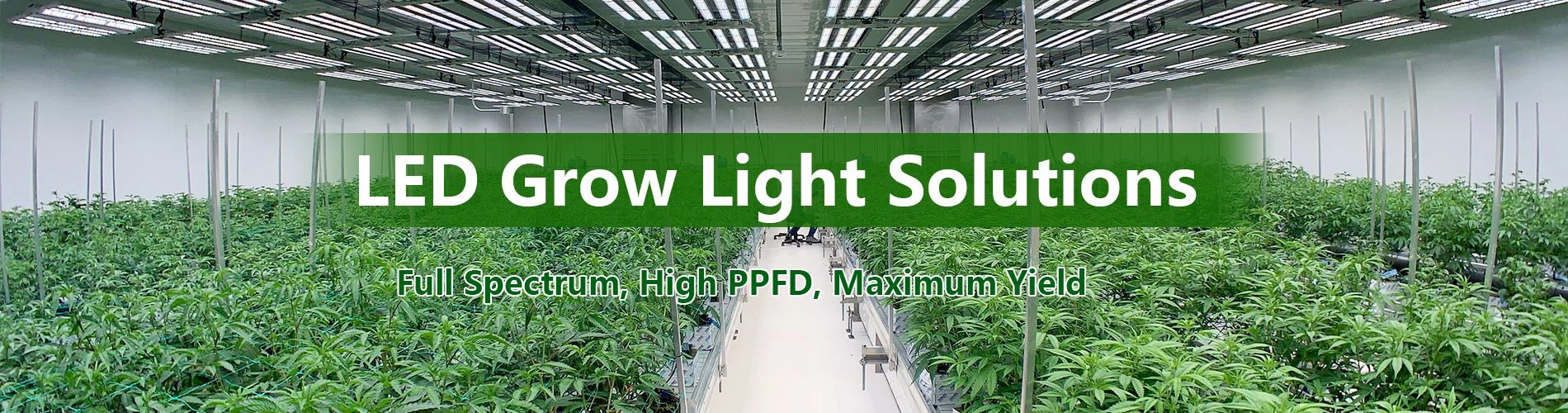
Once a crop reaches a certain canopy density, light behaves very differently from how growers expect.
Top lighting always enters from one direction. From above. As plants mature, leaves expand horizontally, branches overlap, and the canopy becomes a physical barrier. By the time light reaches the mid and lower sections of the plant, a large portion of it has already been intercepted, absorbed, or scattered.
This is not a lamp-quality issue, not a spectrum issue, and rarely a PPFD issue. It is a geometry problem. Light simply cannot reach certain zones anymore, no matter how powerful the top lights are. This is why many facilities experience a strange paradox:
- Increasing top light improves top yield
- Energy consumption rises
- Heat load increases
- Under canopy performance barely changes
At that stage, continuing to push top lighting does not fix the problem. It amplifies inefficiency. Under canopy grow lights were introduced because experienced growers eventually accepted a hard truth: some parts of the plant are physically unreachable by top lighting alone.

Why Adding More Top Lights Rarely Fixes the Lower Canopy
In theory, higher output should push more photons downward. In practice, that assumption breaks down very quickly.
Once upper leaves are already light-saturated, additional photons do not pass through freely. They are either absorbed, reflected, or converted into heat at the canopy surface. That's why many growers notice:
- Stronger top light increases leaf stress at the top
- HVAC demand rises
- Lower bud structure remains weak
Light does not behave like water. It does not "flow" into shaded zones simply because more is applied above. Under canopy grow lighting approaches the problem from the opposite direction. Instead of forcing more light through an already blocked structure, it changes the entry point. That shift in direction is the entire point. This is also why adding more top lights and introducing under-canopy grow light solve completely different problems in modern grow rooms.
What Under Canopy Grow Light Is Actually Correcting
At a system level, under canopy lighting is designed to correct three specific failures that top lighting cannot address.
1. Directional Blind Spots
Lower canopy zones are not dark because total light is low. They are dark because light cannot reach them from above.
Under canopy lights introduce photons laterally or from below, restoring access to areas that were structurally excluded from the light environment.
2. Lower Canopy Instability
Inconsistent light exposure leads to inconsistent development. Some lower sites receive enough energy to mature properly, others do not.
The result is uneven bud density, inconsistent ripening, and more sorting work at harvest.
Under canopy lighting does not chase peak intensity. It stabilizes exposure across the lower zone, which directly improves uniformity.
3. Imbalanced Whole-Plant Light Distribution
Yield is not determined by the brightest point in the room. It is determined by how evenly usable energy is distributed across the productive parts of the plant. Under canopy grow lights rebalance that distribution. They do not replace top lighting. They complement it by addressing the portion of the plant that top lighting structurally ignores. This is why experienced growers evaluate under canopy lighting not by how bright it looks, but by what it changes in plant structure and consistency.
Why This Becomes a System-Level Decision
Once growers understand what under-canopy lighting actually fixes, the conversation changes. It stops being about "adding another light" and becomes about:
- Canopy management
- Power distribution strategy
- Labor efficiency
- Harvest consistency
- Long-term operational stability
This is also where many installations go wrong. Under canopy grow lights work best when they are integrated intentionally, not added reactively. Facilities that install them simply because lower buds look weak often fail to see meaningful results, because the underlying structural causes were never addressed. At this stage, lighting becomes a strategy, not a collection of lights.
How Experienced Facilities Think About Under Canopy Lighting
In mature commercial operations, under canopy lighting is rarely the first upgrade. It is introduced only after top lighting, canopy density, and airflow are already reasonably optimized. When done correctly, it is treated as part of a layered lighting strategy:
- Top lighting provides primary energy input
- Inter-canopy or mid-level light supports dense canopiesunder-canopy
- Under canopy lighting corrects structural blind zones
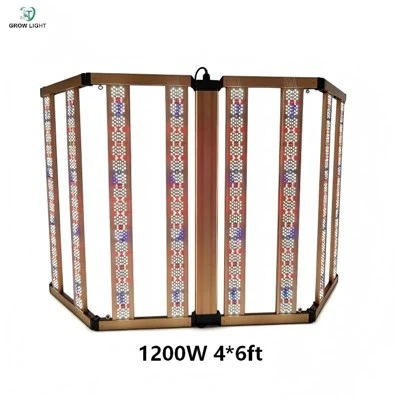
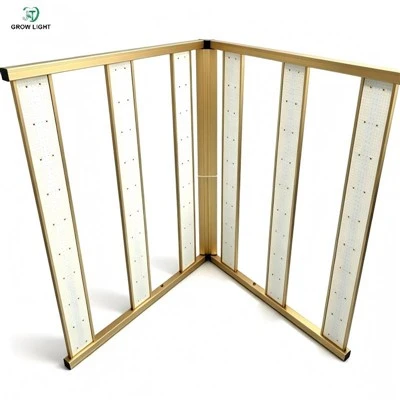
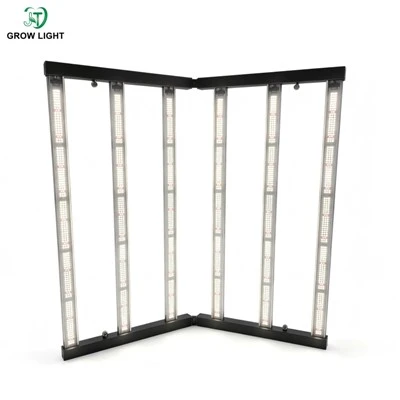
Each layer has a role. None of them exist in isolation. This layered approach is also why under canopy lights are usually lower wattage, wider beam, and designed for close-range use. They are not chasing intensity. They are filling a gap.
Why Design Matters More Than Power
From a source manufacturer's standpoint, one of the most common mistakes in the market is overemphasizing wattage. Under canopy grow lights that are too intense, too narrow in beam angle, or poorly positioned can easily cause stress, leaf curl, or inefficient power use.
At JT Grow Light, most under-canopy projects we support are not about pushing numbers. They are about fitting the light to the structure of the grow room. That means focusing on:
- Beam distribution that matches canopy geometry
- Low-profile designs that integrate cleanly with racks or rows
- Stable thermal performance for long operating hours
- Power levels that support uniformity without overdriving
Because under canopy lighting is always used close to plants, reliability and consistency matter far more than peak output. This is also why experienced buyers ask more about layout and integration than raw specifications.
When Under Canopy Lighting Makes Sense - And When It Doesn't
Under canopy grow lights are not a universal solution. They make sense when:
- Canopy density blocks top-down light access
- Uniformity is a limiting factor
- Harvest consistency matters more than peak PPFD
- Labor efficiency and post-harvest sorting costs are concerns
They add little value when:
- Canopy is already open and well-managed
- Plant spacing allows sufficient light penetration
- Lower yield loss is driven by nutrition or airflow issues instead
- Understanding this distinction is what separates strategic use from expensive experimentation.
The best under canopy results usually appear in facilities that already solved most of their obvious problems. That's because under canopy grow lights do not compensate for poor layout, poor canopy control, or inconsistent environmental management. They refine systems that are already functional.
When used correctly, they don't dramatically change how a grow room looks. They change how it performs over time.
- Lower buds finish stronger.
- Plant structure becomes more consistent.
- Harvest becomes more predictable.
Final Thought
Under canopy grow lighting exists because modern grow rooms evolved faster than traditional lighting assumptions. Top lighting alone worked when canopies were smaller, spacing was wider, and yield expectations were lower. Today's facilities are denser, more vertical, and more efficiency-driven.
Under canopy grow lights are not an upgrade for brightness. They are a correction for structure. Once that is understood, they stop being a trend - and start being a tool. Under-canopy grow light only works when it is treated as one layer within a broader layered lighting strategy.