A Repeat Buyer Who Already Knew What They Wanted
One of our long-time customers had been running our standard foldable line for over a year before this order came in. This time, they weren't just placing another repeat order - they were ready to move up to the Elite Foldable LED Grow Light, and they wanted to test something most buyers never get around to trying: running two different spectrum configurations of the same fixture side by side to see which one actually performed better for their crop.
That's not a small ask. It means building two fixtures on the same platform - same chips, same fold structure, same dimming hardware - with only the spectrum ratio changed between them. Most buyers never go this route because it takes more coordination than ordering a standard SKU. But for a grower who already trusts the hardware and wants to optimize the one variable that actually shifts results, it's the most direct way to find an answer instead of guessing from a spec sheet.
Why One Fixed Spectrum Doesn't Cover Every Grow
Different Crops Want Different Ratios
A spectrum tuned for leafy greens isn't the spectrum you'd choose for flowering cannabis, and a spectrum built for a fruiting crop isn't quite the same as either. Blue light drives compact, dense vegetative growth. Red light drives stem elongation and flowering response. Far-red and UV shift flowering timing, pigment development, and resin or oil production depending on the species. A single fixed ratio can get "close enough" across a lot of crops, but close enough isn't what a serious commercial grower is optimizing for once they've scaled past their first season.
Same Crop, Different Goals
This customer's situation is a good example of something that gets missed a lot: two growers running the exact same crop can still want different spectrums because they're not optimizing for the same outcome. One grower wants maximum yield by weight. Another is chasing potency, aroma, or a specific bud density that sells at a premium. Same plant, same room type, different spectrum target - which is exactly why this customer wanted two configurations running at once instead of picking one and hoping it was the right call.
What Actually Changes When You Customize a Spectrum
Red to Blue Ratio
The most basic lever in any custom spectrum LED grow light order is the red-to-blue ratio. Shifting more toward blue keeps growth more compact and vegetative. Shifting more toward red pushes the plant toward flowering response and stretch. For this order, the two builds used a noticeably different red-to-blue balance - one closer to our standard full-cycle ratio, one shifted further toward red to test a more flowering-forward profile.

UV and IR Levels
Beyond the basic ratio, UV and far-red intensity were also adjusted between the two units. Higher UV exposure is tied to increased pigment and resin development in a lot of crops, while far-red levels influence flowering speed and canopy stretch. Because both fixtures kept the same UV/IR combined dimming channel design, the ratio between UV and far-red stayed balanced within each configuration - only the overall spectrum target shifted between the two builds, not the internal logic that keeps UV and far-red from drifting out of a safe range.

How This Grower Is Running the Comparison
Same Room, Controlled Variables
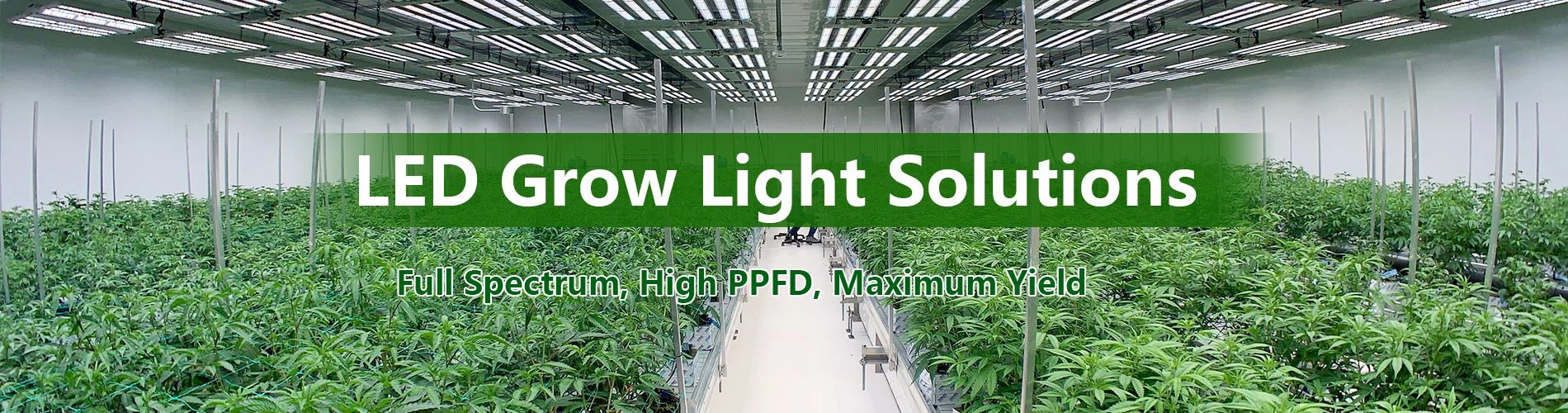
Both fixtures are running in the same facility under matched conditions - same room temperature, same irrigation schedule, same genetics, same planting date. That's the part that actually makes a spectrum comparison useful. Change the spectrum and nothing else, and whatever difference shows up in the harvest is much more likely to be coming from the light rather than a dozen other variables that usually differ between two separate grow cycles.
What They're Tracking: Yield, Potency, Morphology
The customer is tracking three things across the comparison: total yield by weight, potency or quality metrics specific to their crop, and plant morphology - internode spacing, canopy density, and overall structure. That's a fairly standard set of metrics for this kind of trial, and it's the same framework we'd recommend to any grower running a genuine side-by-side spectrum test rather than just going on gut feeling about which light "looks" better.
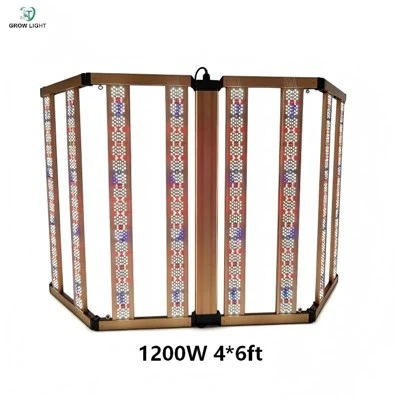
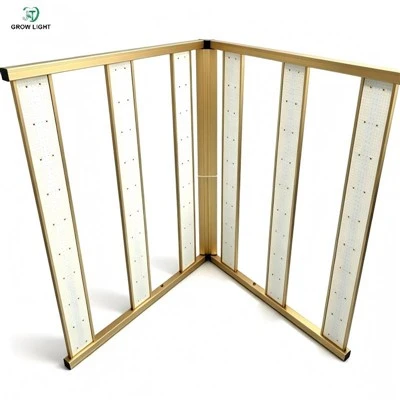
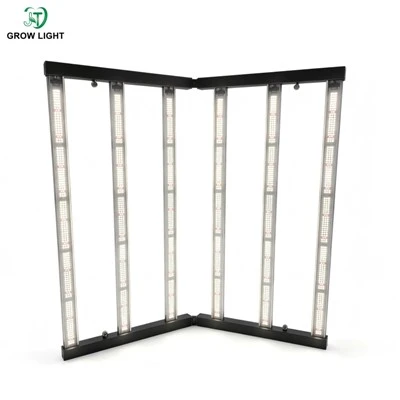
This is the part that made the request straightforward to fulfill rather than a one-off engineering project. Both fixtures are built on the same Elite Foldable LED Grow Light hardware platform - identical large chip diodes, identical 180° triple fold frame, identical dimming control architecture. The only thing that changed between the two builds was the spectrum tuning itself.
That matters for two reasons. First, it keeps the comparison clean - if the hardware, heat management, and dimming behavior are identical between both units, any difference in the harvest can be attributed to spectrum rather than some other variable sneaking in through a different chip batch or a different frame design. Second, it's what makes LED grow light spectrum customization realistic to offer without turning every custom order into a from-scratch build. Because the platform is standardized, we can adjust the spectrum ratio during production without changing the chip sourcing, the fold structure, or the control hardware - which keeps lead time and cost close to a standard order instead of a full custom engineering run.

What This Means for OEM and Distributor Buyers
For distributors and OEM buyers, this kind of order is a good illustration of what to look for in a LED foldable grow light manufacturer relationship. It's one thing for a factory to offer "custom spectrum" as a line item on a quote. It's another for that customization to actually be practical to produce without long lead times or a jump in unit cost, which only works when the underlying hardware platform is standardized enough to absorb spectrum changes without a full redesign.
An OEM foldable LED grow light program built around a consistent hardware platform - same chips, same frame, same control system across the wattage range - gives distributors room to offer spectrum-tuned SKUs to their own customers without carrying a dozen different hardware variants in inventory. That flexibility is often what separates a supplier relationship that scales with a distributor's growth from one that can't keep up once buyers start asking for anything beyond the standard catalog spec.
FAQ
Q: Can any Elite Foldable LED Grow Light be ordered with a custom spectrum?
A: Yes. Because the chip platform, fold structure, and dimming hardware are standardized across the line, spectrum ratio can be adjusted during production without a full custom build.
Q: What's the minimum order for a custom spectrum configuration?
A: Custom spectrum builds are available per order - reach out with your target crop and quantity for a specific quote and lead time.
Q: Does changing the spectrum affect the UV/IR combined dimming channel?
A: No. The combined channel logic that keeps UV and far-red in a balanced ratio stays the same; only the overall spectrum target and intensity levels are adjusted between builds.
Q: How long does a custom spectrum order typically take compared to a standard order?
A: Because the platform itself isn't changing, lead time is close to a standard order rather than a full custom engineering project - exact timing depends on order volume and specification details.
Q: Why compare two spectrums in the same room instead of testing them separately?
A: Running both under matched conditions - same room, same genetics, same schedule - removes most of the outside variables, so any difference in the harvest is more likely to come from the spectrum itself.