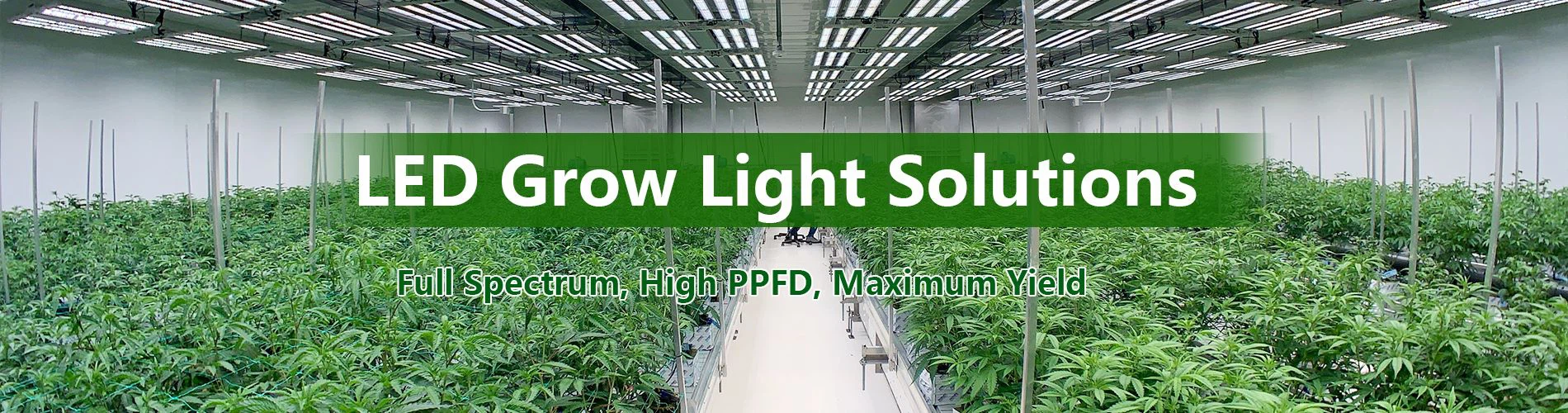
If you walk into enough commercial grow rooms, you start noticing something strange. The room looks bright. The PPFD map looks acceptable. The lights look powerful.
And yet, plants on the edges lag. Lower branches underperform. Certain rows always need more pruning, more correction, more labor.
Most growers don't call this a lighting problem at first. They blame genetics, airflow, feeding schedules, and even staff mistakes. But if you've seen this pattern repeat across different facilities, different teams, and different crops, you eventually realize what's really happening.
You're not short on light. You're dealing with shadow zones. Shadow zones are not dramatic. They don't show up as darkness. They hide inside "acceptable averages." And that's exactly why they're so dangerous in commercial cultivation.
Shadow zones are a design problem, not a power problem
A common misconception in indoor cultivation is that more wattage solves uneven growth. When plants show uneven development, the instinctive response is to increase intensity, lower lights, or add more lights.
But shadow zones don't come from insufficient output. They come from how light is shaped, spread, and interrupted before it reaches the canopy.
Traditional fixed-frame lights concentrate light in predictable rectangles. When mounted in rows, their beam angles overlap in some areas and cancel out in others. Structural elements like bars, drivers, frames, and even the light body itself block parts of the light path. Over time, these blocked areas become permanent low-performance zones.
The issue becomes worse in high-density setups, multi-tier racks, or rooms where spacing isn't perfectly symmetrical. Even small deviations in mounting height or aisle width can create long, invisible bands of under-lit canopy. This is where Foldable LED Grow Lights quietly changed the game, without many people explicitly talking about it.
Why folding structures change how light behaves in real rooms
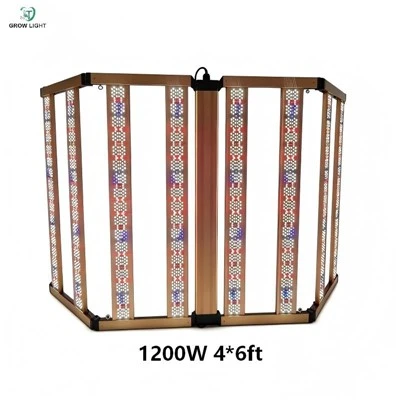
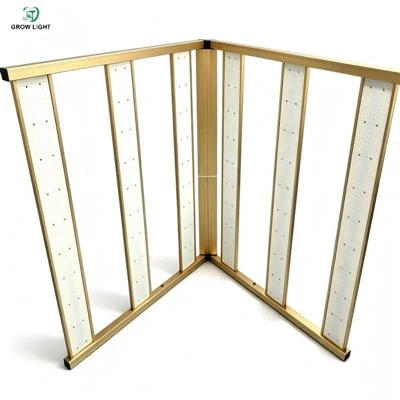
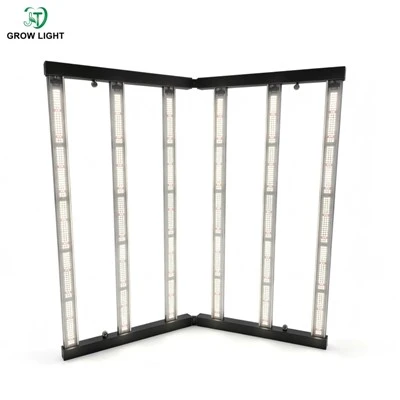
A Foldable Grow Light doesn't just fold for shipping or installation convenience. Its real value is spatial flexibility. Instead of forcing light into a rigid rectangular footprint, folding LED grow light designs allow the light to adapt to the room, not the other way around. By splitting the light source into multiple adjustable bars, light originates from more angles, not just from a single flat plane.
This matters more than many growers realize. When light comes from multiple directions, it penetrates deeper into the canopy and reduces the formation of hard shadows caused by leaves, stems, and trellis structures. Instead of creating bright tops and weak lower zones, the light wraps around plant structures more evenly.
In practical terms, this means fewer dead spots under the canopy, less aggressive defoliation, and more uniform development across rows.
Growers who switch from rigid lights to Folding LED Grow Light layouts often describe the result in simple language: "Plants just look more even."That sentence carries more truth than most technical charts.
Fixed lights amplify shadow zones in complex layouts
Shadow zones become especially problematic in rooms that are not perfectly simple rectangles.
Think about real facilities. Support columns. Drainage paths. HVAC ducts. Uneven rack spacing. Temporary layout changes during expansion phases.
Fixed-frame lights assume ideal conditions. When reality deviates, shadows appear.
Foldable LED Grow Lights, by contrast, allow bars to be angled, spaced, or repositioned to match real-world constraints. Light can be directed around obstacles instead of being blocked by them.
This is why folding designs are increasingly favored in retrofitted facilities, where rooms were never originally designed for high-density cultivation but later converted for it. You don't redesign the entire room. You adapt the light.
How foldable lights reduce self-shadowing within the light
Another overlooked source of shadow zones is the light itself. Large, rigid housings often block part of their own output. Drivers, heat sinks, and frames create micro-shadows directly below the light, especially when mounted close to the canopy.
Foldable LED Grow Lights distribute mass differently. Slim bars reduce obstruction. Drivers are often separated or repositioned away from the primary light-emitting plane. The result is cleaner downward light paths and fewer dead zones directly beneath the light. This is not something you'll see clearly on a spec sheet. But you'll see it in plant structure and harvest uniformity.
Where JTGL's foldable designs fit into this reality
At JTGL, this problem didn't come from theory. It came from repeated feedback from commercial growers who were tired of chasing uneven performance.
Our foldable LED grow lights were developed with one goal: eliminate structural shadow zones without overcomplicating installation. Bar spacing, beam angles, and fold geometry were tested in real grow rooms, not just simulated environments. Instead of maximizing raw wattage numbers, the focus was on usable light. Light that reaches leaves, not just meters.
For facilities running dense canopy crops, vertical racks, or multi-layer systems, this difference becomes measurable within a few cycles. More consistent growth means less corrective labor, more predictable harvest timing, and better overall ROI. That's also why many growers using our Foldable Grow Light solutions end up standardizing layouts across rooms once they see how shadow zones shrink.
Shadow zones cost more than yield
The real cost of shadow zones isn't just grams per square meter. It's labor. It's inconsistent harvest schedules. Its staff is constantly adjusting plants that should have grown evenly in the first place.
When light distribution becomes predictable, operations calm down. Teams stop firefighting. Planning becomes easier.
Foldable LED Grow Lights don't magically fix bad cultivation practices. But they remove one of the most frustrating variables in commercial lighting: uneven coverage caused by rigid design.