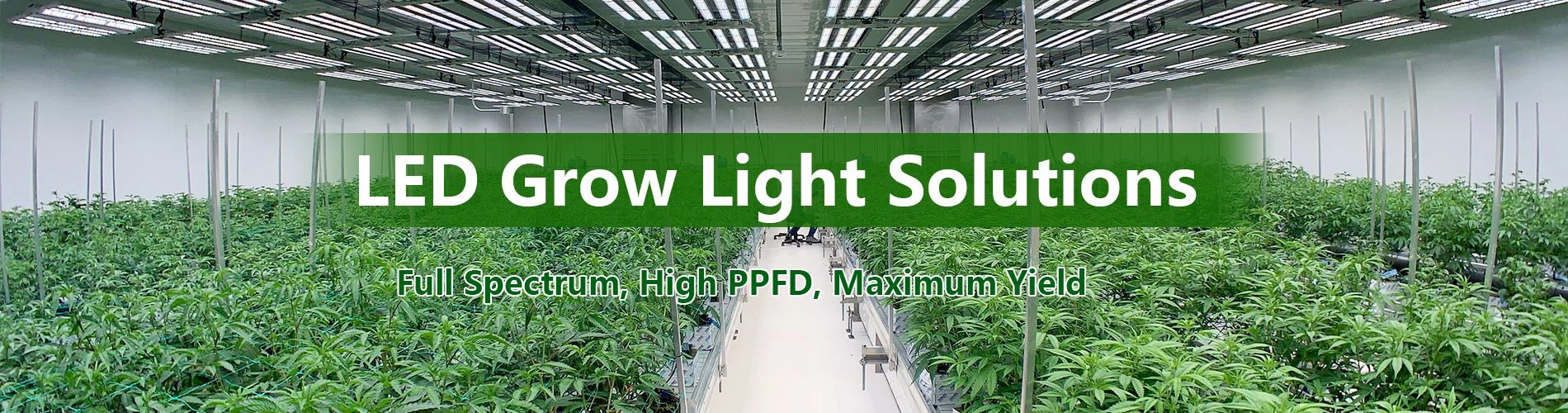
When someone walks into a mature commercial cannabis grow room for the first time, judgment usually happens before they look closely at the plants. Even before yield numbers, genetics, or PPFD maps come up, there is already a quiet conclusion forming in their mind: this is a professional operation. That conclusion is rarely driven by a single technical detail. It comes from the overall visual logic of the space - whether the lighting layout looks intentional, whether the structure feels consistent, and whether the system appears designed rather than gradually assembled.
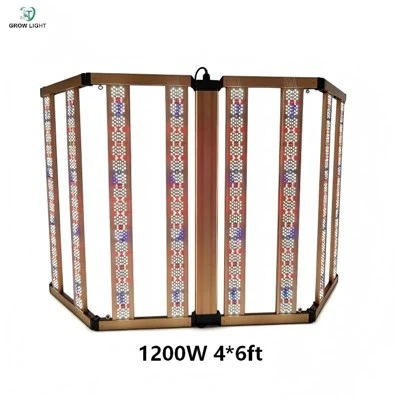
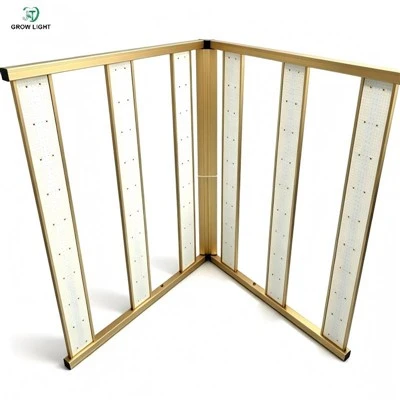
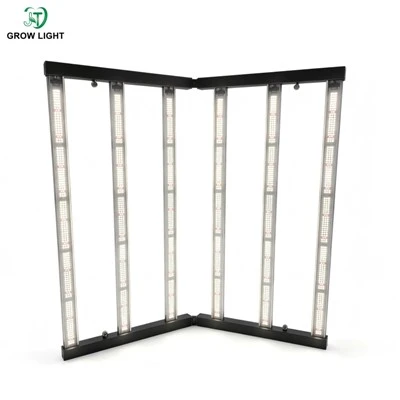
Over the past few years, foldable LED grow lights - often referred to as multi-bar lights - have taken a central role in creating that first impression of professionalism. They did not become dominant because one specification suddenly outperformed all others. They became dominant because they were repeatedly used in real commercial projects, copied across facilities, and gradually absorbed into the industry's shared understanding of what a serious cannabis grow room is supposed to look like.

Professional Perception Often Forms Before Data Is Considered
In commercial cannabis cultivation, decision-making rarely starts with data. It starts with perception. Investors, regulators, partners, and even experienced growers instinctively evaluate a room by asking whether the system looks scalable, repeatable, and under control. Foldable LED grow lights communicate those qualities visually. Uniform spacing, repeated structural patterns, and clean geometry signal that there is a clear design logic behind the room.
This visual order is naturally associated with discipline, standard operating procedures, and operational maturity. No one needs to explain it. The environment itself creates confidence before any technical discussion begins, which is why perception plays such a powerful role at the very first stage of evaluation.
Industry Standards Are Formed Through Repetition, Not Manuals
Commercial cannabis is still a relatively young industry. In young industries, standards are rarely written first - they are copied first. Operators tend to replicate what they see working elsewhere and avoid anything that looks experimental or unfamiliar. Over time, foldable multi-bar LED lights appeared again and again in stable, high-output commercial facilities.
These facilities were toured, photographed, presented at trade shows, and shared across professional networks. As a result, a quiet consensus formed: when someone thinks of a properly built commercial cannabis grow room, this is the lighting structure they picture. At that point, the design is no longer just an option. It becomes the reference model.
Why Other Light Types Struggle to Become the Visual Default
From a purely technical standpoint, many light types can grow cannabis successfully. Visually, however, they communicate very different messages. Large board-style lights often appear heavy and dense. Modular or mixed systems can look temporary unless executed perfectly. In contrast, foldable LED grow lights naturally support clean repetition and spatial consistency.
Human perception interprets that consistency as planning and control. A room filled with evenly spaced multi-bar lights feels engineered rather than improvised. This psychological effect does not depend on technical explanations - it happens instantly, which is why foldable designs gained visual dominance even before many buyers could clearly articulate why.
Visual Consistency Reflects Operational Capability
In large commercial operations, lighting design is rarely about a single room. Facilities expand, duplicate layouts, and optimize over time. Visual consistency becomes a practical advantage. When multiple rooms share the same foldable lighting structure, training becomes easier, maintenance logic transfers cleanly, and anomalies are easier to detect.
This consistency reinforces the external perception that the operation is mature and systematic. What begins as a visual choice gradually turns into an operational advantage, which further strengthens the association between foldable LED grow lights and professional-scale cultivation.
When Lighting and Racks Follow the Same Structural Language
In many JTGL projects, growers choose foldable LED grow lights together with matching grow rack systems. This integration goes beyond convenience. The lighting layout follows the geometry of the racks, creating a unified structural language throughout the room. The result is a space that looks deliberately engineered from the beginning, rather than assembled in stages.
Interestingly, many clients respond to this visual coherence before discussing performance metrics. That reaction itself reveals how strongly professional perception influences confidence and purchasing decisions in commercial cultivation projects.

A Practical Industry Conclusion
Human decision-making is visual first and analytical second. Foldable LED grow lights became the visual standard in commercial cannabis cultivation not through marketing claims, but through repeated success and collective imitation. They look like what works, and in a capital-intensive, high-risk industry, looking competent reduces friction long before numbers are compared.
In this context, visual professionalism is not superficial. It is a strategic way to reduce explanation costs, shorten trust-building cycles, and align with what the industry already recognizes as the commercial standard. This visual standard is one of the deeper reasons why foldable LED grow lights became the industry default in commercial cannabis cultivation.