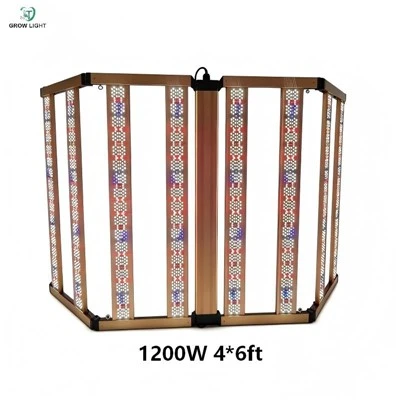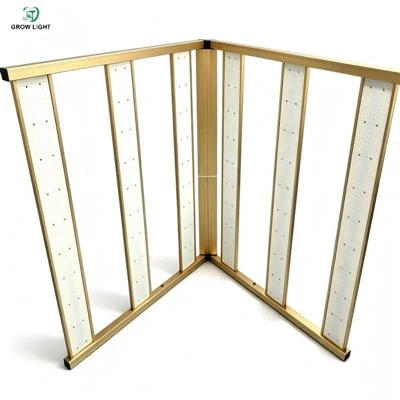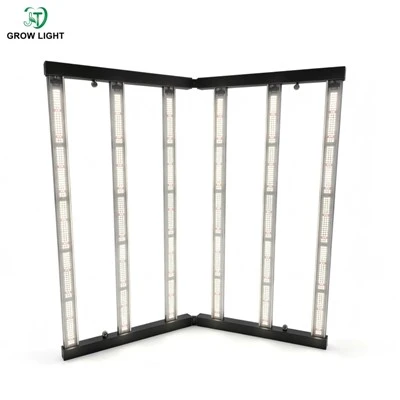
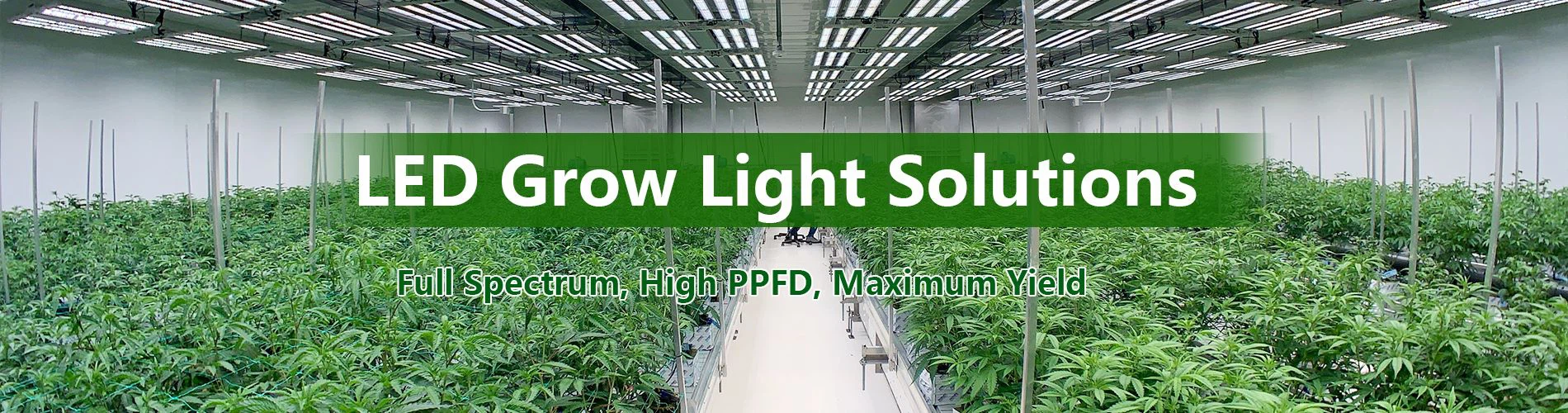
The five things worth checking first when you pick an LED grow light supplier for a pepper or eggplant greenhouse are: measured photon efficacy (µmol/J) at system level, a third-party or in-house test report that matches the model you will receive, the safety and efficiency certificates required in your market, a clear warranty with written terms, and proof that the supplier can customise length, power and mounting for your row layout. A supplier who answers all five with documents, not adjectives, is usually safe to move to a sample order.
The rest of this guide explains where under canopy lighting fits in a greenhouse growing tall fruiting crops, how to read the specs, how a factory differs from a trading company, and how a buyer with a 5,000 sq ft house might run the selection from first enquiry to bulk order. Dual Side Emission Under Canopy Lighting For Commercial Grow Rooms and greenhouses is a specialised product, so the questions below focus on what is particular to it.
Why Peppers and Eggplants Need Supplemental Lighting in Greenhouses
Peppers and eggplants are both warm-season fruiting crops grown on tall, trained plants. In a commercial greenhouse they are often taken up a high wire and kept for most of the year, which creates a few lighting problems that field growing does not have.
Tall plants, thick leaf layers. By mid-season the upper canopy intercepts most of the light. The middle and lower leaves sit in shade.
Low winter light. In many regions, short days and cloud cover leave natural light below what the crop needs for steady fruit set and growth.
Fruit position matters. Fruit on lower trusses gets little direct light. Growers often see slower colour development, uneven sizing or lower yield from that part of the plant.
Long crop cycles. A greenhouse that wants to produce through winter has to deal with this every year, so the lighting choice stays in use for many seasons.
Overhead lighting covers the top of the plant well. Light placed between the rows covers the layer below it. For growers who already have overhead lights or sunlight at the top, the practical question is how to lift the light level in the middle and lower canopy without wasting power.
Where Under Canopy Lighting Fits in a Pepper and Eggplant Greenhouse
Under canopy lights, also called inter-canopy or interlighting, are slim fixtures hung between plant rows or along the plant, close to the leaves. They are added to overhead light, not used in place of it.
A dual side emission fixture gives out light from both faces. In plain terms, one bar hung between two rows lights the plants on its left and its right. A single side fixture lights only one face, so two rows would need two bars. Fixtures at the end of a bay or against a wall still tend to be single side, because there is no row on the other side to use the light.
Table 1 gives rough planning values for the two crops. They are starting points only
Reference light conditions for greenhouse peppers and eggplants
|
Item |
Peppers |
Eggplants |
|
Typical total photoperiod |
about 12–16 h |
about 12–16 h |
|
Role of under canopy light |
Supplement middle and lower leaves |
Supplement middle and lower leaves |
|
Target PPFD at lower canopy from under canopy fixtures |
[Insert range, µmol/m²/s] |
[Insert range, µmol/m²/s] |
|
Typical plant height |
2.5–3.5 m on high wire |
2–3 m on high wire |
|
Light sensitivity of fruit |
Colour and size can suffer in shade |
Fruit colour and gloss can suffer in shade |
|
Overhead light still needed |
Yes |
Yes |
The photoperiod includes natural light. The lamps only supply what the sun does not, so run time changes by season and by site.
What to Check Before You Pick a Supplier
A supplier comparison goes faster when you use the same list for every candidate. Table 2 is a checklist you can copy into a spreadsheet.
Supplier evaluation checklist
|
Area |
What to ask for |
What a good answer looks like |
|
Product data |
Datasheet with input power, PPF, efficacy, spectrum, dimensions, IP rating |
Numbers for the exact model, with test conditions stated |
|
Test reports |
Photometric report, electrical report, LM-80 / TM-21 for the LEDs |
Report names the model and shows a date and a lab or in-house test method |
|
Certificates |
UL / ETL, DLC, CE, RoHS as needed for your market |
Certificate numbers you can verify, covering the model you are buying |
|
Warranty |
Term, what is covered, how a claim works, who pays shipping |
Written terms, not a general promise |
|
Customisation |
Length, power, spectrum, lens, cable, connector, branding |
A list of options with MOQ and lead time for each |
|
Samples |
Sample cost, lead time, whether cost is credited to an order |
A clear policy and a realistic date |
|
Production |
Lines, test equipment, ageing process, monthly capacity |
Specific equipment and numbers, plus a factory video or visit |
|
After-sales |
Spare parts, driver replacement, technical support in your time zone |
Named contact and stated response time |
|
Past projects |
References or photos of greenhouse installations |
Projects with a similar crop, voltage and layout |
Request the same documents from every supplier. If one cannot supply a test report for the model quoted, that tells you something before you have spent any money.
Key Product Specs That Matter
Two fixtures of the same wattage can differ a great deal in useful light, durability and running cost. These are the specs that separate them.
Specs that affect performance and running cost
|
Parameter |
Why it matters |
What to ask for |
|
Photon efficacy (µmol/J) |
More light per unit of electricity, so lower running cost for the same light level |
System-level value, test condition and report. [Insert your value] |
|
Spectrum |
Decides how the light affects growth and fruit colour; under canopy light is often red-rich or broad-spectrum |
Spectrum chart and PPF split by colour band |
|
Thermal management |
Poor cooling shortens LED life and drops output as the fixture warms |
Housing material, heat sink design, operating temperature range |
|
Driver |
Affects efficiency, flicker, dimming and surge protection |
Driver brand or spec, efficiency, power factor, dimming type (0–10 V, PWM) |
|
IP rating |
Greenhouses are humid and often wet during irrigation and cleaning |
IP rating of the whole fixture, not only the LED board |
|
Lifetime (L90 / L70) |
Sets how long before output falls enough to matter |
LM-80 / TM-21 data and the hours claimed. [Insert your figure] |
|
Housing and lens materials |
Corrosion and UV resistance over many seasons |
Aluminium grade, coating, polymer type, any salt-spray or ageing test |
|
Light distribution |
Decides how evenly the light falls on both rows |
Beam angle, PPFD map at stated distances |
|
Cable and connectors |
Weak points in humid environments |
Cable rating, connector type, strain relief, daisy-chain limits |
The first number buyers usually look at is wattage. Efficacy and the light map tell you more, because they show how much of that wattage becomes useful light in the right place.
Factory vs Trading CompanyWhats the Difference
When you search for a grow light manufacturer, you will find factories, trading companies and brand owners that outsource production. They can all sell you a fixture, but what you can get from each differs.
Factorytrading company and brand owner compared
|
Factor |
Factory |
Trading company |
Brand owner (outsourced production) |
|
Price |
Usually closest to cost for larger volumes |
Adds a margin; can be competitive on small standard orders |
Higher, includes brand and support costs |
|
Customisation |
Can change design, parts and tooling |
Limited to what the partner factory will change |
Depends on contract with its factory |
|
Lead time |
Controlled directly; can be short on stock models |
Depends on the supplier behind it |
Depends on the factory and its own stock |
|
Quality control |
Direct control over materials and testing |
Indirect; may vary from batch to batch |
Varies; depends on the brand's own inspection |
|
Technical answers |
Engineers can answer detailed questions |
Often passes questions on and waits |
Support team, sometimes limited on design detail |
|
After-sales |
Direct replacement and design fixes |
Depends on the supplier's cooperation |
Usually structured, but may add cost |
|
Best fit |
OEM/ODM, large or repeat orders, custom layouts |
Mixed small orders from several makers |
Buyers who want a known brand and local support |
A trading company is not always a bad choice. For a small trial order of a standard model it can be perfectly adequate. For a custom length, a private label or a large order, working with the factory directly tends to be cheaper and clearer. Ask to see production lines on video, ask who makes the housings, and ask which tests the factory runs in-house.
Real-World ScenarioChoosing a Supplier for a 5,000 sq ft Greenhouse
This example is illustrative, not a record of a real project. Assume a 5,000 sq ft (about 465 m²) greenhouse growing peppers in double rows on a high wire, with overhead lighting already in place and a local supply of 230 V. [Replace with your own project if you have one.]
Define the load. At the planning range of 15–25 W/m² used for standard layouts, 465 m² gives roughly 7,000 to 11,600 W of under canopy power. With 200 W bars, that is about 35 to 58 fixtures. The count shifts with row spacing and with whether the bars are single side or dual side.
Shortlist three suppliers. Send each the same brief: area, crop, row length, row spacing, plant height, voltage, mounting method and target PPFD. Ask for datasheets, test reports, certificates and a quotation with MOQ and lead time.
Compare documents, not just prices. Check that the reports match the quoted model, that certificates cover the voltage you need, and that warranty terms are written down.
Order samples. Ask for two to four units of the model you would buy. Check build quality, cable length, connectors, weight and how the mounting hardware fits your wires or rails.
Run a small trial. Install the samples in one or two rows and measure PPFD at the lower canopy. Compare with the supplier's light map. Watch the fixtures for a few weeks for heat, condensation and connector problems.
Step 6: Place a small batch order. Cover one bay or one section. This tests the supplier's batch consistency, packaging and delivery time before a full commitment.
Place the full order. Agree the specification, test report, packaging, shipping terms, warranty and payment terms in writing. Ask for a pre-shipment inspection or a photo and video check of the finished goods.
How long this takes depends on sample lead time and on how long you want to trial the lights. A trial of several weeks is common
Safety and Compliance Certifications to Ask For
Greenhouse electrical equipment is exposed to moisture, so safety marks are not only a paperwork item. Ask which certificates apply to the exact model and voltage you plan to buy.
Common certifications and what they mean for buyers
|
Certification |
What it covers |
Typical market |
Why you may need it |
|
UL (for example UL 8800 for horticultural lighting) |
Electrical and fire safety |
United States, Canada |
Often expected by inspectors and insurers |
|
ETL |
Safety testing to North American standards |
United States, Canada |
Accepted in many cases in place of UL |
|
DLC (Horticultural Lighting) |
Efficacy and performance thresholds |
United States, Canada |
Often required for utility rebates and incentives |
|
CE |
EU safety, EMC and related directives |
European Union |
Required to place equipment on the EU market |
|
RoHS |
Restricted substances in electrical products |
EU and other markets |
Market access and customer requirements |
|
IP rating (for example IP65 or IP66) |
Dust and water protection |
Global |
Greenhouse humidity, irrigation and washdown |
[List only the marks your products actually hold, with certificate numbers.] A certificate for a similar model does not cover the model you are buying. Ask for the certificate with the model name and check it on the issuer's database where possible.
If you plan to apply for an energy incentive, check the programme's current rules, because many require a DLC listing or a minimum efficacy, and they change from time to time.
Industry Trends in Greenhouse LED Lighting
Efficiency. Efficacy has risen steadily over the past years, so the same light can be delivered with less power. Buyers now compare fixtures mainly on µmol/J.
Modular and flexible designs. Growers want fixtures in several lengths and powers, easy to move or add as the crop layout changes. Daisy-chain wiring and standard connectors are part of that.
Smart dimming. Controllers that follow outside light, schedule operation or work in zones reduce energy use without cutting the light the plant needs.
Energy cost pressure. Where electricity prices are high, buyers look at running cost over the life of the fixture rather than the purchase price alone.
Red Flags When Buying Grow Lights Online
Some warning signs show up repeatedly in grow light sourcing. None proves a supplier is dishonest, but each is a reason to ask more questions.
Inflated numbers. Efficacy or PPF values that are far above what comparable fixtures with similar LEDs deliver, with no test report.
No report for the quoted model. A report exists, but for a different product, a different power or a different year.
Certificates that do not match. A UL or DLC logo on the page with no certificate number, or a certificate in another company's name.
Vague warranty. Phrases like "long warranty" with no term, scope or claim process
Unclear MOQ and lead time. The supplier will not say what the minimum order is, or the lead time changes with every message.
Stock photos only. No factory images, no production line, no sample photos of the actual product.
Pressure to pay in full early. Especially with no contract, no pro-forma invoice or no clear terms.
Spec changes between sample and bulk. Components change without notice. Ask for a written specification and a pre-shipment check.
MOQ,Lead Time, Wholesale Pricing and Customization
These are the commercial points that decide whether a supplier fits your project. [Insert your own figures where indicated.]
MOQ. Standard models often have a lower minimum than custom ones. Ask for MOQ by model and by customisation level. [Insert your MOQ.]
Lead time. Ask separately for sample lead time, small-batch lead time and bulk lead time, and what delays them (parts, certification, peak season). [Insert your lead times.]
Wholesale pricing. Ask for price tiers by quantity and what is included: driver, cable, mounting hardware, packaging. Compare the same scope between suppliers.
OEM and ODM options. Many factories can change the length, power, spectrum, lens angle, housing colour, cable length, connector and branding. Some can also develop a new housing or control interface. [List what you offer.]
Custom length and power. Row lengths differ by greenhouse, so a bar that fits your row without waste saves wiring and mounting work. Ask what lengths and power steps are available.
Packaging and shipping. Ask about carton size, units per carton, pallet configuration, incoterms, and how fixtures are protected in transit. For long orders, confirm who handles customs paperwork and what happens if units arrive damaged.
FAQ
Q: How can I tell if a supplier is a factory or a trading company?
A: Ask for a factory video, production line photos, the address and business licence, and a list of in-house test equipment. Ask who makes the housing and who assembles the drivers. A factory can usually answer detailed design questions directly and show you the process.
Q: What is a typical MOQ for under canopy grow lights?
A: It varies by supplier and by whether the model is standard or custom. Standard models may be available in small quantities, while custom lengths, powers or private labels usually need a higher minimum. Ask for MOQ in writing. [Insert your MOQ.]
Q: Can I get samples before placing a bulk order?
A: Most suppliers offer samples, though cost, lead time and whether the cost is credited to a later order differ. Ask for samples of the exact model you plan to buy, and test them in a real row for a few weeks.
Q: How long is the warranty?
A: Warranty terms vary. Look for a written term, what is covered (LEDs, driver, housing, cable), what is excluded, and how claims are handled.
Q: Are peppers and eggplants lit the same way?
A: The two crops are similar in many respects: tall, high-wire plants with dense leaf layers. Light targets and positioning can still differ by variety and layout, so confirm with a grower or agronomist and run a small trial.
Q: Do under canopy lights replace overhead lighting?
A: Usually not. They add light to the middle and lower canopy and work alongside overhead lighting or sunlight.
Q: What should I send a supplier to get an accurate quote?
A: Send the greenhouse area, crop, plant height, row length and spacing, number of canopy layers, supply voltage and the mounting method. Add the target light level and whether you want dimming control.
Get a Quote and Samples
If you send us your greenhouse area, crop, voltage and number of canopy layers, we can suggest a fixture layout, a power level and a control approach for your house, and quote it. Samples are available so you can test the lights in your own rows before a larger order.