Most growers think more light equals more yield. They are wrong. Without understanding PPFD, you are either burning your plants or burning your electricity bill. This guide will show you how to find the 'Sweet Spot' for your crops to maximize ROI.
Without understanding this, buying LED grow lights, their wattage, and their placement will be like groping in the dark.
The industry truly focuses on only one metric-PPFD (Photosynthetic Photon Flux Density).
It determines a plant's efficient growth, as well as yield, quality, nutrient density, flower compactness, terpene expression, dry matter accumulation, and everything else. Today, we'll provide a truly comprehensive guide to PPFD requirements. This section mainly tells you why different plants require different PPFD and DLI, why the same plant has completely different needs at different stages, and why the spectrum, uniformity, and heat dissipation of high-quality LED grow lights directly affect the final results.
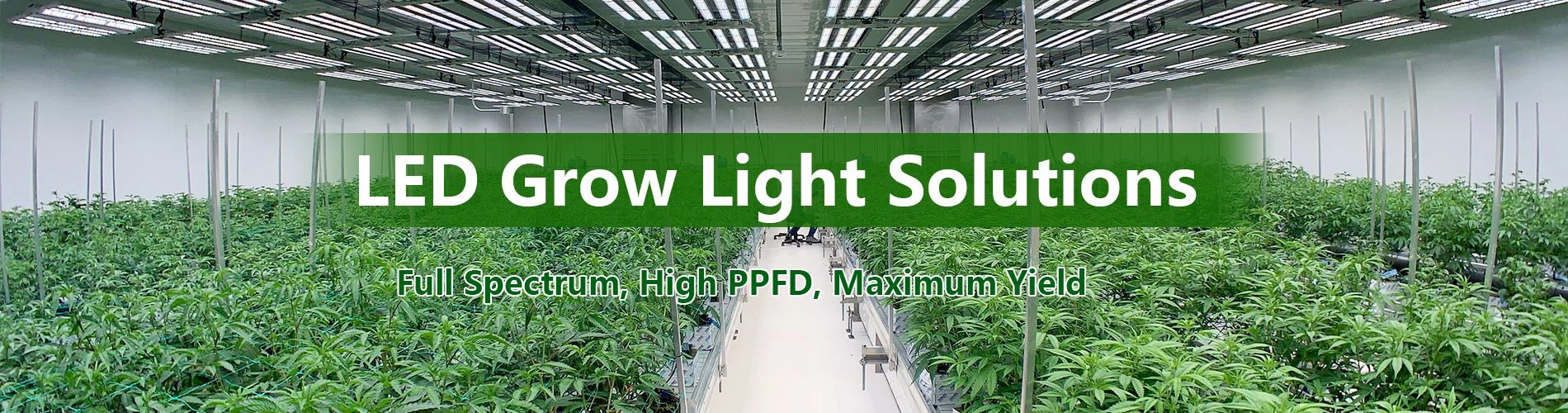
However, in large cannabis grow rooms, hitting a target PPFD number alone does not guarantee consistent results. Uneven light distribution often causes center stress and edge underperformance, even when average PPFD looks ideal. This article explains why PPFD uniformity matters more than peak output in commercial cannabis cultivation.
I. What is PPFD? Why is it more important than wattage?
PPFD (μmol/m²/s) measures how many photosynthetically active photons a plant actually absorbs per second. Wattage only tells you how much electricity the light consumes; PPFD tells you how much energy the plant actually gets.
Professional growing facilities and commercial farms in the US and Europe all use PPFD and DLI as the core of their growing strategies. If you're still using "wattage" to judge whether a light is bright enough, you're truly outdated.

II. Why do different plants have such different PPFD ranges?
Some plants only need 60 μmol/m²/s to thrive; Some plants (such as cannabis) need 700–1000 μmol/m²/s during their flowering period to achieve high yields. The underlying logic is quite simple: each plant has a different light saturation point, and each plant also differs in the number of chloroplasts and photosynthetic efficiency.
We can categorize plants into several groups for easier understanding:

1. Shade Plants – PPFD 50–150 μmol/m²/s
- Representative crops: Monstera deliciosa, Cyclamen, Money Tree, Ferns, Hoya carnosa, Peace Lily
- These plants have very low light requirements, large leaves, and high chlorophyll content; they are instinctively "averse to direct sunlight."
- If you expose them to a lamp with a PPFD of 300–400, it will only cause the leaves to yellow, curl at the edges, and exhibit photoinhibition.
- Suitable light types: Low-wattage T8, T5, and LED grow lights for seedlings
2. Medium Light Crops – PPFD 200–400 μmol/m²/s
- Representative crops: Basil/Blackberry/Coriander/Succulents/Strawberry (early growth stage)/Lemon varieties (seedling stage)
- These plants prefer sunlight but cannot tolerate prolonged exposure. They need even light, avoiding hot spots to prevent localized scorching.
- Suitable light types: Medium-wattage strip lights, T8 tubes, and QB LED grow lights


3. High-Light Crops – PPFD 400–700 μmol/m²/s
- Representative crops: Cucumber/Pepper/Tomato/Radish/Eggplant/Blueberry/Rose
- These are already in commercial greenhouses; higher light intensity equals higher yields and more compact fruit structure.
- Suitable light sources: Commercial LED grow lights (400–700 W), greenhouse supplemental lighting
4. Very High-Light Crops – PPFD 700–1000 μmol/m²/s
- Representative crops: Cannabis (especially during flowering), some mature citrus trees, various fruit trees, cacti, and commercial pineapple and olive
- The physiological structure of these plants makes them extremely light-tolerant, making them excellent beneficiaries of high PPFD.
- In commercial cannabis facilities in the US and Europe, the most common PPFD during flowering is currently 800–1000 μmol/m²/s.
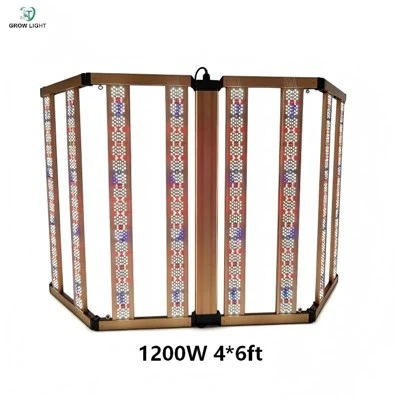
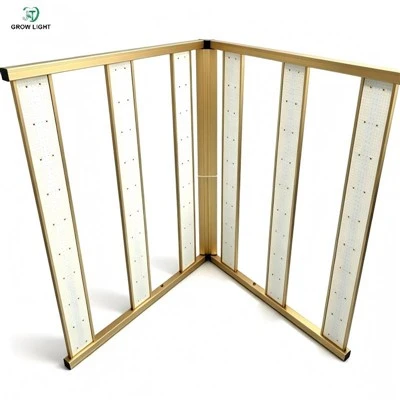
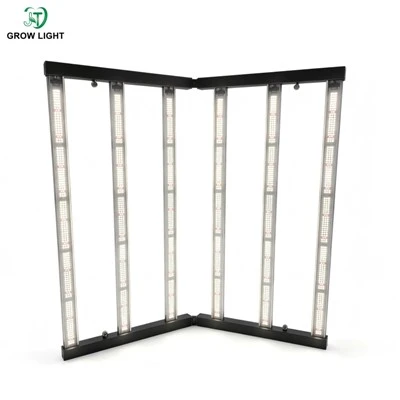
- Suitable light sources: Foldable LED Grow Lights/spider LED grow lights (2.9–3.1 μmol/J).

III. Why does the same plant require different PPFD at different growth stages?
Cannabis example: If you use an 800 μmol light to illuminate a seedling, it will simply die from sunburn. This is why the most important factors for commercial LED grow lights are not wattage but rather spectrum, uniformity, and dimming capability.
For the critical seedling stage, we designed the JTGL Seedling Series. It delivers a precise, uniform PPFD that prevents 'leggy' growth without the risk of light burn.
| Growth Stage | Recommended PPFD (μmol/m²/s) |
|---|---|
| Cloning / Propagation | 60–100 |
| Seedling Stage | 100–300 |
| Vegetative Stage (Veg) | 400–600 |
| Flowering Week 1–4 | 600–800 |
| Flowering Week 5–8 | 800–1000 |
IV. Overview of PPFD Requirements for Different Plants
| Plant | PPFD | DLI | Photoperiod | Hang Height |
| Lettuce (Leafy Greens) | 250–350 | 14–16 | 8–16 h | 0.2–0.3 m |
| Medicinal Plants – Flowering | 500–1500 | 30–65 | 10–12 h | 0.3–0.6 m |
| Desert Succulents / Cacti | 600–1000 | 20–30 | 12–16 h | 0.6–1.2 m |
| Avocado | 400–650 | 18–24 | 8–16 h | 1.2–2.0 m |
| Blueberry | 400–700 | 14–24 | 10–16 h | 0.6–1.2 m |
| Broccoli | 300–700 | 15–35 | 8–16 h | 0.2–0.3 m |
| Coriander | 300–600 | 20–28 | 10–16 h | 0.2–0.3 m |
| Citrus | 250–350 | 14–16 | 8–16 h | 0.6–1.2 m |
| Amaryllis | 150–300 | 4–14 | 12–16 h | 0.2–0.3 m |
| Anthurium | 80–400 | 4–14 | 12–16 h | 0.2–0.3 m |
| Basil | 220–500 | 12–26 | 8–16 h | 0.2–0.3 m |
| Blackberry | 200–300 | 8–14 | 10–16 h | 0.2–0.3 m |
| Pineapple | 80–600 | 4–14 | 10–16 h | 0.2–0.3 m |
| Calathea | 80–400 | 4–15 | 12–16 h | 0.2–0.3 m |
| Chrysanthemum | 200–300 | 10–14 | 8–16 h | 0.2–0.3 m |
| Cucumber | 300–600 | 20–30 | 10–16 h | 0.6–1.2 m |
| Eggplant | 300–600 | 20–30 | 10–16 h | 0.6–1.2 m |
| Lemon | 300–600 | 21–28 | 8–16 h | 0.6–1.2 m |
| Olive | 400–1000 | 18–40 | 6–16 h | 0.6–1.2 m |
| Chili Pepper | 300–600 | 20–30 | 10–16 h | 0.5–1.0 m |
| Petunia | 300–400 | 16–18 | 10–16 h | 1.0–1.5 m |
| Bromeliad Pineapple | 350–700 | 15–30 | 10–16 h | 1.0–1.5 m |
| Rosemary | 300–600 | 20–28 | 10–16 h | 0.5–1.0 m |
| Rose | 350–1000 | 18–22 | 10–16 h | 0.5–1.0 m |
| Strawberry | 350–800 | 17–36 | 10–16 h | 0.2–0.5 m |
| Succulents | 300–650 | 18–28 | 10–16 h | 0.2–0.5 m |
| Ferns | 80–120 | 4–6 | 8–16 h | |
| Cutting Seedlings | 60–80 | 2–6 | 12–16 h | 0.2–0.3 m |
| ZZ Plant | 40–300 | 4–14 | 12–16 h | |
| Jewel Orchid | 40–80 | 4–6 | 8–16 h | |
| Peace Lily | 20–40 | 22–28 | 12–16 h | |
| Araceae | 40–300 | 4–12 | 10–16 h | |
| Aglaonema | 40–600 | 4–14 | 12–16 h | 1–2 m |
V. Why High-Efficiency LED Grow Lights are the Ultimate Choice for Commercial Farming?
Commercial farms always have only three goals: Maximum Yield, Optimal Quality, and Lowest Energy Consumption.
Full-spectrum LEDs with 2.9–3.1 μmol/J can achieve:
✔ Achieving Target PPFD with Lower Energy Consumption
Saving 40–60% more electricity than HPS (US Department of Energy data)
✔ Higher PPFD Uniformity
The multi-point light source of the folded light prevents hotspots in the canopy.
✔ More Stable Temperature
Thickened aluminum frame + high heat dissipation structure
Prevents plants from being damaged by localized high temperatures.
✔ Dimmable
Allows growers to precisely provide light according to growth stages.
This is why commercial indoor farms in the US and Europe have fully transitioned to LEDs.
Understanding PPFD, DLI, and photoperiod is just the first step. The real challenge is transforming these numbers into a complete lighting solution tailored to your greenhouse height, crop, and budget.
If you're planning an LED upgrade for cannabis, vegetables, or high-value crops, or if you only know your greenhouse area, number of floors, and target yield but are unsure about wattage, number of lights, or installation height, simply send us this information.
JTGL's engineering team can help you with:
– Calculating target PPFD/DLI
– Selecting appropriate wattage and light type
– Designing light spacing and layout
– Estimating energy consumption and payback period
Stop Guessing. Get a Professional Lighting Map. Every grow space is unique. Don't waste money on a 'trial and error' approach. Send us your dimensions, and our engineers at JTGL will provide a custom PPFD Simulation Report for your farm-completely free
https://www.china-growlight.com