
Every grower has had a harvest that felt harder than it should have been.
Not because the plants failed.
Not because the team was inexperienced.
But because everything below the top canopy turned into a series of decisions that had to be made on the fly.
Which rows do we harvest first?
Which lower buds are worth keeping?
Do we trim this section or cut it entirely?
Why does the same plant look completely different from top to bottom?
This is where labor efficiency quietly disappears. Not through headcount. But through hesitation, rework, inconsistent standards, and constant management intervention. This is also where under canopy grow light systems begin to show a kind of value that spec sheets never capture.
Labor Cost Isn't About How Many People You Hire - It's About How Predictable the Work Is
Most cultivation teams don't struggle because they have too many workers. They struggle because labor gets pulled into places it was never meant to be. In unstable rooms, labor is constantly spent on:
- Re-evaluating lower canopy quality
- Re-explaining trimming standards
- Correcting mistakes after the fact
- Making last-minute harvest decisions
These are not productive tasks. They are corrective ones. When growers talk about labor efficiency, what they usually mean is not "fewer people," but fewer surprises. This is where under canopy lighting begins to matter - not as a growth accelerator, but as a stabilizer.
Lower Canopy Instability Is the Biggest Labor Black Hole
In rooms without under canopy lighting, the lower canopy is often the least predictable part of the plant.
Some sections produce usable flower.
Some are borderline.
Some clearly don't meet grade.
The result is operational chaos:
- Trimmers slow down to make judgment calls
- Supervisors step in to resolve disagreements
- Standards shift depending on who is working that day
Labor inefficiency almost always starts in the lower canopy. By introducing the Under Canopy LED Grow Light, growers aren't trying to push more production from below. They are trying to make lower-canopy outcomes consistent enough that decisions can be made before harvest day. That alone changes how labor flows through the room.
When Harvest and Trimming Stop Being "Live Decisions"
One of the biggest labor drains in commercial grow rooms is decision-making during harvest. Without stable lower-canopy quality, harvest becomes reactive:
- Teams decide as they go
- Standards shift mid-process
- Experienced workers slow down to compensate
When under canopy lighting is properly integrated, something subtle but important changes. Lower-canopy flower becomes more uniform. Density differences shrink. The "keep or cut" line becomes clearer. As a result:
- Harvest plans are finalized earlier
- Trimming protocols stay consistent
- Fewer decisions are made on the floor
This doesn't eliminate work. It eliminates indecision. And indecision is one of the most expensive forms of labor waste.
Under Canopy Lighting Reduces Repeated Work, Not Daily Tasks
Under canopy LED grow lights do not remove daily cultivation tasks. Plants still need care. Rooms still need monitoring.
What they reduce is repetition. In unstable systems:
- The same issue is addressed multiple times
- Adjustments are revisited again and again
- Managers re-explain the same standards every cycle
Once lower-canopy performance stabilizes, these loops shrink. Growers stop fighting the same problems cycle after cycle. That is where labor efficiency actually improves. Under canopy lighting doesn't remove work. It removes repeated work. This is one reason under-canopy lighting often forces growers to rethink room layout and workflow.
Why Managers Feel the Impact Before Workers Do
In rooms with unstable lower canopies, managers spend an enormous amount of time on:
Quality disputes
Last-minute decisions
Constant oversight
When under canopy grow light systems bring lower-canopy consistency up to an acceptable baseline, managers regain time.
Decisions are made earlier.
Standards stick.
Teams operate with less supervision.
From a labor-efficiency standpoint, this is huge - even if it never shows up as a line item.
Training New Workers Becomes Easier When Results Are Consistent
In many grow rooms, efficiency depends on a few highly experienced individuals who "know what to look for."
That dependence is risky.
When outcomes vary wildly, new workers struggle to learn. They copy what they see, but the results don't match expectations. Training takes longer, and mistakes cost more.
With under canopy lighting, improving lower-canopy consistency:
Visual standards become clearer
Outcomes align better with instructions
Training time shortens naturally
This doesn't replace skilled labor.
It reduces overreliance on it.
That is a real efficiency gain.
This is where lighting design intersects directly with labor outcomes.
In under canopy applications, coverage matters more than intensity. Dead zones create variability, and variability creates labor problems.
Different cultivation environments require different light distribution strategies.
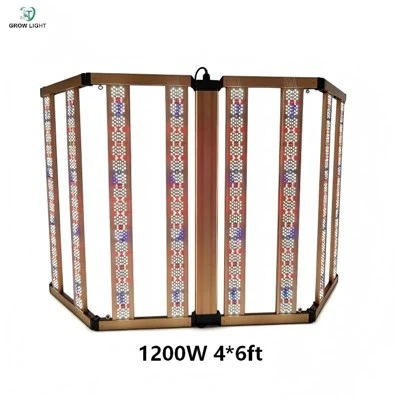
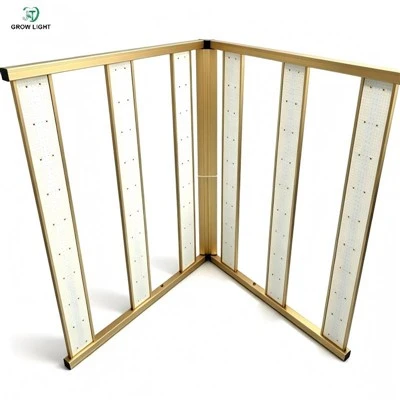
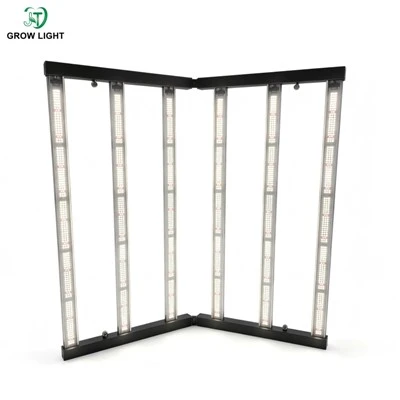
That's why JT Grow Light offers under canopy LED grow lights with both 120° and 240° beam angles, allowing growers to match light spread to their layout.
- 120° beam angle works well in tighter rows or controlled layouts where focused coverage is needed
- 240° beam angle provides broader lateral spread, helping eliminate shadows and dead zones in more open or irregular canopies
By ensuring that lower canopy zones receive even, predictable light, these designs directly support labor efficiency. Fewer dark spots mean fewer borderline flowers - and fewer decisions for the team to argue over.
This is not about brighter light. It is about removing uncertainty from the workspace.

When Under Canopy Lighting Hurts Labor Efficiency Instead of Helping
Under canopy lighting only improves labor efficiency when it simplifies decisions. Poorly designed systems do the opposite. Common mistakes include:
- Fixtures blocking access paths
- Excessive light creates uneven growth
- Inconsistent coverage creates new problem zones
In these cases, labor becomes harder, not easier. That's why under canopy lighting must be integrated thoughtfully - with beam angle, placement, and workflow in mind.
Why Labor Efficiency Improves Most in Mature Facilities
Early-stage grow rooms rarely feel labor pressure the same way mature facilities do.
In early phases, everything is still improving. Gains come easily.
In mature operations, labor inefficiency becomes the limiting factor. Margins tighten. Volume increases. Small inconsistencies become expensive.
That's when under canopy lighting becomes meaningful - not as a yield booster, but as an operational tool.
It stabilizes outcomes so teams can work with the system instead of constantly correcting it.
The most efficient grow rooms are not the ones with the fewest workers. They are the ones that require the least human intervention to maintain standards. Under canopy LED grow lights contribute to this by:
- Stabilizing lower-canopy quality
- Reducing judgment calls during harvest
- Making outcomes easier to train and replicate
This is the kind of efficiency growers actually care about. Under-canopy grow light only works when it is treated as one layer within a broader layered lighting strategy.