Every grower has seen the same pattern repeat itself.
The plant looks strong from the top.
Internodes tighten where the light is strongest.
Upper flowers stack nicely.
And then you look down.
Lower branches thin out.
Nodes space wider.
Flower sites hesitate, then stall.
Eventually, parts of the plant quietly give up.
For years, this has been treated as a lighting problem, a yield problem, or a trimming problem. But in practice, it is none of those first.
It is a decision problem - made by the plant itself. This is where under-canopy grow light begins to matter, not as a productivity tool, but as a structural signal that tells the plant which parts of itself are worth investing in.
Lower Canopy Weakness Is Not Failure - It's Conservation
One of the biggest misconceptions in cultivation is that the lower canopy "fails" because it lacks power.
In reality, most plants are doing exactly what evolution trained them to do.
When light levels remain below a meaningful return threshold for an extended period, the plant reduces investment. It thins stems. It stretches nodes. It limits flower development. Not because it can't grow - but because growing there no longer makes sense.
In top-light-only environments, the lower canopy exists in a permanent state of uncertainty. Light levels fluctuate. Shading shifts daily. The signal is inconsistent.
From the plant's perspective, the message is clear: Do not commit resources here. This is not stress. It is a strategy.
What Changes When Lower Canopy Light Becomes Predictable
The moment under canopy lighting is introduced correctly, the plant receives a different message.
Not brighter.
Not extreme.
Just consistent.
Lower canopy light no longer spikes randomly. It arrives daily, from a known direction, with predictable coverage. And the plant responds quietly but decisively.
Lower nodes stop being treated as expendable. Branches thicken instead of stretching. Flower initiation becomes more uniform. This is not about forcing production. It is about giving the plant a reason to keep its structure alive. One of the earliest visible outcomes of these structural changes is improved canopy uniformity.
Under Canopy Grow Light Changes Which Nodes Survive
This is one of the most under-discussed structural effects of under canopy lighting.
In rooms without under-canopy support, node survival follows a brutal logic. Anything below a certain height is eventually sacrificed. The plant reallocates energy upward, reinforcing dominance at the top.
With Under Canopy LED Grow Light, that logic softens. Nodes that would normally be abandoned remain active. Secondary branches persist instead of stalling. Structural symmetry improves naturally. Growers often describe this as "better lower growth," but that undersells what's happening. The plant is rewriting its internal priority list.
Plants Stop Racing Upward and Start Filling Out
In top-light-only systems, vertical growth is often exaggerated. Branches stretch toward light not because the plant wants height, but because it is escaping shade.
Under canopy lighting changes that dynamic. Once the lower structure receives reliable light, upward escape behavior decreases. Branches stabilize. Internodal spacing becomes more consistent across the plant. Instead of a sharp hierarchy - dominant top, passive bottom - the plant begins to behave as a volumetric structure, not a ladder. This is one of the earliest visible signs that under canopy lighting is influencing structure correctly.
Flower Structure Changes Before Yield Numbers Do
One of the most important practical observations from real cultivation is this: Structural change always appears before yield change.
In early cycles with under canopy lighting, growers often notice:
- Tighter flower formation lower on the plant
- Better-supported flower axes
- Reduced "airy zones" between productive sites
Total yield may not jump immediately. But the shape of the flowers changes first. That's because structure is a prerequisite for production. The plant builds architecture before it fills it. This is why experienced growers evaluate under canopy lighting by looking at form, not weight, in the early stages.
Beam Angle Is a Structural Decision, Not a Spec Sheet Detail
This is where lighting design directly intersects with plant morphology. Under canopy applications are not about intensity. They are about activation range.
Some cultivation environments feature tight row spacing and disciplined plant training. Others are more open, with lateral branching and less uniform geometry.
That's why beam angle matters.
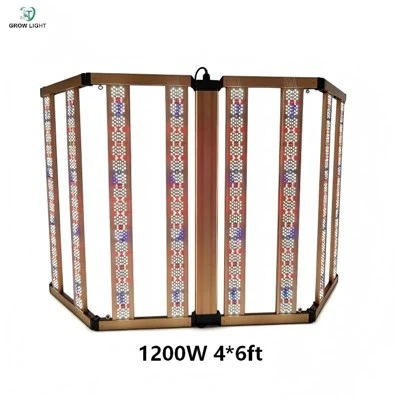
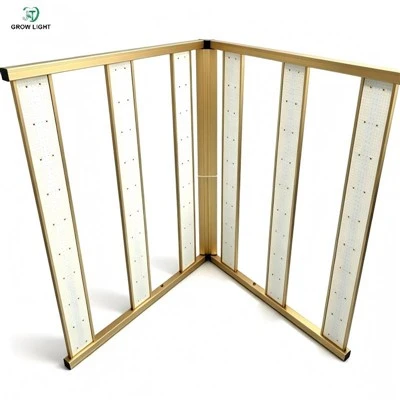
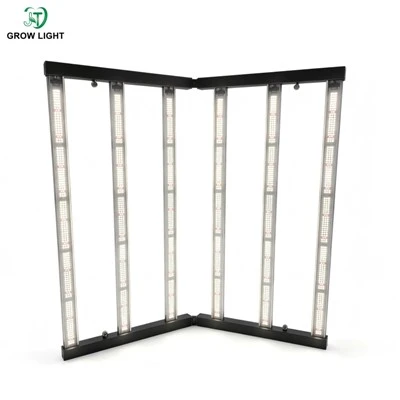
At JT Grow Light, under-canopy grow lights are offered with both 120° and 240° beam angles, specifically to address structural differences rather than brightness preferences.
Provides focused coverage for dense, organized canopies where light needs to target specific structural zones without spill.
Delivers broader lateral coverage, activating side branches and irregular lower structures while minimizing shadow zones.
The goal is not to push more photons. The goal is to ensure that more structural tissue receives a clear, repeatable signal to participate in photosynthesis. When that happens, structure responds.
Under Canopy Lighting Encourages Structural Confidence
This concept is subtle but real.
Plants behave differently when environmental signals are reliable. Lower canopy lighting removes doubt.
Instead of "maybe this area will be shaded tomorrow," the plant experiences consistency. And consistency encourages commitment.
Branches thicken.
Node spacing stabilizes.
Flower sites develop with less hesitation.
The plant is no longer hedging its bets.
Under canopy lighting does not automatically improve plant structure. Poor application can do the opposite. Common mistakes include:
- Introducing lower-canopy light too early, before structure is defined
- Using excessive intensity that disrupts apical balance
- Poor placement that creates uneven activation zones
In these cases, plants may respond with chaotic lateral growth, tangled branching, or difficult-to-manage architecture.
One hard-earned lesson from real cultivation: Under canopy lighting improves structure only when the structure is ready to respond.
Timing matters. Restraint matters.
Why Structural Changes Are More Valuable Than Short-Term Gains
Yield is easy to measure. Structure is harder - but more important. Plants with better structural balance:
- Are easier to manage
- Respond more predictably to environmental changes
- Maintain consistency across cycles
Under canopy grow light contributes to this by changing how plants allocate effort internally. It does not force growth. It invites participation.
Under Canopy Lighting Does Not Add Control - It Removes Conflict
One of the biggest misunderstandings is that adding lights adds complexity. In reality, under canopy lighting often simplifies cultivation by removing internal conflict within the plant.
When upper and lower structures are competing under unequal conditions, the plant is constantly adjusting. When light distribution becomes more balanced, internal signals align.
Growth becomes calmer.
Structure becomes clearer.
Management becomes easier.