Thanks to scientific verification, LED full spectrum grow light can supply the dominant light band effective for plant growth. LED Grow Light with IR can not only provide the spectrum needed to grow traditional plants but also increase the infrared light radiation, thus making it possible to effectively improve plant growth efficiency and quality. What exactly is the IR spectrum - we will explain that in detail here.
What is far infrared (fIR)?
Far infrared (IR) wavelengths typically range between 720 and 750 nm and are part of the electromagnetic spectrum While we cannot see far infrared with our naked eyes, it still has an effect on objects and the environment in the form of heat. Far infrared (FIR) in the growth of plants can form the growth, flowering, fruiting, and other plant growth processes.
What is the far infrared effect on plant growth?
1) Photomorphogenesis
Plants do not only rely on photosynthesis for growth and development, they are also regulated by photomorphogenesis. As a long-wave light, FIR light can exert its influence over the photosensitive pigment system of the plants. Genes with a significant effect on the conversion of Pfr (far-red light absorption type) to Pr (red light absorption type) and the growth pattern and morphological structure of the plant were considered as regulators of the growth pattern of plants, which are directly under the control of the photosensitive pigment of the plant.
Plants possess two varieties of photosensitive pigments (Phytochrome):
660nm Pr (red light absorption type)
Pfr (absorption type for far-red light, 730nm)
- Day time (have enough red light): Pr → Pfr (active state), plants enter active growth and photosynthesis period.
- Night (most far-red light): Pfr to Pr (going into dormancy) → stimulates vegetative elongation growth and increases flowering and fruiting potential in plants
The Pfr/Pr balance can change in response to far-red light (730nm), where the plant "thinks" whether the day is getting longer or night is getting longer, changing flowering and growth.
2) Modifying the Day Length Effect of Plants
Photoperiod is a means for plants to modulate their growth cycle and flowering time as a function of precipitating and chilling temperatures. The photoperiod perception mechanism can be adjusted by the length of light needed by different plants. The response to blue light depends in part on the efficacy of phytochrome-promoting flowering in profound red light and inhibiting it in FIR light-for long-day plants and short-day plants, respectively. FIR is known to help plants regulate the flowering cycle, thus speeding up flowering and improving yield.
Long-day plants, since increasing the exposure to far-red light will shorten the period of waiting jitter time in the light cycle time, also will shorten the growth cycle flowering.
By adjusting the growth cycle via FIR light, short-day plants make flowering more stable, thus raising overall yield.
In what ways does FIR affect plant growth?
1) Accelerate growth through photosynthesis.
Supplications to fibrinogen (FIR) light can help the photosynthesis of plants, FIR light can increase the activity of the chlorophyll in the plant, and absorb more light energy. However, far-red light can also improve the photosynthesis efficiency of plant leaves because it affects the photosensitive pigments of plants. This allows plants to utilize the additional light from the LED grow lamps to produce energy more efficiently and speed up plant growth.
LED full spectrum grow light provides sufficient light for plants, the combination of red light and far-red light promotes the growth of plants in a variety of wavelengths. This is especially true when the light intensity is suitable, which can effectively promote the increase of leaf area, root development, and branch elongation of the plant.
2) Increase resistance to plant diseases and enhance quality
FIR light is very beneficial in increasing plant resistance, particularly against diseases and pests. By being caught up in the plant's immune system Plants can better withstand external pressures with exposure to IR at day/night when growing at wide temperature ranges or in changing humidity settings.
Moreover, IR light can also enhance the production of plant secondary metabolites, such as anthocyanins, terpenes, flavonoids, and so on. These compounds function as functional or pharmacological materials, influencing the flavor, aroma, color, and nutritional characteristics of plants, thus enhancing their market value. For instance, e.g., under the influence of IR light, the cannabis plants can increase their THC (tetrahydrocannabinol) content which enhances the commercial value of the cannabis plants.
3) Help plants to flower and fruit
The regulation of plant photosensitive pigments was regulated by FIR light. As a result, the flowering period of plants is shortened and the crops are matured in advance by increasing the far-red light in the dark.
As for the application in large-scale commercial planting, LED Grow Light with IR can help growers shorten the growth cycle of plants and increase the total yield of crops. However, the FIR light can also cause fruit swelling, promote fruit ripening, and improve the quality of fruits.
When to Plant and the Benefits of Planting with LED Grow Light with IR
1) Efficiency enhancement of plant growth
Efficient growth lighting– The best space-saving way to make sure your plants receive healthy lighting is using the LED grow light with IR. This lighting combination can supply all the lighting to the plants for growth, and it can avoid the spectral imbalance, and increase the growth rate and yield of the crops.
2) Save energy and protect the environment
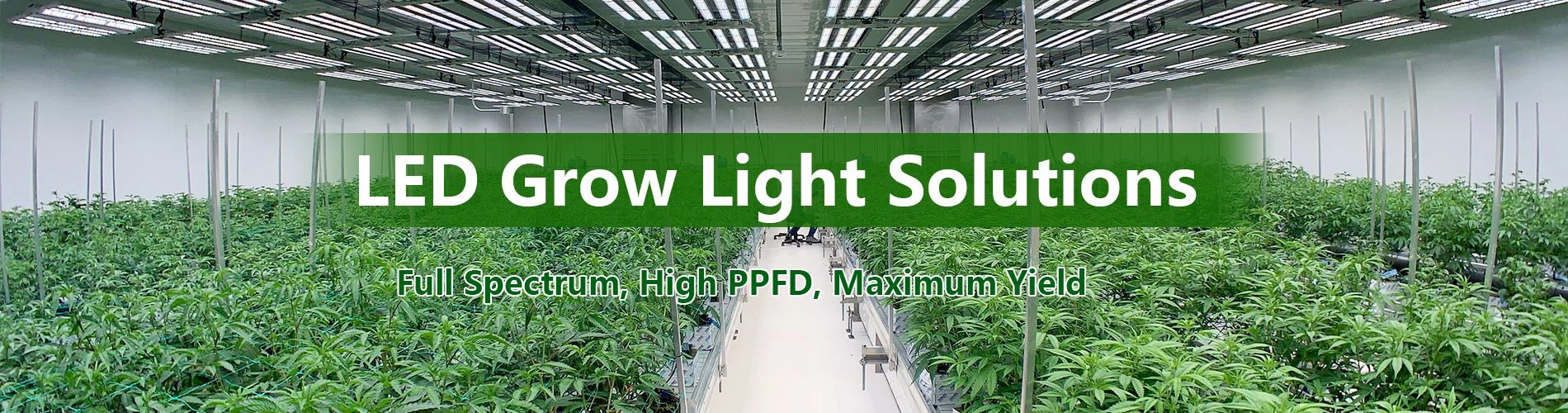
LED Grow Light Professional not only offers more efficient lighting than traditional high-pressure sodium lamps (HPS), but also reduces power consumption. LED plant origin lights adding the IR spectrum typically have a more balanced illumination, reduce strength consumption, and apply to the fields of greenhouse, vertical agriculture, and commercial planting.
Which crops are fIR (far-red light) permissive?
|
Crop Type |
Effect of IR (Far-Red Light) |
|
Leafy Vegetables (Lettuce, Spinach) |
Increases leaf expansion rate, enhances yield |
|
Fruit and Vegetables (Tomato, Pepper, Cucumber) |
Promotes flowering and fruiting, enhances photosynthesis |
|
Medicinal Plants (e.g., Cannabis) |
Increases growth rate, boosts yield |
|
Strawberries |
Accelerates fruit ripening, increases sweetness |
|
Ornamental Plants (Flowers) |
Promotes flowering, extends flowering period |
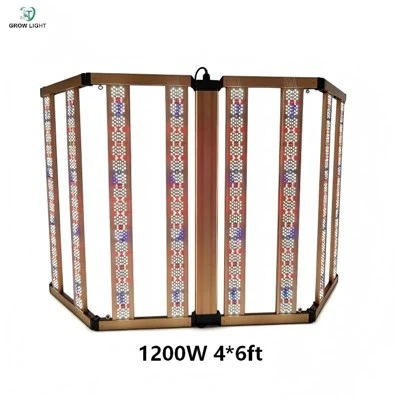
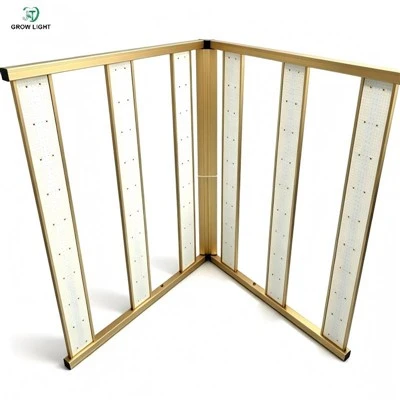
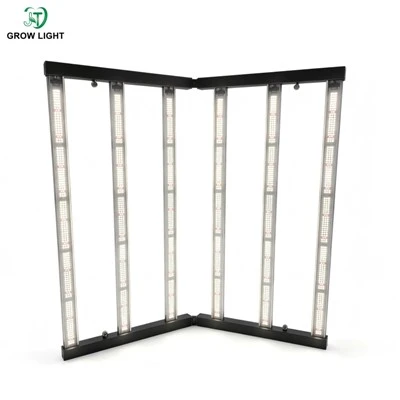
LED Grow Light with IR products include foldable and quantum board:
https://www.china-growlight.com/plant-grow-lights/quantum-board-grow-lights/
https://www.china-growlight.com/led-grow-lights/commercial-led-grow-lights/