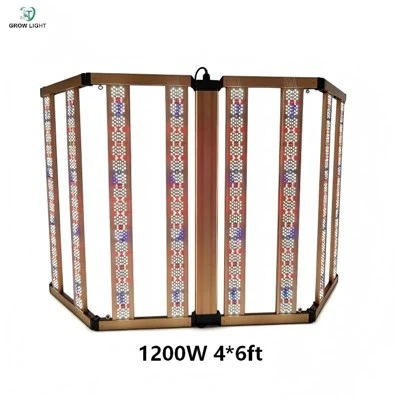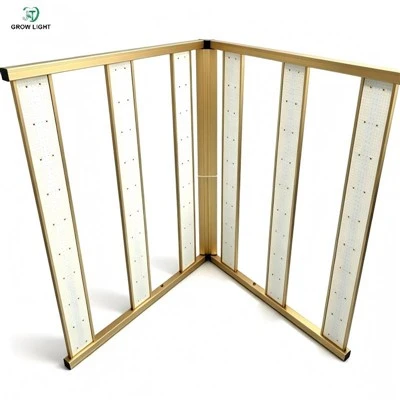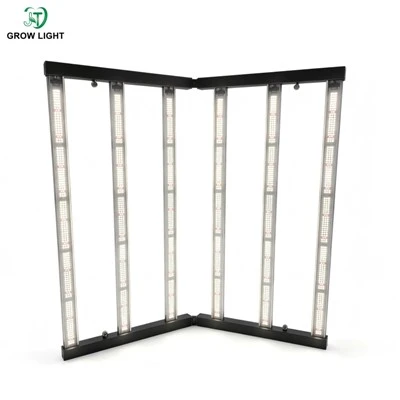

If you've been growing cannabis for a while, you already know this: veg and flower are two completely different games. A lot of growers switch nutrients, adjust their feeding schedule, even change their watering routine once flowering starts - but they keep using the exact same light. That's usually where the yield gets stuck.
We talk to commercial growers every week who tell us the same thing: "My plants look healthy, but the buds just aren't as dense as I expected." Nine times out of ten, it's not the genetics. It's the LED grow light for cannabis flowering they're using - or more specifically, the spectrum coming out of it.
Let's break down what actually matters during flowering, in plain language, no engineering degree required.
Vegetative Light vs Flowering Light - They're Not the Same Thing
During veg, plants want more blue light. It keeps growth compact and leafy. But once you flip to flowering, the plant's priority changes completely - it's now focused on building buds, not leaves. That means the light recipe needs to shift too, with more emphasis on red and far red wavelengths.
A Real Example of What Happens When the Spectrum Is Off
We've seen this play out on real farms: two identical rooms, same strain, same nutrients, same climate control - but one room used a fixed, veg-heavy spectrum all the way through flower. The result was noticeably fluffier buds and a longer flowering cycle. The other room, running a full spectrum grow light for cannabis tuned specifically for flowering, finished faster with tighter, heavier bud structure. Same genetics. Different light. Different outcome.

What's Actually in the Ideal Flowering Spectrum
Red Light - The Main Driver Behind Bud Formation
Red light (roughly 620-660nm) is the workhorse of flowering. It's the wavelength most directly tied to bud site development and flowering speed. If your light is weak in this range, you're basically asking your plant to flower with one hand tied behind its back.
Far Red Light - Why It Speeds Up Flowering
This is where a lot of older LED fixtures fall short. Far red (700-760nm) works together with red light to trigger faster, more even flowering response across the whole canopy - not just the top. Growers using far red LED cannabis flowering setups often report a slightly shorter finish time and more uniform bud development from top to bottom of the plant.
Blue Light - Still Needed, Just Less of It
Don't cut blue light out completely during flower - it still plays a role in resin production and keeping plant structure sturdy. It just needs to take a back seat to red and far red once flowering kicks in.
Red to Far Red Ratio, Explained Simply
| Ratio (Red : Far Red) | Typical Result |
|---|---|
| Too high (little far red) | Slower flower response, less uniform canopy |
| Balanced (optimized) | Faster, more even flowering, denser bud sites |
| Too low (excess far red) | Stretching, weaker bud density |
The Technical Stuff That Actually Matters (Kept Simple)
Chip Quality - Why It Affects Your Yield
Not all diodes are created equal. Higher-grade chips running at around 70-76% of their rated power tend to hold their output much longer over time, instead of dimming out after a year or two. That translates directly into more consistent yields, cycle after cycle.
PPFD & Light Efficiency Numbers You Should Know
Two numbers worth knowing:
PPFD (Photosynthetic Photon Flux Density) - basically how much usable light is actually landing on your canopy
PPE (Photosynthetic Photon Efficacy) - how much usable light you get per watt of electricity
| Metric | Flowering Stage Target |
|---|---|
| PPFD | 700–1000 µmol/m²/s |
| PPE | 2.8–3.1 µmol/J |
Higher PPE means your electricity bill does less damage while your plants get the same (or better) light.
Why "Full Spectrum" Isn't Always the Same Thing
Here's a truth a lot of sellers won't tell you: "full spectrum" on a spec sheet doesn't tell you anything about the actual ratio of red to far red, or how much of each wavelength is really present. Two lights can both claim full spectrum and perform completely differently in flower. Always ask for the actual spectrum graph, not just the label.

We're Running a Live Trial Right Now - Here's What We're Seeing
The Setup: A 9-Week Flowering Cycle, Old Light vs New Spectrum
We're currently mid-way through a real commercial trial comparing our optimized flowering spectrum against an older-style fixture, side by side, same strain, same room conditions. The full cycle runs 9 weeks.
Week 5 Check-In: Early Observations
We're at week 5 right now. So far, the canopy running the optimized spectrum is showing noticeably tighter bud formation and more even development across the canopy compared to the older light. It's still early to talk final numbers, but the trend is encouraging.
What's Coming Next - Full Harvest Results
Once harvest is complete, we'll update this article with real yield and bud density comparisons between the two lights. Bookmark this page if you want the full before-and-after data.
Old-Style Grow Lights vs Optimized Flowering Spectrum

What the Data Shows on Yield & Bud Density
Independent horticultural lighting studies have consistently shown that increasing far red presence during flower improves flowering speed and bud density compared to red-only or blue-heavy fixtures. This is exactly why more wholesale LED grow lights for commercial cannabis buyers are now asking specifically about red-to-far-red ratios, not just total wattage.
Energy Efficiency - Which One Actually Saves You Money
Older HPS-style thinking was all about total wattage. Today, smart commercial buyers look at PPE instead - because a lower-wattage light with higher PPE can outproduce a higher-wattage light with poor efficiency, while using less electricity.

Where Commercial Cannabis Lighting Is Headed
Adjustable Spectrum Is Becoming the New Standard
More growers are moving toward tunable spectrum fixtures that let you shift the red-to-far-red balance as the flowering cycle progresses - heavier stretch-control early, heavier bud-density push later.
Multi-Zone Dimming for Bigger Operations
For larger facilities, daisy-chain dimming lets growers control multiple rooms or zones from one control point, which matters a lot when you're running different strains with different light needs side by side.
Rising Demand from EU & North American Growers
As commercial cannabis cultivation keeps expanding across Europe and North America, more growers are searching specifically for a LED grow light manufacturer for cannabis cultivation that can prove performance with real data, not just marketing claims.
How to Pick the Right Flowering Light for Your Operation
Questions to Ask Before You Buy
What's the actual red-to-far-red ratio, not just "full spectrum"?
What's the PPE rating, and can you show test data?
What's the lumen depreciation after 12-24 months of use?
Can they provide real case studies, not just renders?
Manufacturer vs Off-the-Shelf - What's the Real Difference
Buying off-the-shelf often means you're stuck with whatever spectrum the factory decided works for everyone. Working directly with a manufacturer means you can request spectrum tuning based on your specific strain and facility setup - which matters more than most growers realize until they've tried both.
FAQ
Q: What light spectrum is best for cannabis flowering?
A: A spectrum rich in red (620-660nm) combined with far red (700-760nm), with a balanced ratio between the two, generally produces the fastest and most even flowering response.
Q: Do I really need far red light?
A: Not strictly required, but it noticeably speeds up flowering response and improves canopy uniformity when balanced correctly with red light.
Q: How much light (PPFD) do I need during flowering?
A: Most commercial cannabis operations target a PPFD range of 700-1000 µmol/m²/s during flowering, depending on canopy density and strain.
Q: Can I use the same light for veg and flower stages?
A: You can, but a fixed veg-heavy spectrum typically underperforms during flower. A tunable or flower-specific spectrum will usually outperform it.
At the end of the day, spectrum isn't just a spec sheet number - it's the difference between an average harvest and a great one. We're currently proving this out ourselves with a live 9-week trial, and we'll share the real results once harvest wraps up. If you're evaluating your next lighting setup, don't just ask "how many watts" - ask about the spectrum behind it.