In the past few years, one question has been repeatedly raised in our enquiries from North America: "If I replace my 1000W HPS with LEDs, how fast can I get my money back?"
Everyone already knows that LED grow lights are more energy-efficient, cooler, and more stable, but what truly determines investment isn't "sounds good" but rather ROI (Return on Investment).
Therefore, we systematically conducted an "ROI Study on HPS Replacing LEDs" using real-world North American conditions to clearly calculate and explain this issue.
To be clear, we are not using ideal laboratory conditions but rather modelling a scenario very common in North America.
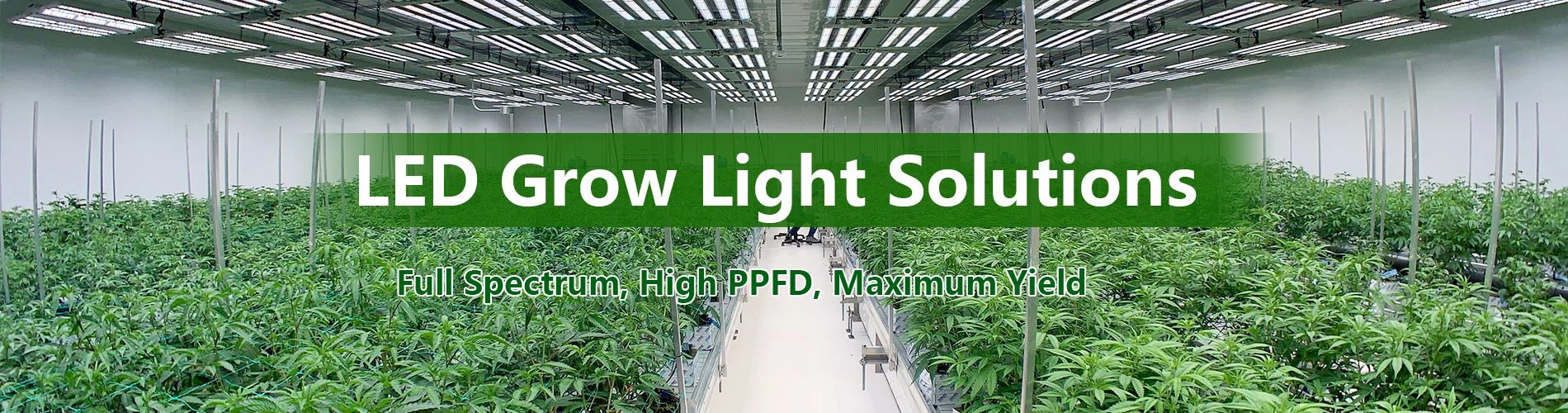
A 1000-flowering room in North America
- Original Plan: 100 units of 1000W HPS (including ballast, actual power estimated at 1050W)
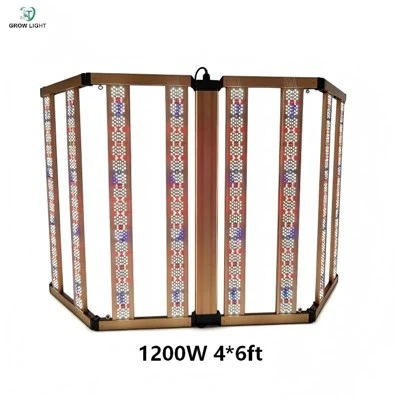
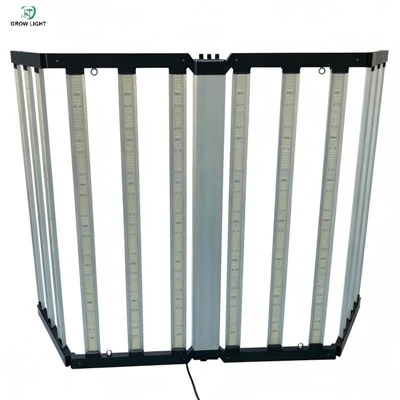
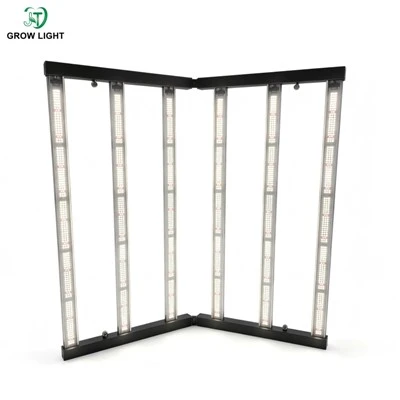
- Replacement Plan: 100 units of high-efficiency LED grow lights (e.g., 720–800W foldable/spider models, PPE approximately 2.8–3.0 μmol/J)
- Light Target: Flowering PPFD 800–1000 μmol/m²/s
- Light Duration: Average 12 hours per day, 365 days per year
- Local Electricity Price: We use a conservative assumption of 0.12 USD/kWh (higher in many areas).
Under this premise, we calculate ROI from four perspectives:
- Direct electricity cost savings
- Savings from reduced HVAC cooling load
- Differences in bulb/maintenance costs
- Actual improvement in yield and quality


2. How significant are the direct electricity cost savings?
Let's look at the most intuitive aspect first: the power of the lights themselves.
- HPS: 100 units × 1050 W ≈ 105 kW
- LED: If using 720W–800W foldable LED grow lights/spider LED grow lights, let's take the middle value of 750W. → 100 units × 750 W = 75 kW
That is to say, under the same PPFD conditions, LEDs have approximately 30 kW less overall power than HPS.
Annual Electricity Consumption Difference:
- HPS: 105 kW × 12 h/day × 365 ≈ 459,900 kWh/year
- LED: 75 kW × 12 h/day × 365 ≈ 328,500 kWh/year
Annual Electricity Savings ≈ 459,900 – 328,500 = 131,400 kWh
Assuming an electricity price of 0.12 USD/kWh: Annual savings in pure lighting electricity cost ≈ $15,768.
If the local electricity price is 0.15–0.18 USD/kWh, this figure will be even more significant.
3. Reduced Cooling Load, HVAC, Also "Saving Money."
The biggest problem with HPS is not just its high electricity consumption but also its excessive heat. Switching to LED significantly reduces the amount of heat entering the room-heat that would otherwise be removed by air conditioning, chillers, and dehumidifiers.
Our study used a conservative factor: for every 1 kW reduction in lighting load, approximately 0.3–0.5 kW of cooling demand is reduced. As calculated earlier, LEDs require about 30 kW less load than HPS.
Using a midpoint of 0.35, we estimate:
Cooling load reduction ≈ 30 kW × 0.35 = 10.5 kW.
These cooling devices themselves also consume electricity.
Assuming the cooling system's COP is approximately 3 (1 kW of electricity carries 3 kW of heat)
Then the electricity consumption of the cooling equipment for 10.5 kW of heat would be approximately:
10.5 ÷ 3 ≈ 3.5 kW
Annual HVAC electricity savings ≈ 3.5 kW × 12 h × 365 ≈ 15,330 kWh
At a rate of 0.12 USD/kWh:
Annual savings on cooling alone ≈ $1,839 USD
Total electricity savings for lighting and cooling combined: ≈ $17,600 USD/year (conservative estimate)
This is just for a 1000-room㎡ facility with 100 lights; for larger facilities, this number will increase significantly.
4. Light Bulbs and Maintenance Costs – Hidden Expenses of HPS
HPS bulbs are generally recommended to be replaced approximately every year (some growers extend this to 1.5 years, but light decay is already quite noticeable).
The price per bulb + labour + downtime, combined, is conservatively estimated at $40 USD/unit/year in our model.
100 HPS units: Annual maintenance cost ≈ $4,000 USD
LEDs have a lifespan exceeding 50,000 hours. Using JTGL LED grow lights, the design lifespan of L90/L80 is generally 50,000–60,000 hours, meaning there is almost no need for "mass bulb replacement" within 5 years.
The annual maintenance cost of LEDs is close to zero, with only a small cost for replacing a very few faulty bulbs.
In the ROI model, an annual maintenance cost difference of $3,000–$4,000 USD is considered very reasonable.
Therefore, the total savings from these three items are:
Lighting savings: ≈ $15,768/year
HVAC savings: ≈ $1,839/year
Maintenance savings: ≈ $4,000/year
Total direct economic benefits: ≈ $21,000–$22,000/year
5. Changes in Actual Output and Quality
The above discussion focused on "saving money", but the true value of LED grow lights goes beyond just cost savings.
- In many North American projects, we've heard similar feedback: switching to a suitable LED solution generally increases yield per square metre by 5-15%, due to reasons including:
- Better spectrum for flowering (reasonable blue-red ratio, controllable far-red)
- More uniform PPFD, resulting in better quality, lower canopy flower heads
- More stable temperature, reducing plant stress
- Lower disease incidence
For a practical example: If the original yield per cycle was 50 kg, a conservative 8% increase would mean:
- 4 kg more per cycle, 5 cycles per year, totalling an extra 20 kg per year.
- Even without considering the end-user price, just the "plant-side price",
This extra output easily offsets a significant portion of the lighting investment cost.
Therefore, in our ROI studies, we usually treat the "yield increase" as a separate bonus: it's not a prerequisite for break-even, but it often shortens the payback period by several months.


6. Overall ROI: How Long Does it Take to Recover Investment by Switching HPS to LEDs?
Let's put everything together:
Assuming 100 high-quality LED grow lights (e.g., JT's foldable/spider series), with a total investment estimated at $80,000–$90,000.
Annual Savings:
Electricity + HVAC ≈ $17,600
Maintenance Costs ≈ $4,000
Total Direct Savings ≈ $21,000/Year
Adding a conservative estimate of increased production (e.g., an additional $10,000–$15,000 in variable revenue annually)
Theoretically:
Most of the investment can be recovered in approximately 2–3 years.
In regions with higher electricity prices and more production-sensitive environments, the payback period could even approach 1.5–2 years.
7. How will this "HPS → LED ROI Study" be applied to JT's projects?
Next, we will apply these models to preliminary project evaluation for North American clients; Financial calculations for LED upgrades for investors; Overall upgrade path planning from HPS to LED for growhouses; and providing partners with ROI comparison tables for foldable LED grow lights, spider LED grow lights, and QB LED grow lights.
In other words, when clients ask, "Is it worth it to replace the lights?" we will no longer simply answer, "LEDs are more energy-efficient."
Instead, we can provide an ROI report tailored to their specific facilities-including power consumption, electricity costs, cooling, maintenance, yield, and payback period.
HPS to LED is not a simple light replacement; it's a business model upgrade.
This ROI study on replacing HPS with LEDs in North America is just a starting point.
Next, we will continue to develop more detailed models for different regional electricity prices, different crop varieties, and different growroom structures.
But one thing is very clear: in North America, if you're running commercial agriculture with HPS (High-Performance Hybrid System) long-term, switching to high-efficiency, stable LED grow lights will only mean a return on investment, and often sooner than you might imagine.
JTGL's goal is simple: to help customers transform every unit of electricity, every light, and every square metre of canopy into predictable, calculable, and replicable long-term cash flow through more efficient and stable LED solutions.