Blue light decay is the most overlooked yet most impactful spectral issue in LED grow lights.
Everyone talks about μmol/J, chasing high luminous efficacy and low energy consumption, debating 2.8, 3.0, 3.2...
But what truly determines plant morphology, internode spacing, compactness, root system quality, and canopy uniformity is blue light.
You may have heard that grow lights lose efficiency over time, but do you truly understand why? In full-spectrum LED grow lights, blue light serves as the primary energy source, driving white phosphors to emit other colors, such as green and red.
When blue light decays rapidly, plants immediately signal their distress. That's why we dedicated months to studying blue light decay as a specialized research topic.
Blue light is challenging to manage due to:
1) Extreme temperature sensitivity
2) Significantly faster decay rate than red light
3) Prone to peak loss in high-temperature environments
4) Major impact on plant morphology
5) Critical influence on canopy uniformity
6) It represents the "stability ceiling" for full-spectrum performance
Even if your lights appear bright and normal, the slightest blue light dropout causes plants to:
- Exhibit elongated internodes
- Develop loose apical growth
- Produce sparse lateral buds
- Show increasingly uneven canopy structure
- Develop weak plant architecture
- Experience reduced photosynthetic efficiency
- Grow at a slower overall rate
Yet 90% of manufacturers in the industry don't even test blue light decay. They only look at luminous efficacy, wattage, and brightness. But plants won't deceive you-blue light decay issues will be written all over their growth cycle after cycle. This is precisely why JT undertook this research: because blue light stability = long-term yield stability.

2. What specific areas did JT's R&D team investigate?
Our research aims to ensure LED grow lights operate more reliably in growers' environments.
This project focused on four key areas:
① Blue light decay curves for different LED chips at 25°C / 35°C / 45°C / 55°C
After hundreds of thermal spectral tests, we reached a critical conclusion: blue light is 2–4 times more sensitive to temperature than red light.
Even slight temperature increases cause noticeable blue light drop-off. Thus, heat dissipation structures, driver stability, and airflow directly impact blue light lifespan.
② Effect of LED Arrangement Patterns on Blue Light Decay
Many manufacturers favor "point-like distribution" for blue light. We discovered: Point-like blue light decays faster, while area-like blue light remains more stable.
Therefore, in our new-generation bar lights and thin rack lights, we exclusively adopt a "uniformly distributed area-like spectrum" blue light architecture, specifically optimized for canopy stability.
③ Practical effects of blue light decay on plant internode length and morphology
Results were clear: faster blue light decay leads to longer internodes, looser plant structures, and weaker apical growth.
④ Correlation between blue light decay and long-term PPFD consistency
Faster blue light decay → Red-shifted spectrum → Altered PPFD structure → Accelerated canopy aging → Lower overall cycle yield
3. What upgrades do JT's LED grow lights deliver?
We've directly implemented these research findings into our products:
① All commercial LED grow lights feature upgraded heat-resistant blue light architecture (Blue-Stability Architecture)
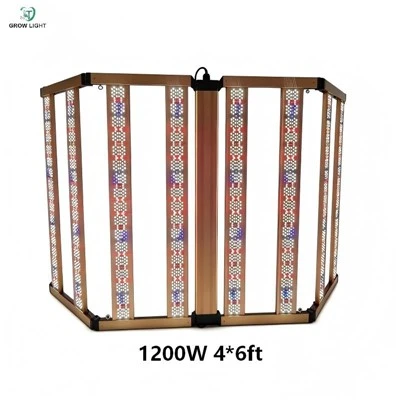
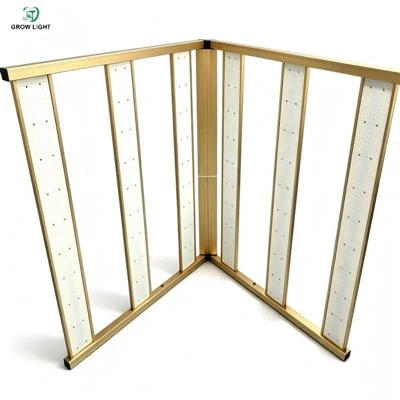
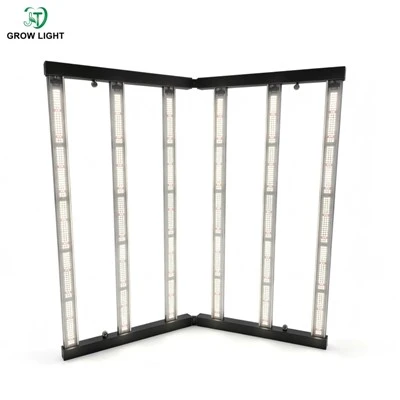
Our upgraded foldable LED grow lights and slim vertical farming lights feature heat-resistant blue light layouts, minimizing blue light decay under thermal stress.
② Spectral consistency testing now includes "blue light stability curve" comparisons
We evaluate not only spectral positions but also relative blue light ratios, thermal blue light shifts, and blue light decay trends under high-frequency use.
③ Optimized heat dissipation for blue light critical zones
Since blue light is most heat-sensitive, we directly enhance thermal efficiency in blue light zones for more stable overall operation.
④ New product line tailored for high-blue-light-demand crops
This upgrade is particularly suited for: leafy greens, microgreens, cannabis, propagation/cloning, and compact-structure crops.

4. Why choose JTGL?
Because most manufacturers fundamentally misunderstand blue light's importance, let alone conduct dedicated research.
We've thoroughly investigated this issue and integrated our findings across our entire product line. This means: JT lights aren't just bright-they deliver more consistent yields.
Blue light is the soul of plant morphology; stability is a brand's responsibility. We pursue this research because we believe: LED grow light competition isn't about luminous efficacy-it's about long-term stability.
Achieving stable blue light output is the most challenging-and most worthwhile-goal.
Moving forward, we'll continue advancing: long-term blue light decay curves, spectral consistency labs, thermal spectral databases, and blue light formulation studies for diverse crops.
Our mission is to ensure customers still affirm after three or five years: JT Photoelectric LED grow lights deliver unwavering reliability.