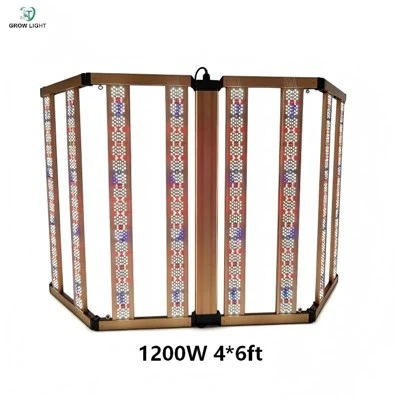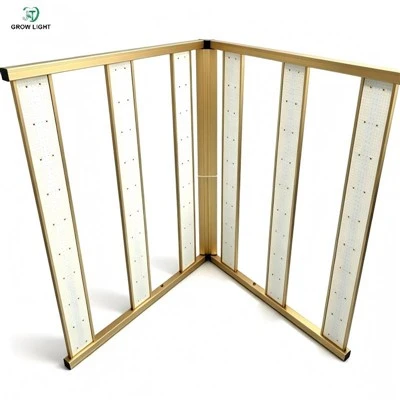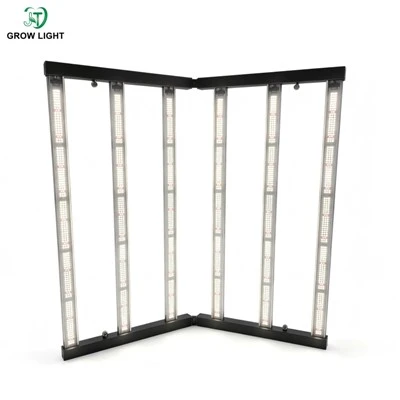
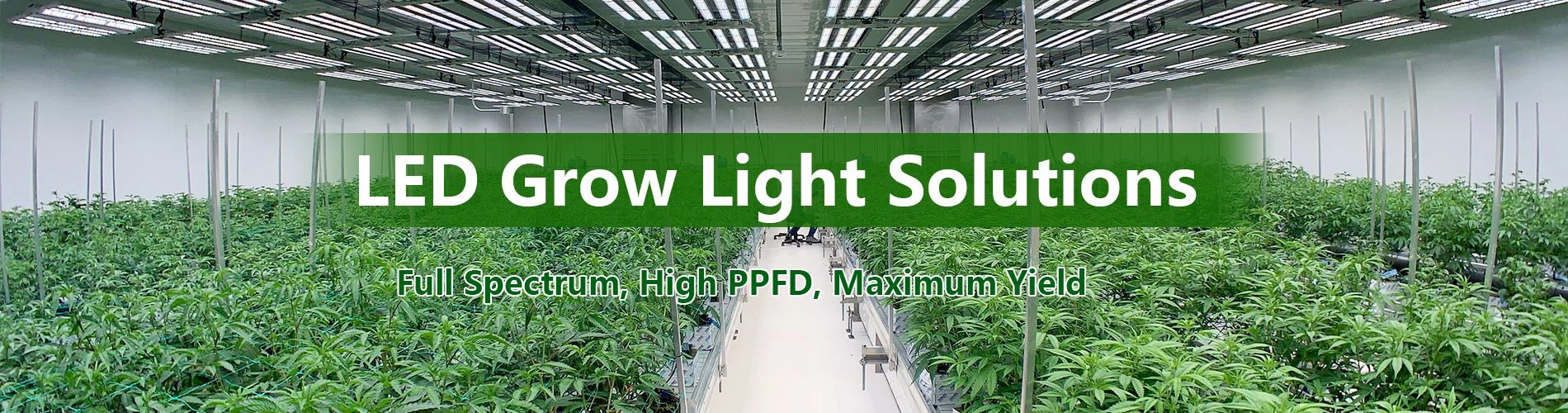
I've been doing this long enough to know that when a grower calls asking about under canopy light, the first two questions out of their mouth are almost always about wattage and PPFD. Fair enough - those numbers matter. But there's a decision that comes before all of that, and it's the one I see people get wrong more often than anything else: fixture length.
Get the length wrong, and it doesn't matter how good your spec sheet looks. You either end up with dark gaps between fixtures where your lower bud sites just don't get enough light, or you overbuy and end up with expensive overlap that's basically wasted photons and wasted money. So before we talk watts, let's talk length - specifically, the choice between 6ft under canopy light and 8ft under canopy light, which is the question I probably field more than any other these days.
Why Fixture Length Is the Most Overlooked Decision in Under Canopy Lighting
Here's a scenario I run into a lot. A facility manager sends me their current top light layout and says "just quote me something for under canopy." No row length, no bench width, no mention of how many rows per light circuit. They've already decided on wattage based on what a competitor quoted them, but they haven't thought about whether the fixture length actually fits their space.
The thing is, under canopy lighting isn't like top lighting where you're covering an open canopy from above and a few inches of overhang barely matters. Under canopy fixtures sit inside the canopy, threaded between plants or mounted along a bench rail, and they're covering a linear run. If your row is 24 feet long and you're using a fixture that doesn't divide evenly into that, you're either leaving a gap at the end of the row or you're forcing an extra fixture into a space that doesn't really need one. That's money and light efficiency lost on a decision that takes five minutes to get right if you measure first.
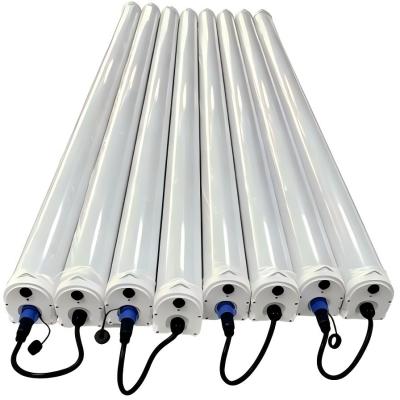
6ft vs 8ft Under Canopy Light: The Basic Differences
Let's get the fundamentals out of the way first. Our under canopy line has grown over the past couple of years - we started mainly around the 4ft mark, and based on what commercial growers were actually asking for, we've pushed the range out to 6ft and 8ft options, paired with wattages of 120W, 150W, 180W, and 250W depending on the length and emission style you pick (2-side or 3-side).
| Spec | 6ft Under Canopy Light | 8ft Under Canopy Light |
|---|---|---|
| Typical wattage range | 150W – 200W | 250W |
| Coverage per fixture | 6 ft | 8 ft |
| Emission options | 2-side (180°) | 3-side (up to 270°) |
| Daisy-chain per power cord | Up to 5 units | Up to 5 units |
| Connection points per 24ft row | 4 units | 3 units |
That last row is really the heart of the decision. On a 24-foot row, you're looking at four 6ft fixtures versus three 8ft fixtures. Fewer fixtures means fewer connection points, fewer brackets to install, and - this matters more than people expect - fewer places where a loose connector or a bent bracket can become a maintenance headache six months down the line.
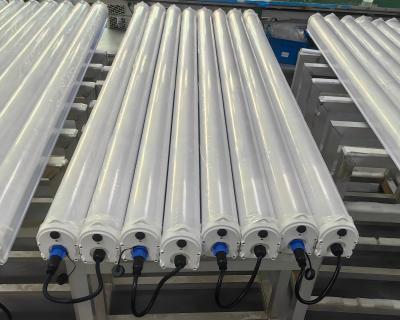
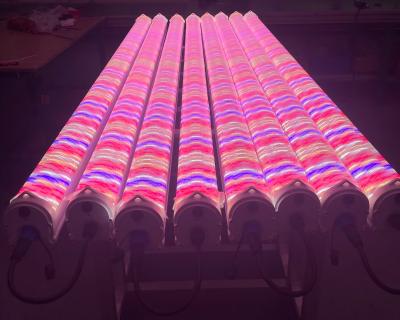
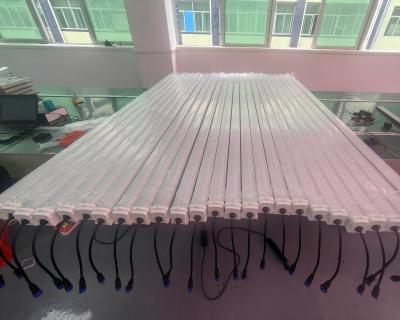

How Row Spacing and Row Length Actually Determine the Right Length
Before you order anything, grab a tape measure and actually walk your rows. I know that sounds basic, but I'd say close to half the sizing mistakes I see come from someone eyeballing row length instead of measuring it.
Measuring your row length before you choose a fixture
What you want is the usable planting length of the row - not the total bench length, the part that's actually going to have canopy sitting over the under canopy grow light. If your bench is 20 feet but the first and last 18 inches are used for irrigation manifolds or walkway clearance, that changes your real coverage need.
What happens when fixture length doesn't match row length
If you go too short, you get a dark zone at the end of the row. Growers usually notice this first as uneven bud development on the outer plants closest to that gap - smaller, airier flower compared to the rest of the row. If you go too long, you're either bending the fixture into a corner (not recommended) or running it past the edge of the canopy into open air, which is just wasted electricity and wasted light.
Common row length ranges in commercial setups
From what I see across our customer base - mostly commercial cannabis cultivators and vertical farms across North America - rows tend to fall into a few common bands: short rows in the 12–16 foot range (typical of smaller flower rooms or retrofit tents), mid-length rows around 20–24 feet, and long commercial or greenhouse rows that stretch 32 feet and beyond. Shorter rows tend to favor 6ft fixtures because they divide more cleanly. Longer rows tend to favor 8ft fixtures because you need fewer connection points to cover the same distance.
Dual vs Triple Emission Under Canopy Light: Does Length Change Which One You Need
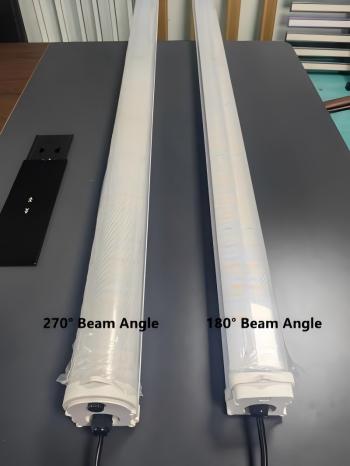
This is another spot where terminology trips people up, so let's separate it clearly from what we just covered. Dual side under canopy light refers to 2-side emission fixtures, throwing light out to the left and right at roughly 180°. Triple side under canopy light refers to 3-side emission fixtures, adding a downward or rear-facing emission angle to push coverage up to around 270°. We've actually covered the full breakdown of that comparison in a separate article, so I won't repeat all of it here - but it's worth touching on how fixture length interacts with that choice.
Does 6ft vs 8ft change whether you need dual or triple emission
Not directly - the emission angle decision is really driven by canopy density and how much light your lower bud sites are missing, not by how long the fixture is. But length does affect how noticeable the difference feels in practice. On an 8ft run, a dual-emission fixture is covering more linear footage per unit, so any dark zone caused by insufficient side throw shows up over a longer stretch of row. On a 6ft run, that same gap is more contained.
When triple emission matters more as fixtures get longer
In denser canopies or wider benches where you've already committed to longer 8ft under canopy lights to cut down on connection points, triple emission often makes more sense - you're already reducing fixture count for efficiency, so getting more coverage angle out of each unit keeps that efficiency without sacrificing light penetration into the lower canopy.
Fewer, Longer Fixtures vs More, Shorter Fixtures - Which Is More Cost Effective
This is the question that actually decides most orders, so let's break it down properly.
Installation labor and wiring complexity
Bracket count actually scales with length - 6ft fixtures typically use 2 brackets, 8ft fixtures usually need 3. So on a 24ft row, four 6ft fixtures come out to 8 brackets total, while three 8ft fixtures come out to 9 - roughly the same, not fewer. The real labor savings come from having one less fixture to position and wire. Multiply that across dozens of rows on a commercial build, and it adds up.
Power distribution and daisy-chain considerations
Our under canopy grow lights support daisy-chaining, with up to five units running off a single power cord run. Whether you're using 6ft or 8ft fixtures, the daisy-chain logic is the same - but because 8ft units cover more row length per fixture, you can sometimes cover a longer stretch of row within a single five-unit chain than you could with 6ft units, which simplifies your circuit planning.
Long-term maintenance and replacement cost
Fewer fixtures generally means fewer individual units that can fail, which is a small but real factor in a facility running thousands of hours a year. That said, if a single 8ft fixture ever does go down, you're losing more linear coverage per fixture than you would with a 6ft unit, so there's a trade-off between simplicity and redundancy that's worth thinking through based on how critical uptime is for your operation.
Real Scenarios: How Growers Choose Between 6ft and 8ft
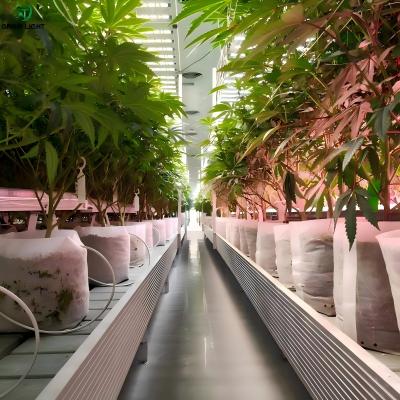
A commercial cannabis cultivator running standard 4-tier rolling benches with rows around 20 feet long typically lands on 6ft fixtures in a dual configuration - four fixtures per row, clean fit, minimal overhang.
A greenhouse vegetable operation running long fixed benches, sometimes 30 feet or more per row, tends to go with 8ft fixtures instead, cutting the fixture count nearly in half compared to a 6ft layout on the same run, which matters a lot when you're wiring hundreds of feet of bench.
A vertical farm with narrower, shorter racks - often under 15 feet per tier - usually sticks with 6ft or even shorter runs, since matching fixture length closely to rack length keeps things tidy and avoids overhang into walkways.
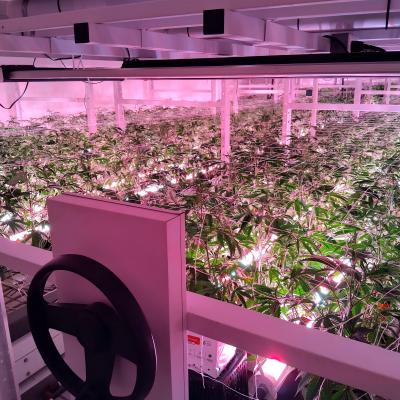
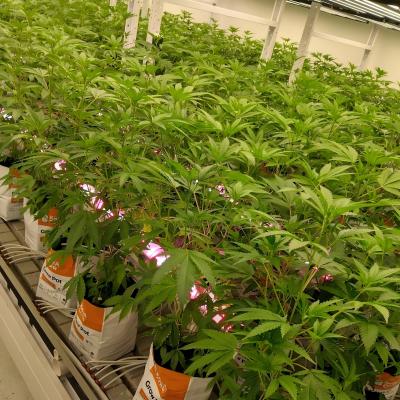
Across our customer base, which now includes more than 100,000 under canopy units shipped into the North American market alone, we've seen growers report yield increases in the range of 20–25% after switching from top-light-only setups to a properly sized under canopy layout, along with a noticeable shift in bud grading - flower that used to come in as B-grade lower canopy material moving up to A-grade after the lower bud sites finally got adequate light. None of that works, though, if the fixture length doesn't actually fit the row in the first place.
What to Look for When You're Sourcing an Under Canopy Light Length and Layout
Since this whole article comes down to matching fixture length to your actual space, it's worth explaining how we approach that on our end as an under canopy lighting manufacturer.
We offer under canopy fixtures in 6ft and 8ft lengths, at 120W, 150W, 180W, and 250W depending on the length and emission style you need. Rather than just quoting a length and letting you figure out the fit, we ask for your row dimensions and bench layout up front and put together a layout plan based on your actual growing scenario - how many rows, what spacing, what fixture count - before finalizing wattage and length.
On the 2-side vs 3-side decision specifically, we don't leave that up to guesswork either. Based on your canopy density and how far your bench sits from the sidewalls, we'll recommend whether 2-side or 3-side emission makes more sense for your layout, rather than just selling you whichever option you originally asked about.
For reference, our under canopy line carries CE, RoHS, FCC, and IP66 certification, with standard lead times running 15–25 days depending on configuration and order volume.
The Trend Toward Longer, Higher-Wattage Under Canopy Light
Looking at where the industry has moved over the past couple of years, the trend is pretty clear: growers are moving away from shorter, lower-wattage under canopy light and toward longer runs at higher wattage. Part of that is simply operational - fewer connection points per row means faster installs and less troubleshooting later. Part of it is that as under canopy lighting has proven itself as a real yield driver rather than a novelty add-on, growers are willing to commit to higher-wattage fixtures (180W and 250W in particular) that can properly saturate denser, taller canopies rather than under-lighting them with older 120W four-foot units stretched across too much space.
If there's one thing I'd want a grower to take away from this, it's simple: measure your rows before you pick your fixture length. Whether you land on 6ft or 8ft, or end up running a dual or triple configuration, the right choice comes down to your actual row length, bench width, and how much wiring complexity you're willing to manage. Get the length right first, and the wattage and PPFD conversation - which is usually where people start - actually becomes a lot easier to have.