Under Canopy Grow Light in Vegetative vs Flowering Stages
Almost every grower who installs under canopy lighting eventually asks the same question.
Should this be running in veg, or only in flower?
If lower canopy light helps structure, wouldn't it help earlier?
Why does it feel powerful in some rooms and almost invisible in others?
The uncomfortable truth is this: under canopy grow light is not a stage-neutral tool. It does not deliver the same value at every point in the plant's life, and pretending that it does is how growers end up disappointed, over-lighting, or misreading results.
To understand when under canopy lighting actually works, you have to stop thinking in terms of calendar stages and start thinking in terms of plant decisions.
Why Under Canopy Lighting Is Not Automatically Useful in the Vegetative Stage
One of the most common assumptions is that if lower canopy light helps flowering outcomes, then applying it earlier must help even more. In real cultivation, this assumption rarely holds up.
During the vegetative stage, most cannabis plants are not yet limited by lower-canopy light. They are limited by architecture, training, spacing, and apical dominance. The plant is still building its framework, deciding how tall to grow, where to branch, and how aggressively to pursue vertical dominance.
At this point, most lower growth has not been "abandoned" yet. It is simply undecided. Nodes are present, branches exist, and the plant has not been forced to choose which structures are worth finishing. Adding Under Canopy LED Grow Light at this stage often produces very little visible response, not because the light is ineffective, but because the plant has not entered a decision phase.
In veg, the plant is still asking "how big can I get?" rather than "what should I complete?" Lower canopy light does not strongly influence that question.
Why Early Under Canopy Lighting Often Feels Like It Does Nothing
Many growers try under canopy lighting in veg, see little change, and conclude that the concept itself is overrated. In reality, the timing was wrong.
Before flowering, the lower canopy is not yet under real threat. Light competition has not peaked. Shading patterns are still fluid. The plant does not yet perceive lower growth as a liability.
As a result, the signal delivered by LED under canopy lights is often ignored. The plant is not ready to respond. It has not reached the point where it needs to conserve energy or abandon structures.
This is why adding under canopy lighting too early can feel underwhelming. The plant is not resisting - it is simply not listening yet.
The Few Vegetative Scenarios Where Under Canopy Lighting Can Matter
That said, there are real-world veg environments where under canopy lighting can play a limited but meaningful role. In extremely high-density vegetative rooms, vertical racks, mother plant management, or long veg cycles where self-shading becomes severe, lower canopy structures may begin to experience consistent deprivation earlier than usual. In these cases, under canopy lighting can help preserve branching potential and prevent early structural thinning.
The key point is this: even in veg, under canopy lighting only matters when the plant has something to decide. If the structure is not yet under pressure, there is nothing for lower light to influence.
Flowering Stage Is When Under Canopy Lighting Becomes Relevant
The transition to flowering is when under canopy lighting finally enters a meaningful conversation with the plant.
Once flowering begins, the plant stops expanding endlessly and starts consolidating. It shifts from exploration to commitment. This is the phase where energy becomes finite, and choices become permanent.
During flowering, the plant is constantly evaluating which structures are worth finishing and which should be sacrificed. Lower canopy zones that appear unproductive are gradually deprioritized. Growth slows. Flower sites hesitate. Eventually, they stall.
This is the moment when under canopy grow light begins to matter - not because it increases speed, but because it alters the plant's internal cost–benefit analysis.
Under Canopy Lighting in Flowering Is About Retention, Not Acceleration
A common misunderstanding is that under canopy lighting in flower is meant to "boost" lower buds. That framing leads to unrealistic expectations.
In real grow rooms, under canopy lighting does not dramatically accelerate flowering below the canopy. What it does is far more subtle and far more valuable. It reduces abandonment.
With consistent lower-canopy light, flower sites that would normally stall continue developing. Buds that would have remained airy begin to densify. The plant does not suddenly produce more sites - it simply follows through on more of the ones it already initiated.
In flowering, under canopy lighting does not push production; it reduces losses.This shift in plant response is also when under-canopy lighting begins to make real economic sense.
Why Plants Respond Differently to Under Canopy Light in Flower
The difference comes down to intent.
In veg, the plant is gathering options.
In flower, the plant is closing options.
Lower canopy light in flowering sends a clear signal: this area is still viable. This structure is still worth investing in. The plant responds not by changing direction, but by continuing.
This is why many growers describe under canopy lighting in flower as making plants "more complete" rather than "more aggressive." The structure looks finished. Fewer areas feel half-abandoned.
Beam Angle Matters More in Flowering Than in Vegetative Stage
During veg, if under canopy lighting is used at all, growers often prefer restraint. Focused coverage helps avoid early over-activation of lateral growth.
During flowering, the priorities shift. Structure is already defined. The risk is no longer chaos, but inconsistency.
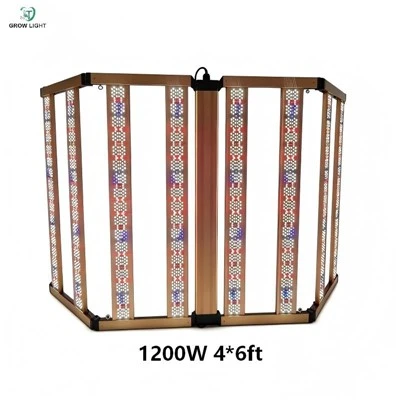
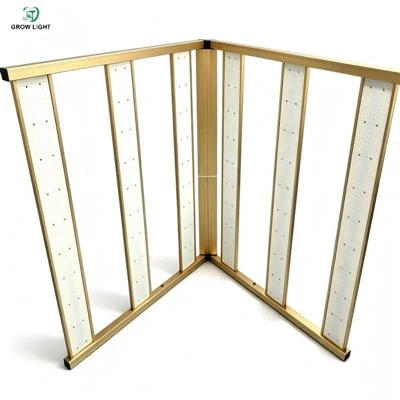
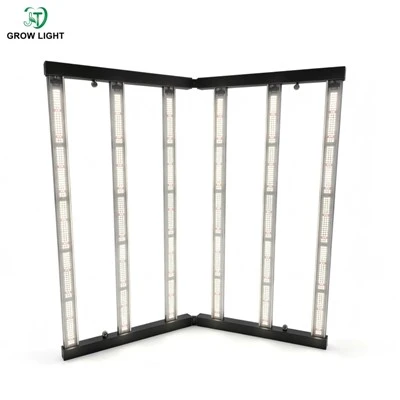
That's why in real cultivation projects, JTGL under canopy grow lights are available with both 120° and 240° beam angles, not as a marketing gimmick, but as stage-appropriate tools.
A 120° beam angle provides more directional coverage and can be useful in tighter, more controlled canopies where precision matters. A 240° beam angle offers wider lateral spread, reducing shadow zones and improving uniformity across irregular lower structures, which is especially valuable in flowering rooms where the goal is completion, not control.
This choice directly affects how evenly the lower canopy receives its final signals.
Why Under Canopy Lighting Sometimes Fails in Flowering
Even in flowering, under canopy lighting is not guaranteed to work.
If the lower canopy has already been aggressively stripped, if the plant has clearly committed all resources upward, or if the structure was never allowed to develop, adding light will not reverse that decision.
Once the plant has stopped believing in certain structures, it rarely changes its mind.
This leads to one of the most important practical rules: Under canopy lighting only works if the plant still has choices. Timing, again, is everything.
Why Growers Often Misjudge Under Canopy Results
Many growers evaluate under canopy lighting by comparing raw yield numbers from a single cycle. This often leads to disappointment or confusion.
Structural effects show up first. Completion improves before totals change. Consistency appears before averages rise.
Growers who understand this look for different signals: more uniform lower flowers, fewer stalled sites, and less drastic quality drop-off from top to bottom. Those are structural wins, and they compound over time.
Vegetative vs Flowering: The Real Difference in One Sentence
If this entire topic had to be reduced to a single grower-level truth, it would be this:
In veg, under canopy lighting rarely changes what the plant builds.
In flower, it often changes what the plant is willing to finish.
Everything else flows from that distinction.
Let the Plant Tell You When Under Canopy Lighting Matters
Under canopy grow light is not something you apply because a schedule says so. It is something you apply because the plant has entered a phase where lower structures are being judged.
In the vegetative stage, that judgment has usually not begun.
In the flowering stage, it is unavoidable.
Experienced growers don't ask whether under-canopy lighting works. They ask when the plant is ready to respond.
And when it is, properly designed under canopy LED grow lights - used with restraint, correct beam angle, and realistic expectations - become one of the most effective tools for improving structural completion and consistency.
Not because they force growth. But because they help the plant finish what it already started. Under-canopy grow light only works when it is treated as one layer within a broader layered lighting strategy.