Most commercial grow room budgets fail in the same place.
Not because the lights were too expensive. Not because HVAC was underestimated. But because labor quietly doubled.
Lighting installation is often treated as a one-time task. Hang the fixtures, wire them up, and move on. On spreadsheets, the difference between designs looks negligible.
In reality, grow light design directly determines how many people you need, how long they stay on ladders, and how much schedule risk you carry.
And that cost rarely shows up on the quotation.
A common mistake in project planning is assuming installation time scales linearly. If one light takes 10 minutes longer, it sounds insignificant. But multiply that by 100 lights, add height restrictions, safety procedures, and coordination delays, and suddenly the project slips days - sometimes weeks.
In commercial grow rooms, lighting is installed late in the build. Any delay here pushes everything else. That is why experienced project managers obsess over minutes, not hours.
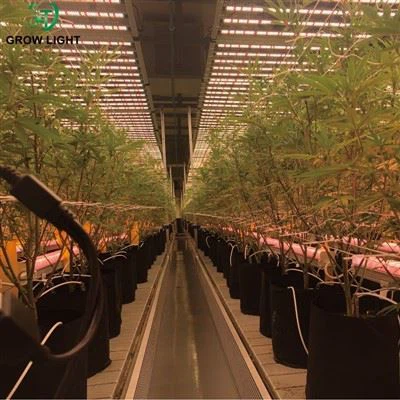
Many grow light designs assume assembly happens on the ground. In practice, most commercial installations require work at height. Ladders, lifts, or scaffolding are involved. Every additional step becomes slower, riskier, and more expensive. Lights that require:
- On-site bar assembly
- Separate driver mounting
- Complex wiring connections
- Multiply labor time dramatically once workers are off the ground.
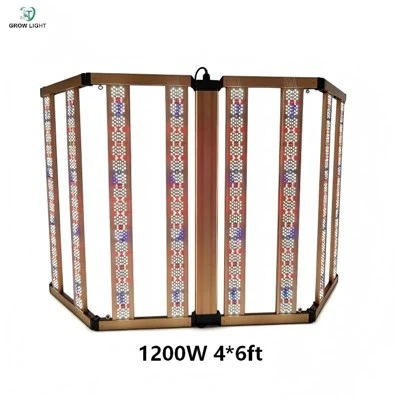
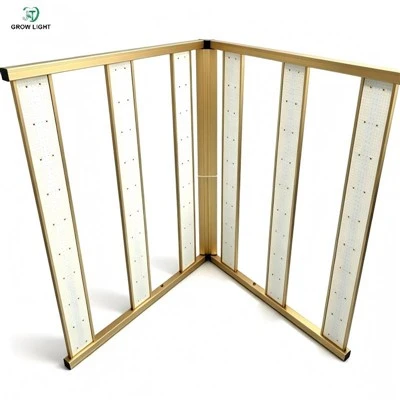
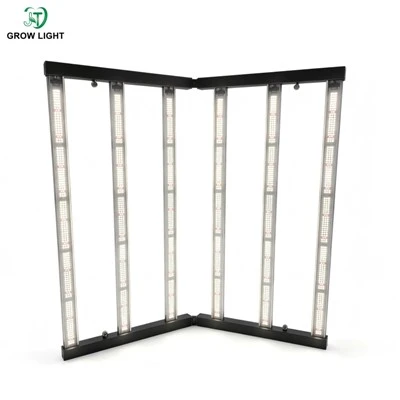
Foldable grow lights remove most of this friction. They arrive pre-assembled. Workers unfold, hang, plug, and move on. This difference is not about convenience. It is about reducing exposure time in the most expensive labor condition: working overhead.
Why "10 Minutes Per Light" Becomes a Project-Level Problem
Let's break the math down realistically.
In a 100-light commercial grow room:
- +10 minutes per fixture = +1,000 minutes
- That equals more than 16 labor hours
Now add safety checks, coordination, and fatigue. In reality, those 10 minutes often become two extra workdays.
And that does not include:
- Supervisor time
- Equipment rental extension
- Delayed commissioning
This is why experienced buyers ask not "How fast can one light be installed?" but "How predictable is installation across the entire room?"
Plug-and-Play Is Not a Buzzword - It Is a Labor Strategy
Plug-and-play designs reduce decision-making during installation. There is no debate about wiring order. No uncertainty about orientation. No field improvisation. Foldable grow lights are typically designed with:
- Pre-wired drivers
- Fixed cable lengths
- Clear hanging geometry
Installers do not need to think. They follow a repeatable pattern. This reduces training requirements and minimizes mistakes - two major cost drivers in large projects.
Labor Risk Is Often More Expensive Than Labor Cost
Delays are rarely just about wages. They create cascading effects:
- Missed planting windows
- HVAC commissioning conflicts
- Contractor rescheduling fees
When lighting installation drags on, it becomes a coordination nightmare. Designs that minimize on-site decisions reduce this risk dramatically.
That is why many large operators prefer fixtures that trade slight material cost for predictable labor behavior.
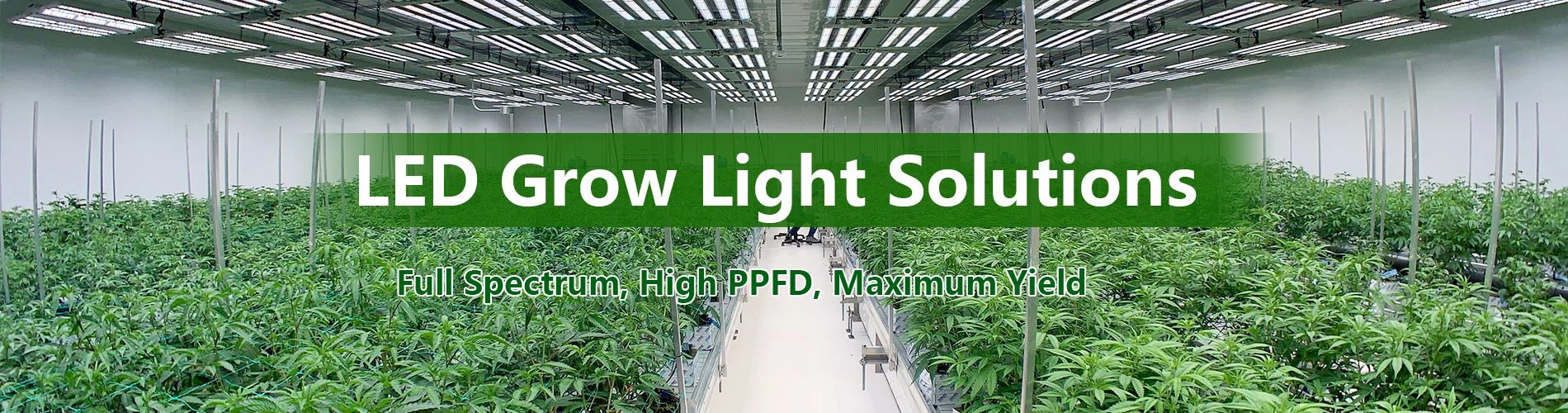
Why Vertical Grow Rooms Amplify Labor Differences
Vertical grow rooms intensify everything. Working between tiers is slower. Access is restricted. Mistakes are harder to correct.
A light that requires multiple assembly steps becomes exponentially harder to install on multi-tier racks.
Foldable grow lights simplify this reality. Their geometry fits rack systems. Their installation sequence is identical on every tier. In vertical systems, consistency saves money.
Integrated Rack + Lighting Design Reduces Labor Twice
Many projects suffer because racks and lights are sourced separately. Dimensions clash. Mounting points don't align. Installers improvise.
At JTGL, rack dimensions and foldable grow lights are designed together. Cable paths, hanging points, and spacing are coordinated before anything reaches the site.
This integration reduces labor twice:
- Faster installation
- Fewer corrections
Labor saved upfront is often greater than any difference in equipment pricing.
Procurement Teams Often Miss This - Until It's Too Late
Procurement decisions are usually made on unit price.
Labor is "someone else's problem."
Until the schedule slips. Until contractors ask for change orders. Until installation overruns eat into contingency budgets.
This is when design choices made months earlier reveal their true cost.
Growers who have been through this once rarely repeat the mistake.
Why Foldable Grow Lights Are Easier to Standardize
Standardization reduces labor variance.
Foldable grow lights have consistent installation geometry. Once crews learn the process, speed increases naturally.
This is why multi-room facilities often complete later rooms faster - not because workers try harder, but because design allows repetition.
Standardization is one of the most undervalued labor-saving mechanisms in commercial cultivation.
The Real ROI of Installation-Friendly Lighting
Return on investment is not just yield. It includes:
- Faster commissioning
- Lower labor volatility
- Reduced project stress
Foldable grow lights contribute to ROI by shrinking uncertainty, not by boosting specs. In large-scale operations, predictability is profit.
The Takeaway for Buyers and Project Managers
If you are comparing grow lights purely on purchase price, you are missing half the cost. Ask how long installation takes. Ask how many people are required. Ask whether assembly happens on the ground or overhead.
In commercial grow rooms, labor efficiency is a design feature. That is why foldable grow lights consistently reduce hidden labor cost - and why they are favored in serious commercial installations.