
Most commercial grow light problems don't start in the grow room.
They start in a warehouse or on a loading dock or inside a truck, halfway through the last mile.
Shipping and packaging are usually treated as logistics details. Something to be handled after the purchasing decision is made. But in commercial grow light projects, shipping size and packaging design quietly determine whether a project stays on schedule-or bleeds money before the lights are even turned on.
Growers who have dealt with damaged fixtures, emergency replacements, and delayed commissioning already know this: Logistics failures are operational failures.
Shipping Damage Is Rarely Random
When a grow light arrives damaged, the assumption is often "bad luck" or "carrier issue." In reality, damage is usually predictable.
Large, rigid fixtures create leverage during transport. Vibration, stacking pressure, and sudden movement amplify stress at specific points. The longer and more awkward the fixture, the more likely it is to fail somewhere along the route.
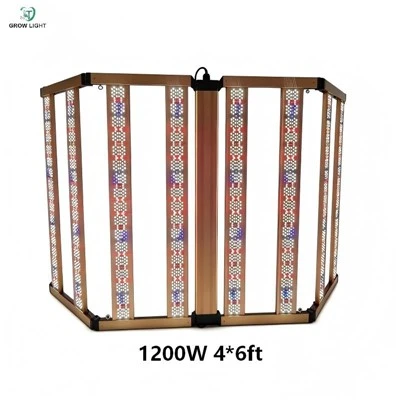
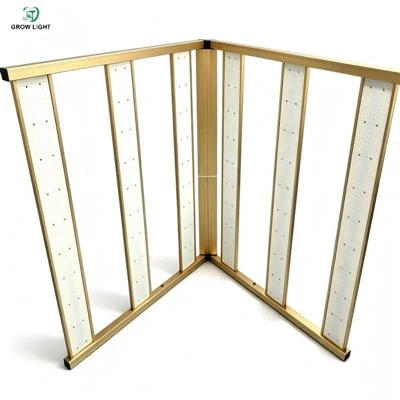
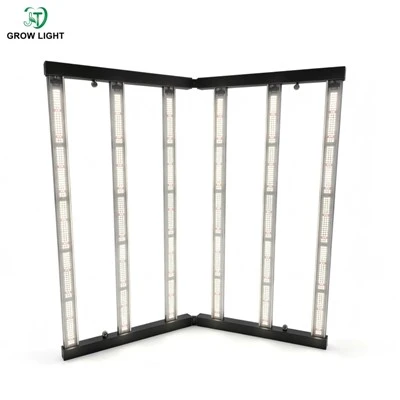
Foldable grow lights change this equation fundamentally by reducing the longest dimension and redistributing mass. Damage probability drops not because carriers are more careful, but because physics is less hostile.
Folding Reduces Volume, But It Also Reduces Stress. Most discussions stop at volume reduction.
Yes, foldable grow lights take up less space. But the more important factor is stress distribution.
When a long fixture is shipped fully extended, force concentrates at mounting points and joints. Any shock is amplified across the length.
Folded fixtures shorten that lever arm. They become denser, more compact, and less prone to bending forces.
This is why folded fixtures survive shipping environments that destroy rigid designs-even when both are packaged properly.

Warehouse Efficiency Is Not Just About Space
Storage cost is often underestimated in grow light projects. Large lights consume disproportionate warehouse space. They limit stacking options and reduce pallet density. Over time, this translates into higher storage fees and lower inventory flexibility.
Foldable grow lights increase pallet efficiency. More units per pallet means fewer pallets, fewer handling steps, and less opportunity for damage. For distributors and integrators, this directly affects cash flow and fulfillment speed.
Foldable Design Improves Inventory Flexibility.
Projects change. Orders are adjusted. Rooms expand. Compact packaging allows lights to be redirected, reallocated, or held in reserve without logistical headaches.
Rigid fixtures are difficult to store once unpacked. Foldable fixtures can remain packaged until needed, reducing handling and exposure risk.
This flexibility matters more as projects scale.
The Hidden Risk of Last-Mile Delivery
Last-mile delivery is where most damage happens.
Not during ocean freight.
Not during long-haul trucking.
But during final handling-when boxes are moved manually, squeezed through doors, or loaded into smaller vehicles.
Large, awkward fixtures are difficult to maneuver. They get tilted, bumped, or dragged. Packaging can only do so much when the object itself is hard to handle.
Foldable grow lights are easier to carry, easier to position, and easier to protect during the most chaotic part of the journey.
Packaging Cannot Fix Poor Form Factor
There is a dangerous misconception in the industry: that better packaging can compensate for bad form factor. It cannot.
You can add foam, double boxes, reinforced corners-but if the product itself is long, rigid, and unbalanced, risk remains.
Packaging works best when it complements product geometry. Foldable grow lights are inherently more packaging-friendly, allowing protection to be distributed evenly instead of fighting the product's shape.
How Shipping Size Impacts Project Timelines
Damaged fixtures don't just cost money. They cost time. Replacement orders need to be processed. Inventory has to be reallocated. Projects stall while waiting for parts.
In commercial grow rooms, lighting is often installed late in the build. A delay here can push planting schedules, labor coordination, and even regulatory inspections.
Shipping reliability becomes schedule reliability. This is why experienced project managers care deeply about shipping dimensions-even if procurement teams do not.
Integrated Rack and Lighting Logistics Reduce Complexity
At JTGL, many customers choose to ship grow racks and foldable grow lights together as a coordinated system.
This alignment simplifies logistics planning. Packaging dimensions are standardized. Palletization is optimized. Installation sequencing becomes predictable.
When racks and lights are designed together, shipping stops being an afterthought and becomes part of the system.
ROI Is Affected Long Before Harvest
When people talk about ROI, they usually think about yield. But ROI is also shaped by what happens before the first plant goes in.
Shipping damage, storage inefficiencies, and last-mile failures all consume budget without producing value. Foldable grow lights protect ROI by minimizing exposure during these early stages. They do not just arrive smaller-they arrive safer.
Mature products consider their entire lifecycle. Not just performance in the grow room, but survival through global logistics.
Foldable grow lights reflect this maturity. Their design acknowledges real-world constraints: shipping containers, warehouses, forklifts, and human hands. This is one reason why they have become standard in serious commercial projects.
A Practical Conclusion for Buyers
If you've ever had to delay a project because lights arrived damaged, you already understand the lesson. Shipping size is not cosmetic. Packaging is not optional. Logistics is not separate from performance.
In commercial grow light projects, what survives the journey determines what performs in the room. That is why foldable grow lights consistently reduce logistics risk-and why they protect ROI long before harvest day. Logistics reliability is one of the core reasons why foldable LED grow lights became the industry standard in commercial cannabis cultivation.